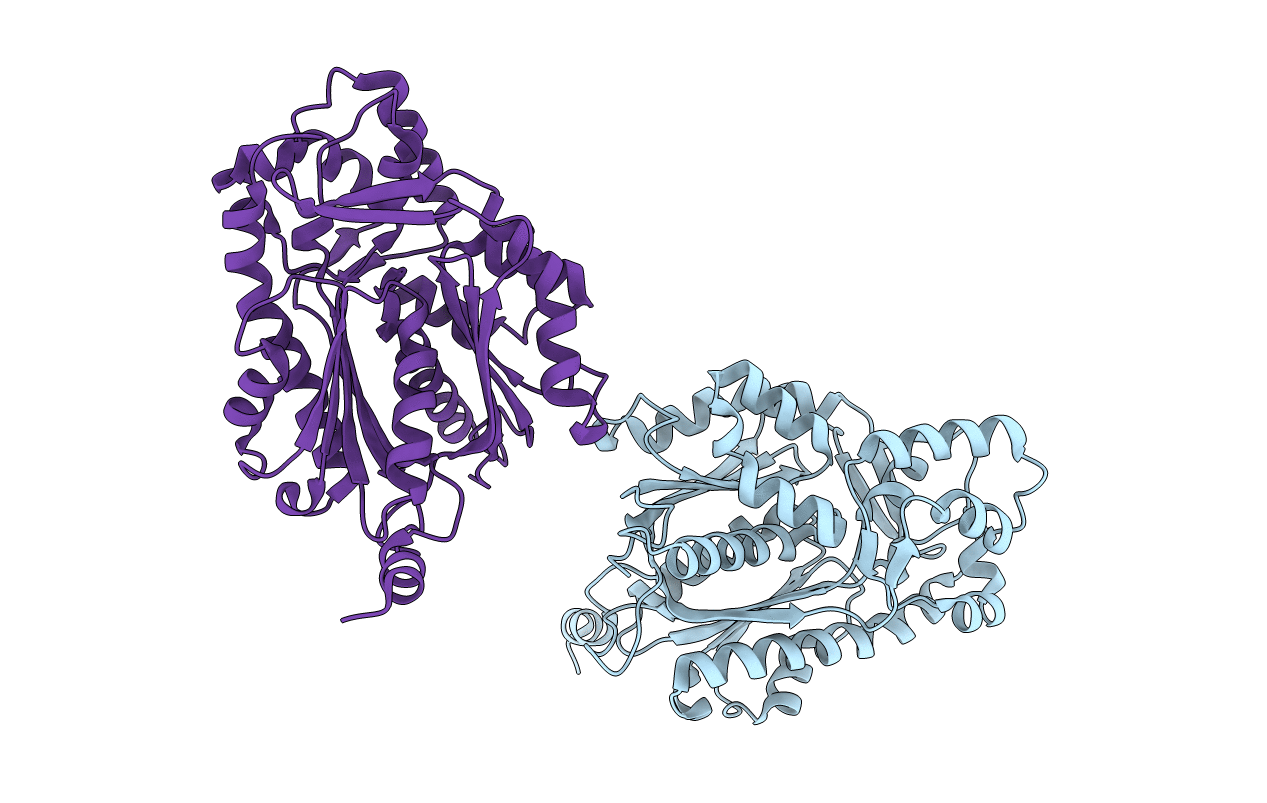
1I8B image
Deposition Date 2001-03-12
Release Date 2001-12-12
Last Version Date 2024-11-13
Entry Detail
PDB ID:
1I8B
Keywords:
Title:
Chalcone synthase (G256F)
Biological Source:
Source Organism:
Medicago sativa (Taxon ID: 3879)
Host Organism:
Method Details:
Experimental Method:
Resolution:
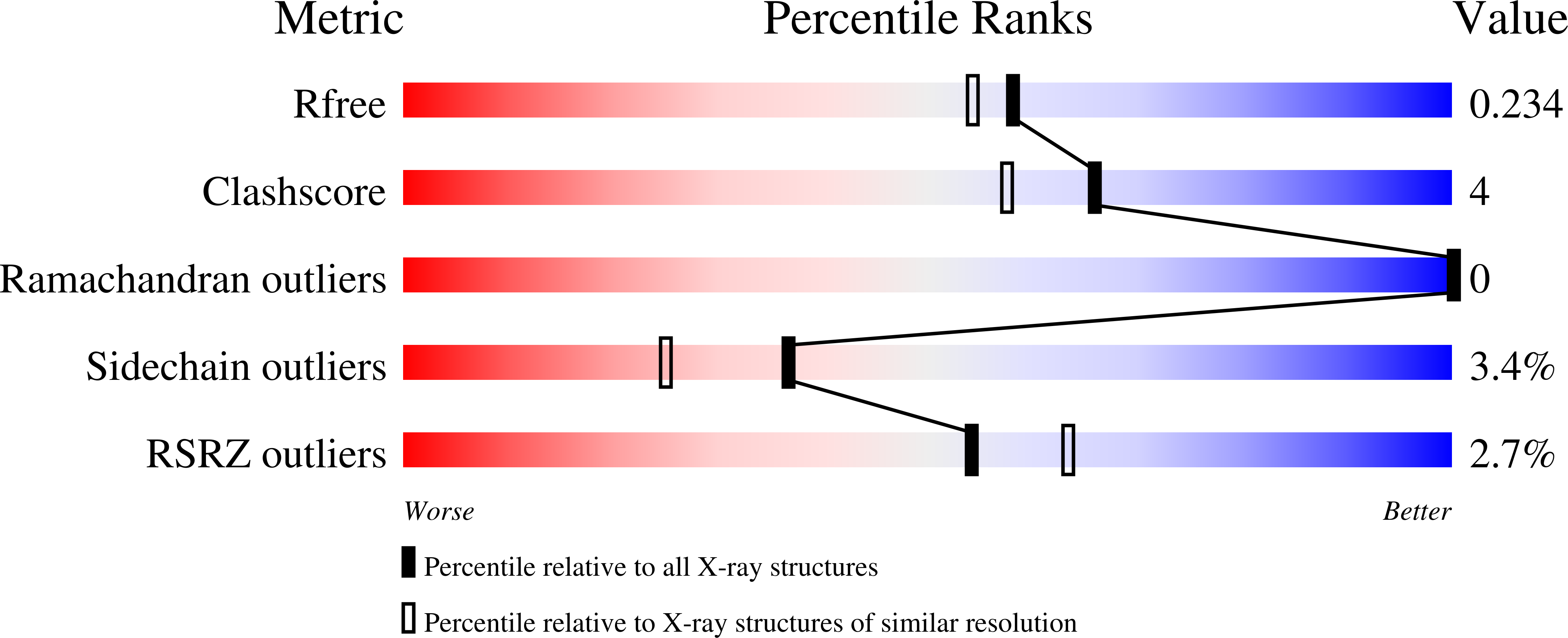
1.95 Å
R-Value Free:
0.25
R-Value Work:
0.20
Space Group:
P 31 2 1
Macromolecular Entities
Structures with similar UniProt ID
Protein Blast
Polymer Type:polypeptide(L)
Molecule:CHALCONE SYNTHASE 2
Gene (Uniprot):CHS2
Mutagens:G256F
Chain IDs:A, B
Chain Length:389
Number of Molecules:2
Biological Source:Medicago sativa
Modified Residue
Compound ID Chain ID Parent Comp ID Details 2D Image
CSD A CYS 3-SULFINOALANINE
Primary Citation
Structure-guided programming of polyketide chain-length determination in chalcone synthase.
Biochemistry 40 14829 14838 (2001)
PMID: 11732902 DOI: 10.1021/bi015621z

Abstact

Chalcone synthase (CHS) belongs to the family of type III polyketide synthases (PKS) that catalyze formation of structurally diverse polyketides. CHS synthesizes a tetraketide by sequential condensation of three acetyl anions derived from malonyl-CoA decarboxylation to a p-coumaroyl moiety attached to an active site cysteine. Gly256 resides on the surface of the CHS active site that is in direct contact with the polyketide chain derived from malonyl-CoA. Thus, position 256 serves as an ideal target to probe the link between cavity volume and polyketide chain-length determination in type III PKS. Functional examination of CHS G256A, G256V, G256L, and G256F mutants reveals altered product profiles from that of wild-type CHS. With p-coumaroyl-CoA as a starter molecule, the G256A and G256V mutants produce notably more tetraketide lactone. Further restrictions in cavity volume such as that seen in the G256L and G256F mutants yield increasing levels of the styrylpyrone bis-noryangonin from a triketide intermediate. X-ray crystallographic structures of the CHS G256A, G256V, G256L, and G256F mutants establish that these substitutions reduce the size of the active site cavity without significant alterations in the conformations of the polypeptide backbones. The side chain volume of position 256 influences both the number of condensation reactions during polyketide chain extension and the conformation of the triketide and tetraketide intermediates during the cyclization reaction. These results viewed in conjunction with the natural sequence variation of residue 256 suggest that rapid diversification of product specificity without concomitant loss of substantial catalytic activity in related CHS-like enzymes can occur by site-specific evolution of side chain volume at position 256.

Legend

Protein

Chemical

Disease

Primary Citation of related structures
Feedback Form
Name
Email
Institute
Feedback