1I5P image
Deposition Date 2001-02-28
Release Date 2001-05-16
Last Version Date 2024-10-30
Entry Detail
PDB ID:
1I5P
Keywords:
Title:
INSECTICIDAL CRYSTAL PROTEIN CRY2AA
Biological Source:
Source Organism:
Host Organism:
Method Details:
Experimental Method:
Resolution:
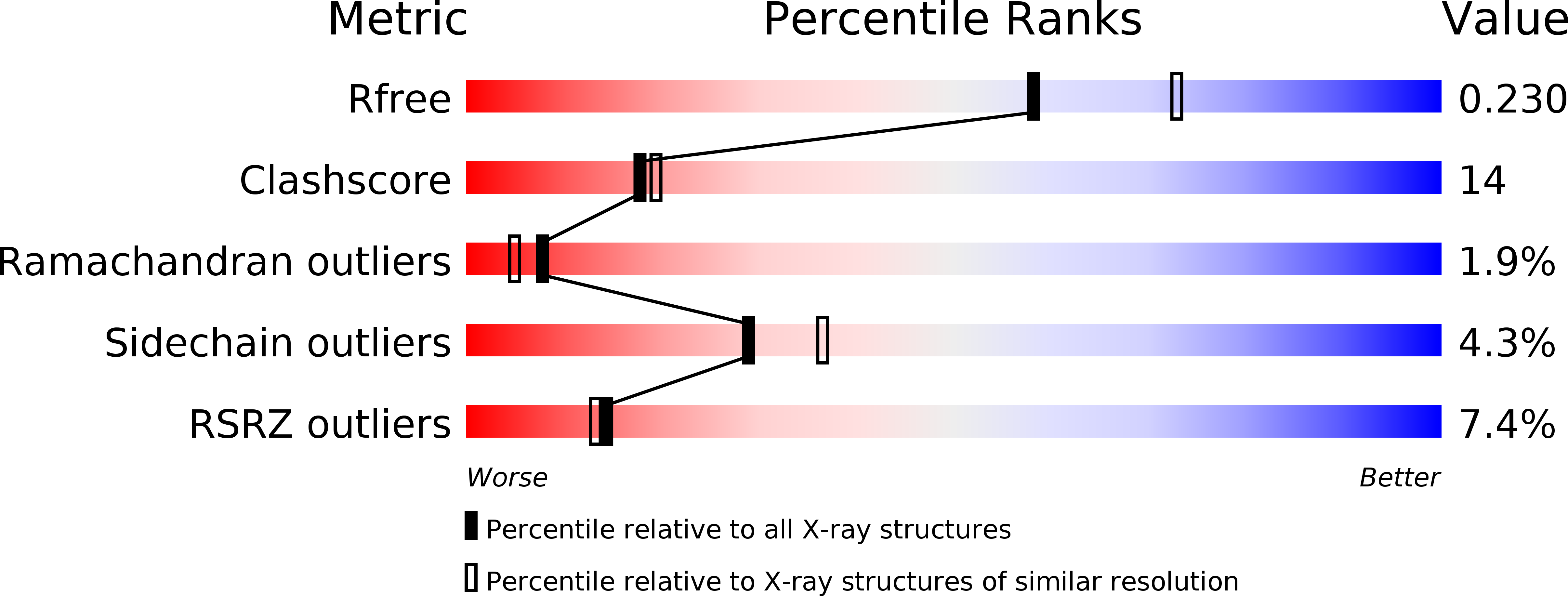
2.20 Å
R-Value Free:
0.23
R-Value Work:
0.18
R-Value Observed:
0.18
Space Group:
P 43 21 2
Macromolecular Entities
Structures with similar UniProt ID
Protein Blast
Polymer Type:polypeptide(L)
Molecule:PESTICIDIAL CRYSTAL PROTEIN CRY2AA
Gene (Uniprot):cry2Aa
Chain IDs:A
Chain Length:633
Number of Molecules:1
Biological Source:Bacillus thuringiensis serovar kurstaki
Primary Citation
Structure of Cry2Aa suggests an unexpected receptor binding epitope.
Structure 9 409 417 (2001)
PMID: 11377201 DOI: 10.1016/S0969-2126(01)00601-3

Abstact

BACKGROUND: Genetically modified (GM) crops that express insecticidal protein toxins are an integral part of modern agriculture. Proteins produced by Bacillus thuringiensis (Bt) during sporulation mediate the pathogenicity of Bt toward a spectrum of insect larvae whose breadth depends upon the Bt strain. These transmembrane channel-forming toxins are stored in Bt as crystalline inclusions called Cry proteins. These proteins are the active agents used in the majority of biorational pesticides and insect-resistant transgenic crops. Though Bt toxins are promising as a crop protection alternative and are ecologically friendlier than synthetic organic pesticides, resistance to Bt toxins by insects is recognized as a potential limitation to their application. RESULTS: We have determined the 2.2 A crystal structure of the Cry2Aa protoxin by multiple isomorphous replacement. This is the first crystal structure of a Cry toxin specific to Diptera (mosquitoes and flies) and the first structure of a Cry toxin with high activity against larvae from two insect orders, Lepidoptera (moths and butterflies) and Diptera. Cry2Aa also provides the first structure of the proregion of a Cry toxin that is cleaved to generate the membrane-active toxin in the larval gut. CONCLUSIONS: The crystal structure of Cry2Aa reported here, together with chimeric-scanning and domain-swapping mutagenesis, defines the putative receptor binding epitope on the toxin and so may allow for alteration of specificity to combat resistance or to minimize collateral effects on nontarget species. The putative receptor binding epitope of Cry2Aa identified in this study differs from that inferred from previous structural studies of other Cry toxins.

Legend

Protein

Chemical

Disease

Primary Citation of related structures
Feedback Form
Name
Email
Institute
Feedback