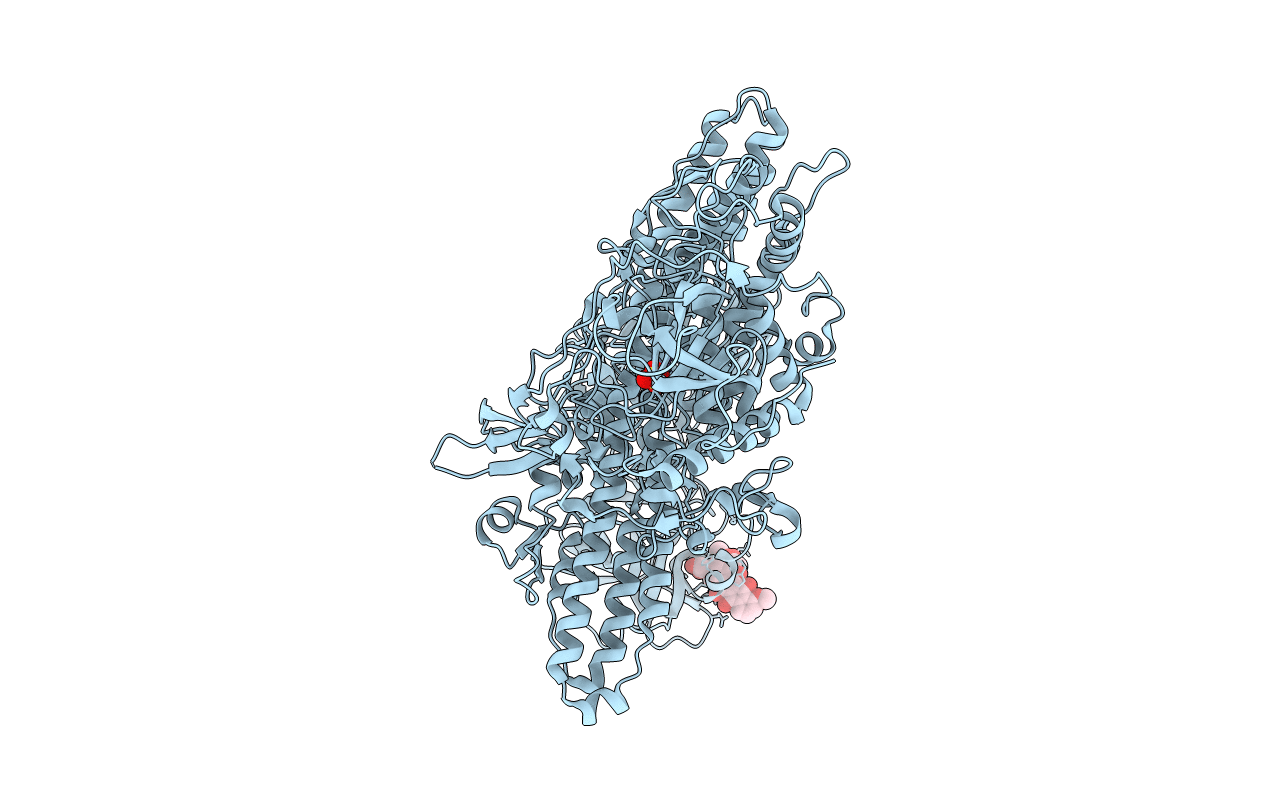
1I1E image
Deposition Date 2001-02-01
Release Date 2001-11-21
Last Version Date 2024-10-30
Entry Detail
PDB ID:
1I1E
Keywords:
Title:
CRYSTAL STRUCTURE OF CLOSTRIDIUM BOTULINUM NEUROTOXIN B COMPLEXED WITH DOXORUBICIN
Biological Source:
Source Organism:
Method Details:
Experimental Method:
Resolution:
2.50 Å
R-Value Free:
0.27
R-Value Work:
0.21
Space Group:
P 1 21 1
Macromolecular Entities
Structures with similar UniProt ID
Protein Blast
Polymer Type:polypeptide(L)
Molecule:BOTULINUM NEUROTOXIN TYPE B
Gene (Uniprot):botB
Chain IDs:A
Chain Length:1290
Number of Molecules:1
Biological Source:Clostridium botulinum
Primary Citation
Crystallographic evidence for doxorubicin binding to the receptor-binding site in Clostridium botulinum neurotoxin B.
Acta Crystallogr.,Sect.D 57 1743 1746 (2001)
PMID: 11679763 DOI: 10.1107/S0907444901013531

Abstact

The neurotoxins of Clostridium botulinum and tetanus bind to gangliosides as a first step of their toxin activity. Identifying suitable receptors that compete with gangliosides could prevent toxin binding to the neuronal cells. A possible ganglioside-binding site of the botulinum neurotoxin B (BoNT/B) has already been proposed and evidence is now presented for a drug binding to botulinum neurotoxin B from structural studies. Doxorubicin, a well known DNA intercalator, binds to the neurotoxin at the receptor-binding site proposed earlier. The structure of the BoNT/B-doxorubicin complex reveals that doxorubicin has interactions with the neurotoxin similar to those of sialyllactose. The aglycone moiety of the doxorubicin stacks with tryptophan 1261 and interacts with histidine 1240 of the binding domain. Here, the possibility is presented of designing a potential antagonist for these neurotoxins from crystallographic analysis of the neurotoxin-doxorubicin complex, which will be an excellent lead compound.

Legend

Protein

Chemical

Disease

Primary Citation of related structures
Feedback Form
Name
Email
Institute
Feedback