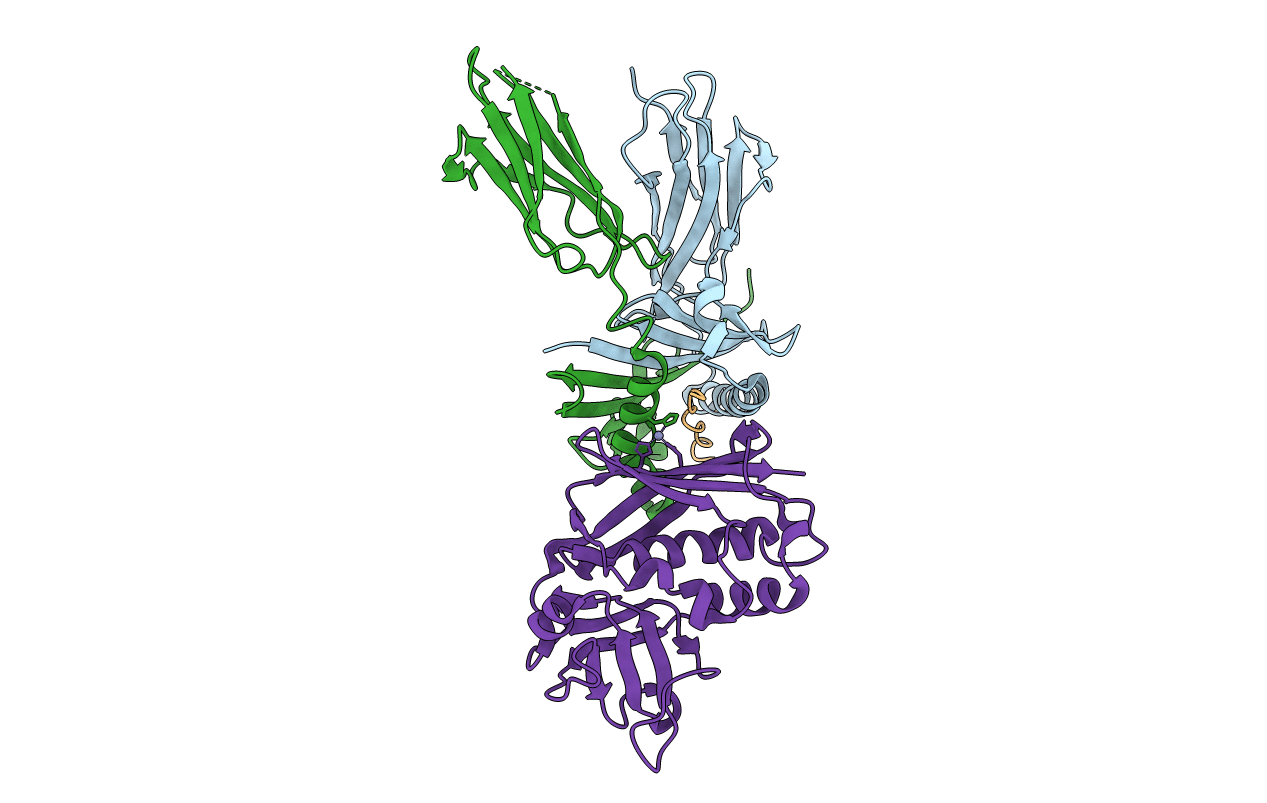
1HXY image
Deposition Date 2001-01-17
Release Date 2001-06-27
Last Version Date 2024-10-16
Entry Detail
PDB ID:
1HXY
Title:
CRYSTAL STRUCTURE OF STAPHYLOCOCCAL ENTEROTOXIN H IN COMPLEX WITH HUMAN MHC CLASS II
Biological Source:
Source Organism:
Host Organism:
Method Details:
Experimental Method:
Resolution:
2.60 Å
R-Value Free:
0.25
R-Value Work:
0.20
Space Group:
C 1 2 1
Macromolecular Entities
Structures with similar UniProt ID
Protein Blast
Polymer Type:polypeptide(L)
Molecule:HLA CLASS II HISTOCOMPATIBILITY ANTIGEN, DR ALPHA CHAIN
Gene (Uniprot):HLA-DRA
Chain IDs:A
Chain Length:182
Number of Molecules:1
Biological Source:Homo sapiens
Structures with similar UniProt ID
Protein Blast
Polymer Type:polypeptide(L)
Molecule:HLA CLASS II HISTOCOMPATIBILITY ANTIGEN, DR-1 BETA CHAIN
Chain IDs:B
Chain Length:190
Number of Molecules:1
Biological Source:Homo sapiens
Structures with similar UniProt ID
Protein Blast
Polymer Type:polypeptide(L)
Molecule:HEMAGGLUTININ
Chain IDs:C
Chain Length:13
Number of Molecules:1
Biological Source:
Structures with similar UniProt ID
Protein Blast
Polymer Type:polypeptide(L)
Molecule:ENTEROTOXIN H
Gene (Uniprot):entH
Chain IDs:D
Chain Length:213
Number of Molecules:1
Biological Source:Staphylococcus aureus
Ligand Molecules
Primary Citation
Crystal Structure of a Superantigen Bound to MHC Class II Displays Zinc and Peptide Dependence
Embo J. 20 3306 3312 (2001)
PMID: 11432818 DOI: 10.1093/emboj/20.13.3306

Abstact

The three-dimensional structure of a bacterial superantigen, Staphylococcus aureus enterotoxin H (SEH), bound to human major histocompatibility complex (MHC) class II (HLA-DR1) has been determined by X-ray crystallography to 2.6 A resolution (1HXY). The superantigen binds on top of HLA-DR1 in a completely different way from earlier co-crystallized superantigens from S.aureus. SEH interacts with high affinity through a zinc ion with the beta1 chain of HLA-DR1 and also with the peptide presented by HLA-DR1. The structure suggests that all superantigens interacting with MHC class II in a zinc-dependent manner present the superantigen in a common way. This suggests a new model for ternary complex formation with the T-cell receptor (TCR), in which a contact between the TCR and the MHC class II is unlikely.

Legend

Protein

Chemical

Disease

Primary Citation of related structures
Feedback Form
Name
Email
Institute
Feedback