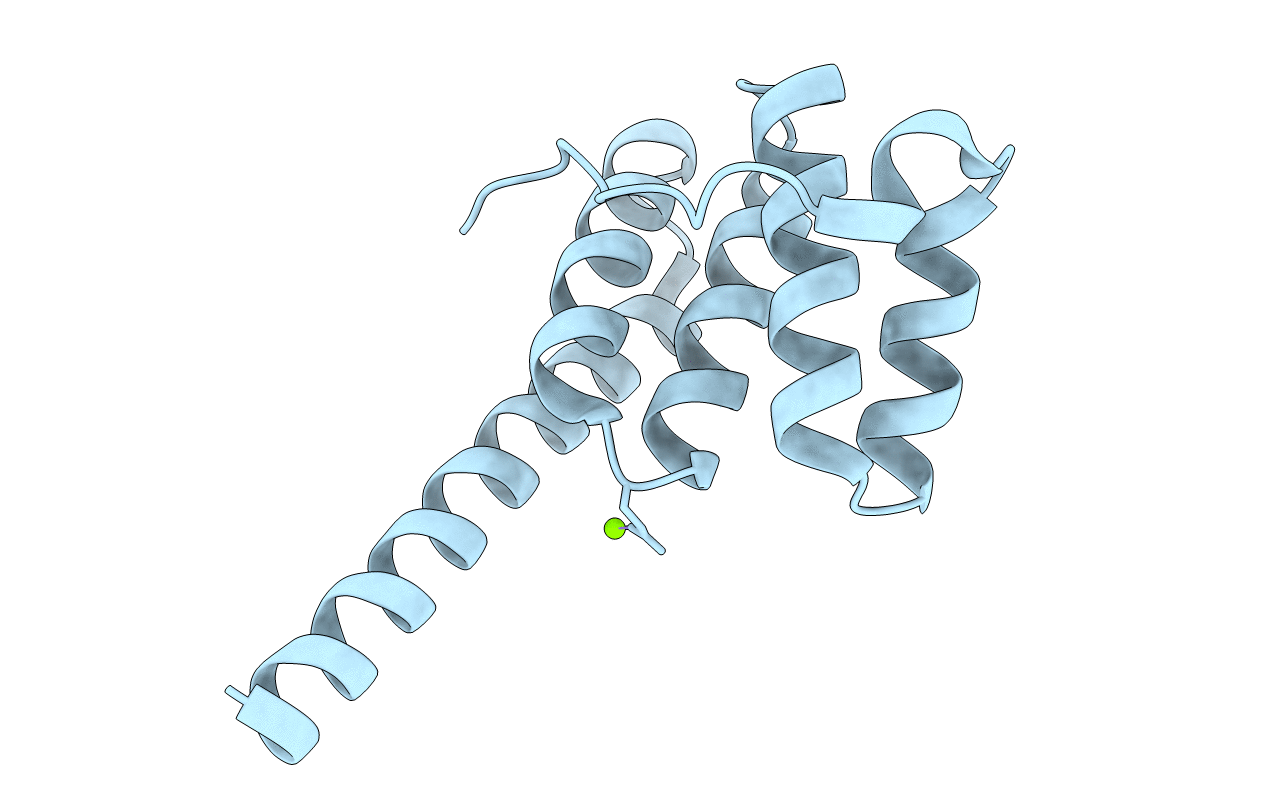
1HXI image
Deposition Date 2001-01-15
Release Date 2001-03-21
Last Version Date 2024-10-16
Entry Detail
PDB ID:
1HXI
Title:
AN UNEXPECTED EXTENDED CONFORMATION FOR THE THIRD TPR MOTIF OF THE PEROXIN PEX5 FROM TRYPANOSOMA BRUCEI
Biological Source:
Source Organism:
Method Details:
Experimental Method:
Resolution:
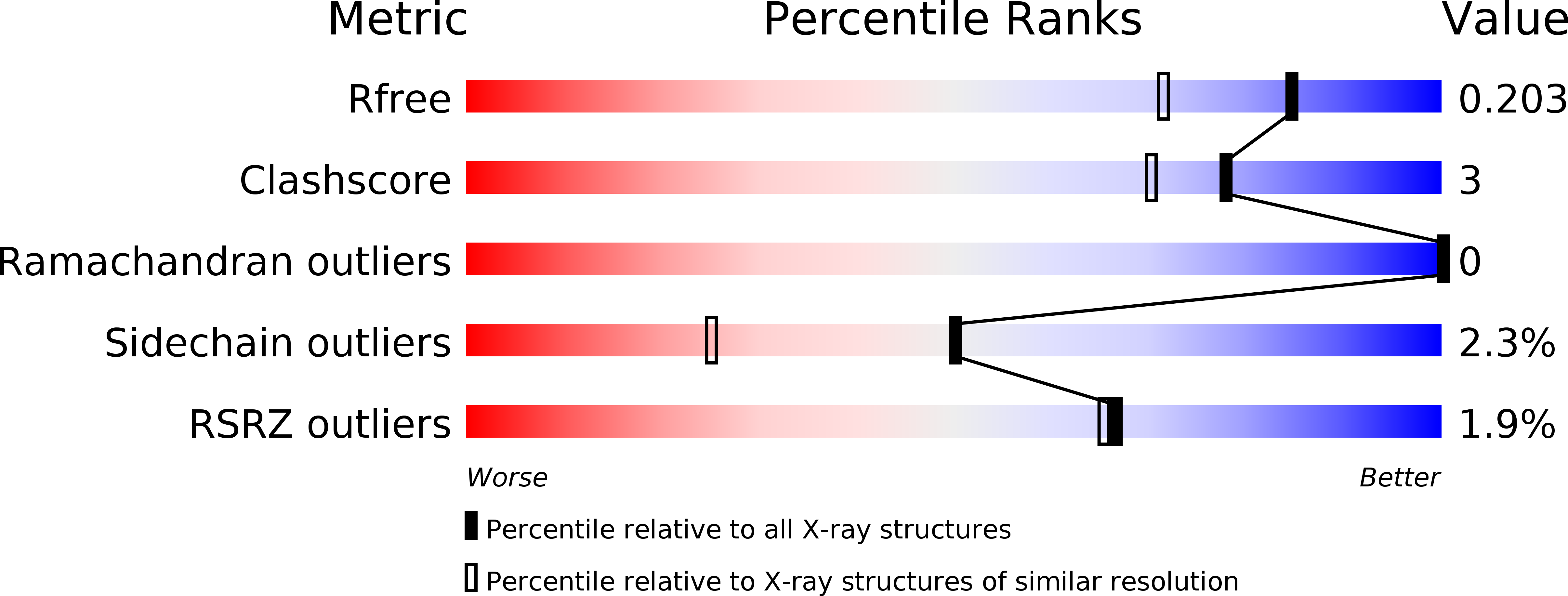
1.60 Å
R-Value Free:
0.22
R-Value Work:
0.18
R-Value Observed:
0.19
Space Group:
P 65
Macromolecular Entities
Structures with similar UniProt ID
Protein Blast
Polymer Type:polypeptide(L)
Molecule:PEROXISOME TARGETING SIGNAL 1 RECEPTOR PEX5
Chain IDs:A
Chain Length:121
Number of Molecules:1
Biological Source:Trypanosoma brucei
Modified Residue
Compound ID Chain ID Parent Comp ID Details 2D Image
MSE A MET SELENOMETHIONINE
Ligand Molecules
Primary Citation
An unexpected extended conformation for the third TPR motif of the peroxin PEX5 from Trypanosoma brucei.
J.Mol.Biol. 307 271 282 (2001)
PMID: 11243819 DOI: 10.1006/jmbi.2000.4465

Abstact

A number of helix-rich protein motifs are involved in a variety of critical protein-protein interactions in living cells. One of these is the tetratrico peptide repeat (TPR) motif that is involved, amongst others, in cell cycle regulation, chaperone function and post-translation modifications. So far, these helix-rich TPR motifs have always been observed to be a compact unit of two helices interacting with each other in antiparallel fashion. Here, we describe the structure of the first three TPR-motifs of the peroxin PEX5 from Trypanosoma brucei, the causative agent of sleeping sickness. Peroxins are proteins involved in peroxisome, glycosome and glyoxysome biogenesis. PEX5 is the receptor of the proteins targeted to these organelles by the "peroxisomal targeting signal-1", a C-terminal tripeptide called PTS-1. The first two of the three TPR-motifs of T. brucei PEX5 appear to adopt the canonical antiparallel helix hairpin structure. In contrast, the third TPR motif of PEX5 has a dramatically different conformation in our crystals: the two helices that were supposed to form a hairpin are folded into one single 44 A long continuous helix. Such a conformation has never been observed before for a TPR motif. This raises interesting questions including the potential functional importance of a "jack-knife" conformational change in TPR motifs.

Legend

Protein

Chemical

Disease

Primary Citation of related structures
Feedback Form
Name
Email
Institute
Feedback