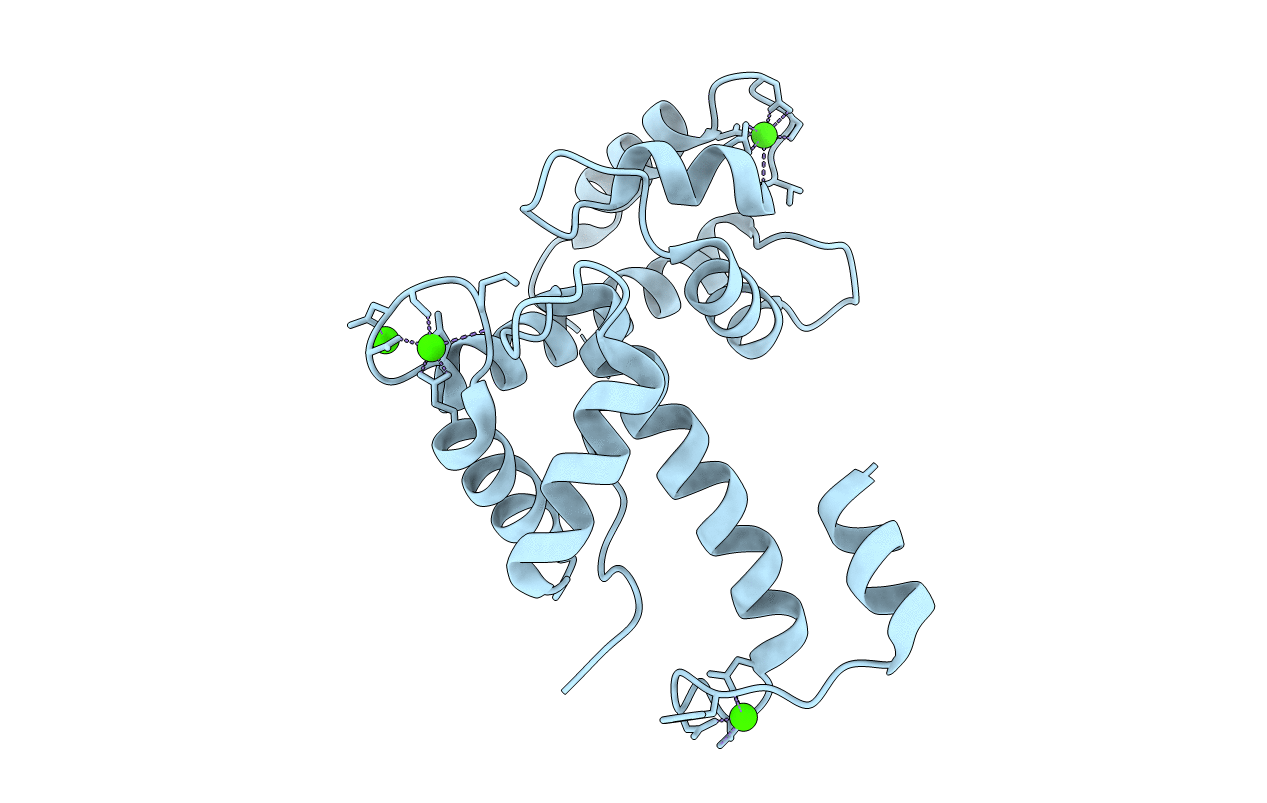
1HQV image
Deposition Date 2000-12-19
Release Date 2001-05-02
Last Version Date 2024-02-07
Entry Detail
PDB ID:
1HQV
Keywords:
Title:
STRUCTURE OF APOPTOSIS-LINKED PROTEIN ALG-2
Biological Source:
Source Organism:
Mus musculus (Taxon ID: 10090)
Method Details:
Experimental Method:
Resolution:
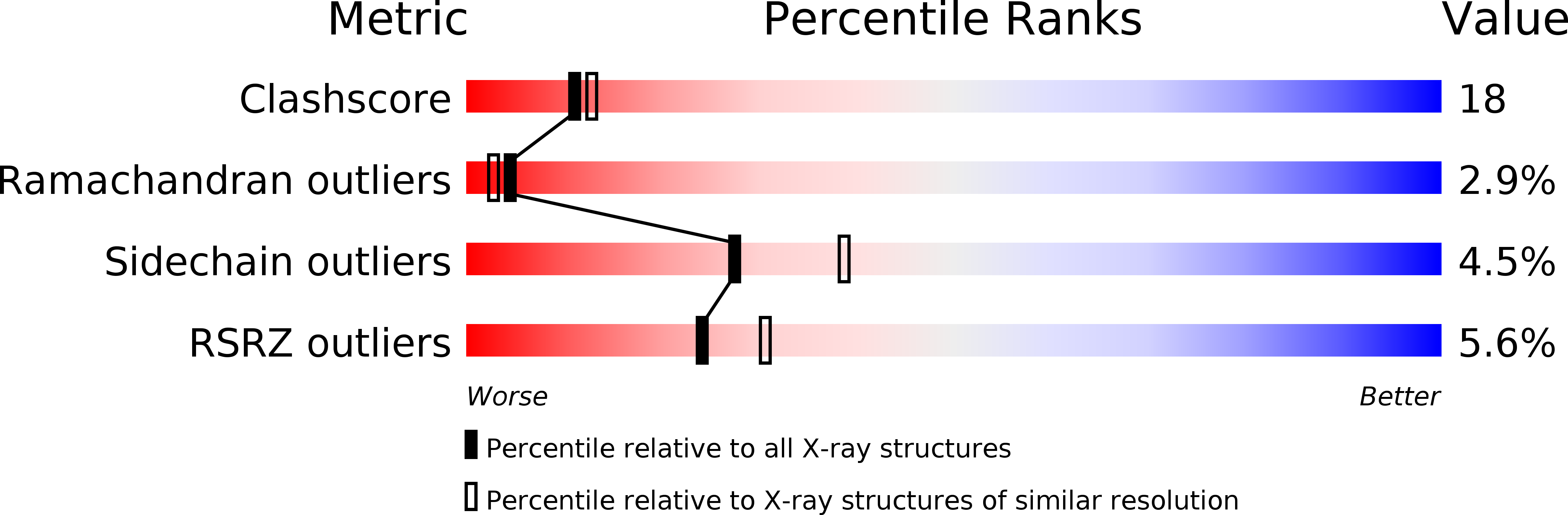
2.30 Å
R-Value Free:
0.29
R-Value Work:
0.25
Space Group:
P 41 2 2
Macromolecular Entities
Structures with similar UniProt ID
Protein Blast
Polymer Type:polypeptide(L)
Molecule:PROGRAMMED CELL DEATH PROTEIN 6
Gene (Uniprot):Pdcd6
Chain IDs:A
Chain Length:191
Number of Molecules:1
Biological Source:Mus musculus
Ligand Molecules
Primary Citation
Structure of apoptosis-linked protein ALG-2: insights into Ca2+-induced changes in penta-EF-hand proteins.
Structure 9 267 275 (2001)
PMID: 11525164 DOI: 10.1016/S0969-2126(01)00585-8

Abstact

BACKGROUND The Ca2+ binding apoptosis-linked gene-2 (ALG-2) protein acts as a proapoptotic factor in a variety of cell lines and is required either downstream or independently of caspases for apoptosis to occur. ALG-2 belongs to the penta-EF-hand (PEF) protein family and has two high-affinity and one low-affinity Ca2+ binding sites. Like other PEF proteins, its N terminus contains a Gly/Pro-rich segment. Ca2+ binding is required for the interaction with the target protein, ALG-2 interacting protein 1 (AIP1). RESULTS We present the 2.3 A resolution crystal structure of Ca2+-Ioaded des1-20ALG-2 (aa 21-191), which was obtained by limited proteolysis of recombinant ALG-2 with elastase. The molecule contains eight alpha helices that fold into five EF-hands, and, similar to other members of this protein family, the molecule forms dimers. Ca2+ ions bind to EF1, EF3, and, surprisingly, to EF5. In the related proteins calpain and grancalcin, the EF5 does not bind Ca2+ and is thought to primarily facilitate dimerization. Most importantly, the conformation of des1-20ALG-2 is significantly different from that of calpain and grancalcin. This difference can be described as a rigid body rotation of EF1-2 relative to EF4-5 and the dimer interface, with a hinge within the EF3 loop. An electron density, which is interpreted as a hydrophobic Gly/Pro-rich decapeptide that is possibly derived from the cleaved N terminus, was found in a hydrophobic cleft between these two halves of the molecule. CONCLUSIONS A different relative orientation of the N- and C-terminal halves of des1-20ALG-2 in the presence of Ca2+ and the peptide as compared to other Ca2+loaded PEF proteins changes substantially the shape of the molecule, exposing a hydrophobic patch on the surface for peptide binding and a large cleft near the dimer interface. We postulate that the binding of a Gly/ Pro-rich peptide in the presence of Ca2+ induces a conformational rearrangement in ALG-2, and that this mechanism is common to other PEF proteins.

Legend

Protein

Chemical

Disease

Primary Citation of related structures
Feedback Form
Name
Email
Institute
Feedback