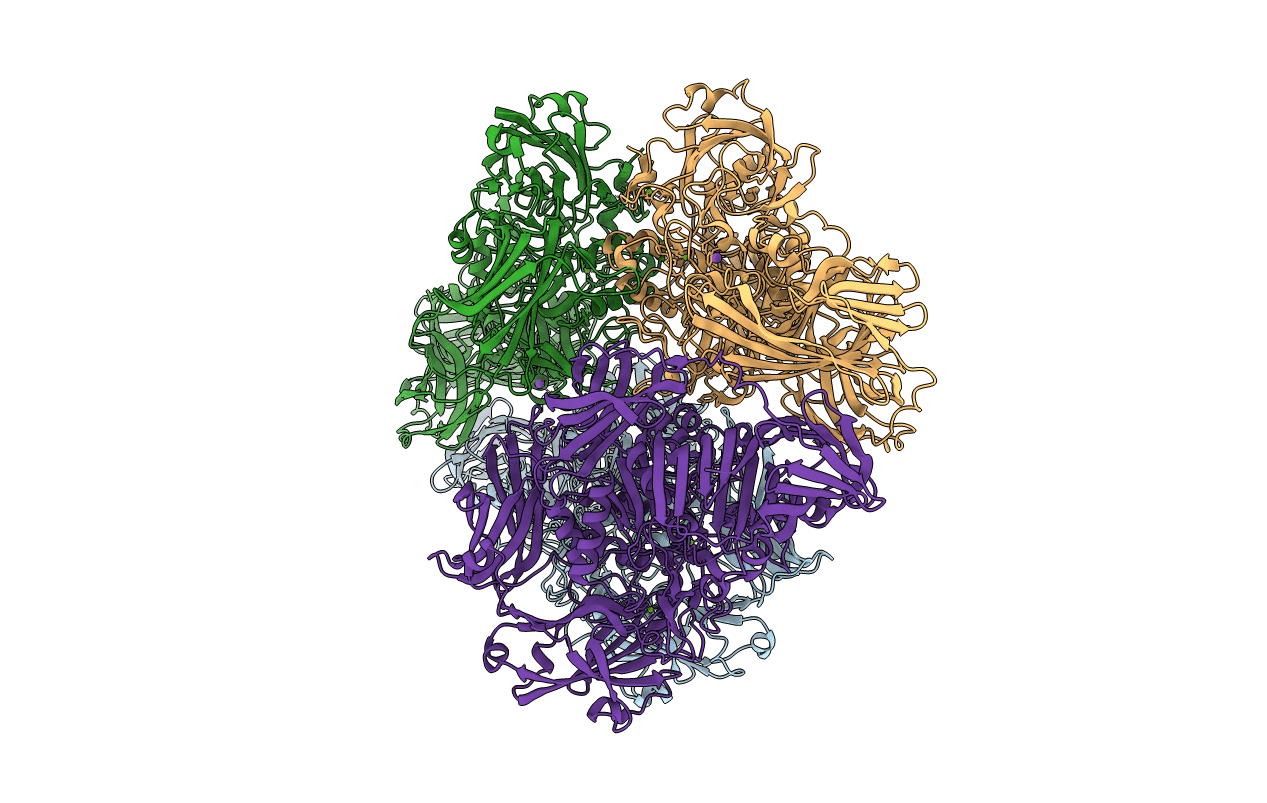
1HN1 image
Deposition Date 2000-12-05
Release Date 2001-12-12
Last Version Date 2023-08-09
Entry Detail
PDB ID:
1HN1
Keywords:
Title:
E. COLI (LAC Z) BETA-GALACTOSIDASE (ORTHORHOMBIC)
Biological Source:
Source Organism(s):
Escherichia coli (Taxon ID: 562)
Expression System(s):
Method Details:
Experimental Method:
Resolution:
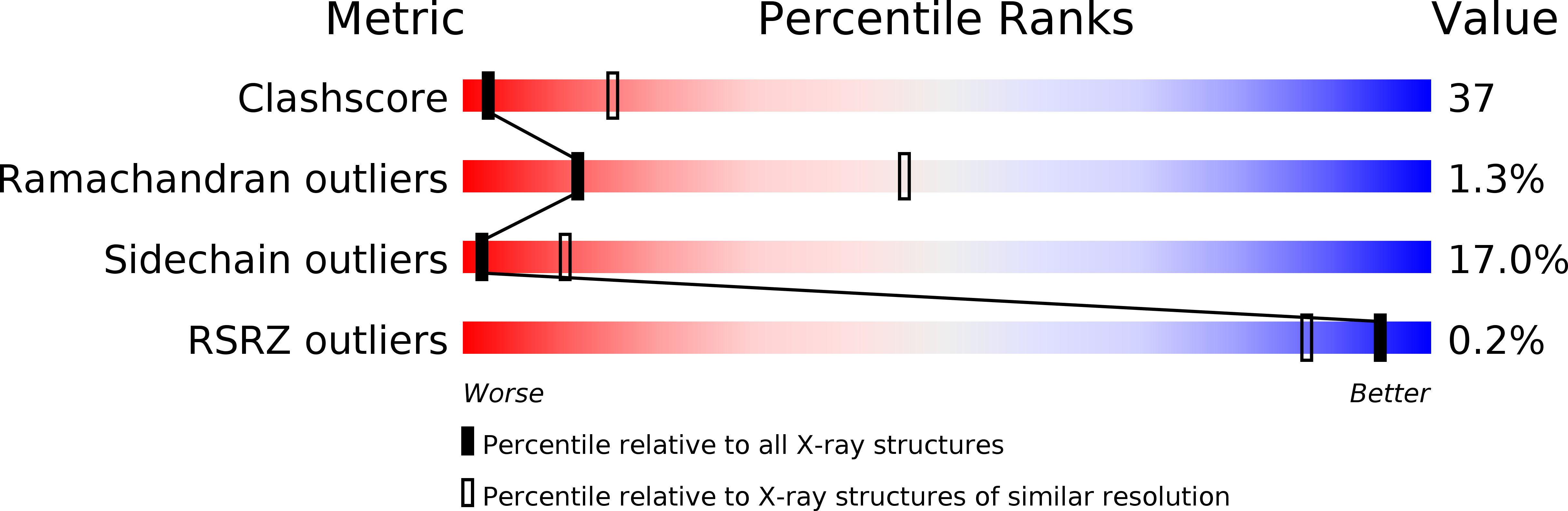
3.00 Å
R-Value Free:
0.29
R-Value Work:
0.14
Space Group:
P 21 21 21
Macromolecular Entities
Structures with similar UniProt ID
Protein Blast
Polymer Type:polypeptide(L)
Molecule:BETA-GALACTOSIDASE
Gene (Uniprot):lacZ
Chain IDs:A, B, C, D
Chain Length:1023
Number of Molecules:4
Biological Source:Escherichia coli
Primary Citation
Reversible lattice repacking illustrates the temperature dependence of macromolecular interactions.
J.Mol.Biol. 311 851 862 (2001)
PMID: 11518535 DOI: 10.1006/jmbi.2001.4891

Abstact

Flash-freezing, which has become routine in macromolecular X-ray crystallography, causes the crystal to contract substantially. In the case of Escherichia coli beta-galactosidase the changes are reversible and are shown to be due to lattice repacking. On cooling, the area of the protein surface involved in lattice contacts increases by 50 %. There are substantial alterations in intermolecular contacts, these changes being dominated by the long, polar side-chains. For entropic reasons such side-chains, as well as surface solvent molecules, tend to be somewhat disordered at room temperature but can form extensive hydrogen-bonded networks on cooling. Low-temperature density measurements suggest that, at least in some cases, the beneficial effect of cryosolvents may be due to a density increase on vitrification which reduces the volume of bulk solvent that needs to be expelled from the crystal. Analysis of beta-galactosidase and several other proteins suggests that both intramolecular and intermolecular contact interfaces can be perturbed by cryocooling but that the changes tend to be more dramatic in the latter case. The temperature-dependence of the intermolecular interactions suggests that caution may be necessary in interpreting protein-protein and protein-nucleic acid interactions based on low-temperature crystal structures.

Legend

Protein

Chemical

Disease

Primary Citation of related structures
Feedback Form
Name
Email
Institute
Feedback