1HM8 image
Deposition Date 2000-12-05
Release Date 2001-11-30
Last Version Date 2024-02-07
Entry Detail
PDB ID:
1HM8
Keywords:
Title:
CRYSTAL STRUCTURE OF S.PNEUMONIAE N-ACETYLGLUCOSAMINE-1-PHOSPHATE URIDYLTRANSFERASE, GLMU, BOUND TO ACETYL COENZYME A
Biological Source:
Source Organism(s):
Expression System(s):
Method Details:
Experimental Method:
Resolution:
2.50 Å
R-Value Free:
0.24
R-Value Work:
0.18
R-Value Observed:
0.18
Space Group:
H 3
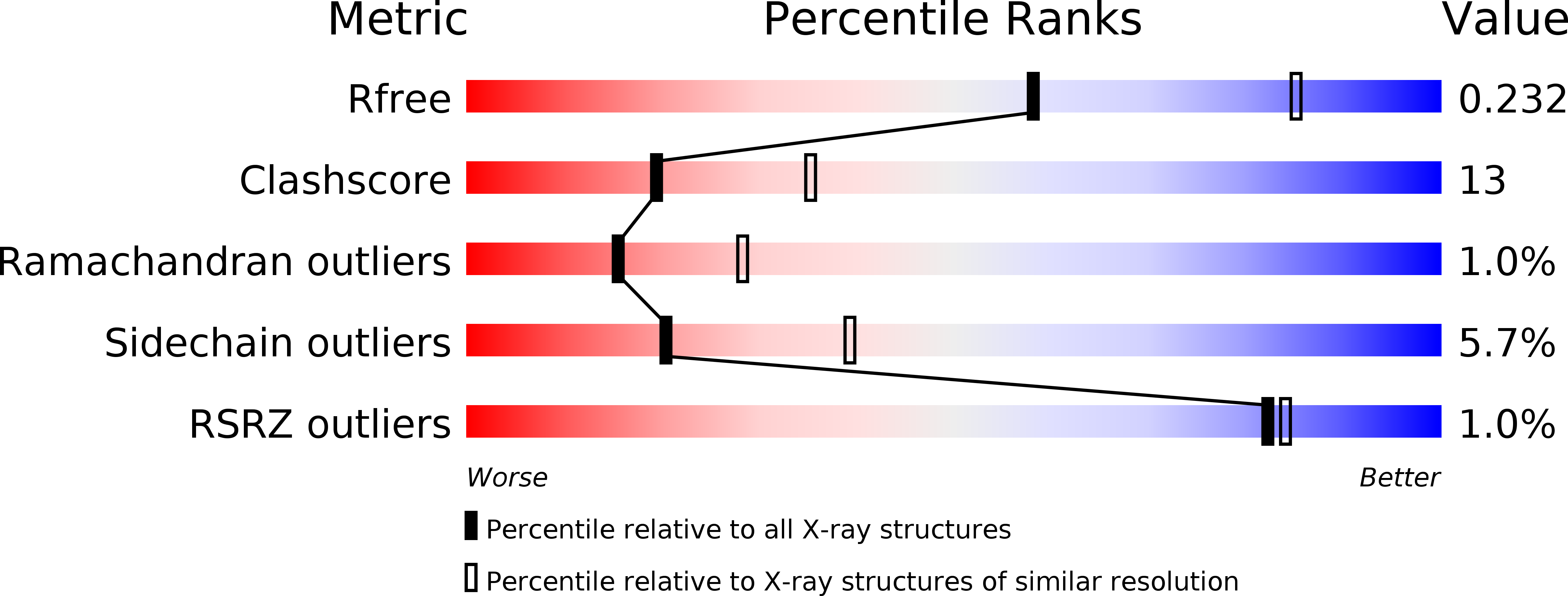
Macromolecular Entities
Structures with similar UniProt ID
Protein Blast
Polymer Type:polypeptide(L)
Molecule:UDP-N-ACETYLGLUCOSAMINE-1-PHOSPHATE URIDYLTRANSFERASE
Gene (Uniprot):glmU
Chain IDs:A, B
Chain Length:468
Number of Molecules:2
Biological Source:Streptococcus pneumoniae
Primary Citation
Crystal structure of Streptococcus pneumoniae N-acetylglucosamine-1-phosphate uridyltransferase bound to acetyl-coenzyme A reveals a novel active site architecture.
J.Biol.Chem. 276 11844 11851 (2001)
PMID: 11118459 DOI: 10.1074/jbc.M011225200

Abstact

The bifunctional bacterial enzyme N-acetyl-glucosamine-1-phosphate uridyltransferase (GlmU) catalyzes the two-step formation of UDP-GlcNAc, a fundamental precursor in bacterial cell wall biosynthesis. With the emergence of new resistance mechanisms against beta-lactam and glycopeptide antibiotics, the biosynthetic pathway of UDP-GlcNAc represents an attractive target for drug design of new antibacterial agents. The crystal structures of Streptococcus pneumoniae GlmU in unbound form, in complex with acetyl-coenzyme A (AcCoA) and in complex with both AcCoA and the end product UDP-GlcNAc, have been determined and refined to 2.3, 2.5, and 1.75 A, respectively. The S. pneumoniae GlmU molecule is organized in two separate domains connected via a long alpha-helical linker and associates as a trimer, with the 50-A-long left-handed beta-helix (LbetaH) C-terminal domains packed against each other in a parallel fashion and the C-terminal region extended far away from the LbetaH core and exchanged with the beta-helix from a neighboring subunit in the trimer. AcCoA binding induces the formation of a long and narrow tunnel, enclosed between two adjacent LbetaH domains and the interchanged C-terminal region of the third subunit, giving rise to an original active site architecture at the junction of three subunits.

Legend

Protein

Chemical

Disease

Primary Citation of related structures
Feedback Form
Name
Email
Institute
Feedback