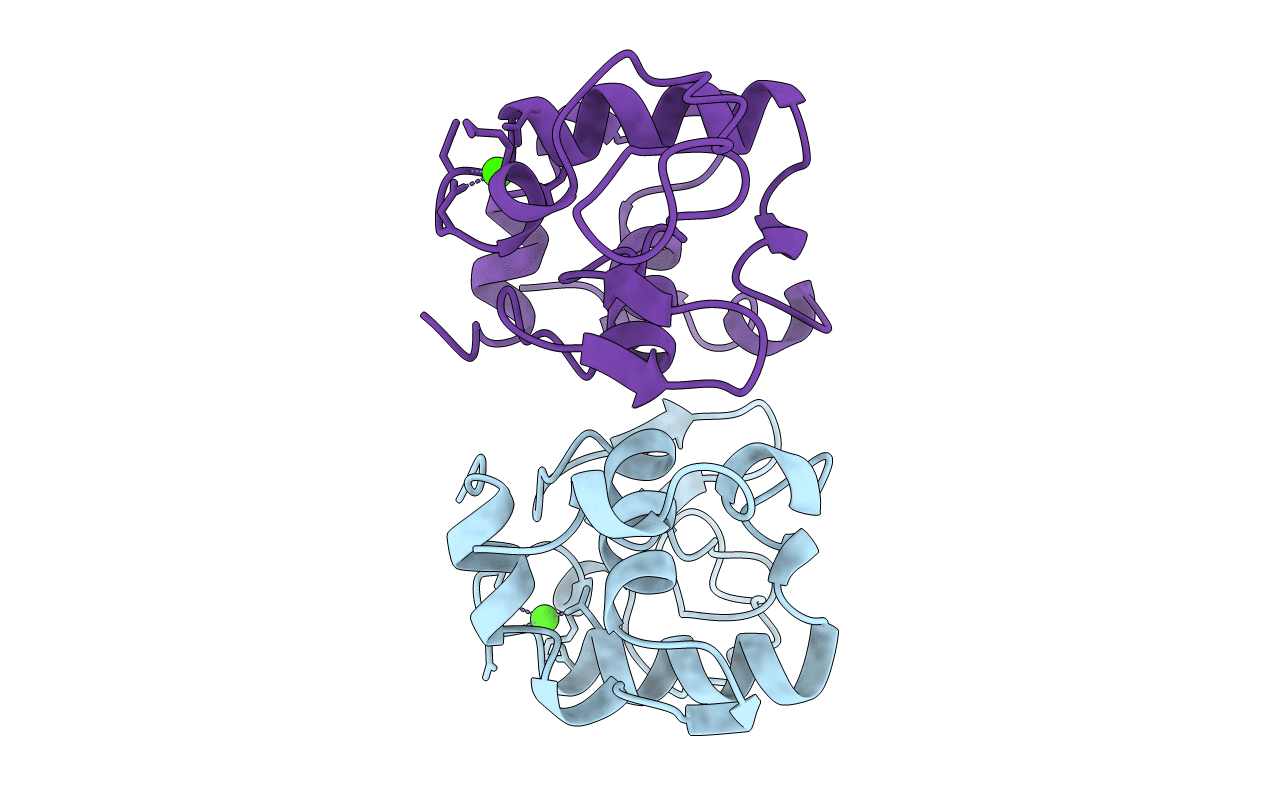
1HFY image
Deposition Date 1996-06-13
Release Date 1997-07-07
Last Version Date 2024-11-20
Entry Detail
PDB ID:
1HFY
Keywords:
Title:
ALPHA-LACTALBUMIN
Biological Source:
Source Organism:
Capra hircus (Taxon ID: 9925)
Method Details:
Experimental Method:
Resolution:
2.30 Å
R-Value Free:
0.27
R-Value Work:
0.19
R-Value Observed:
0.19
Space Group:
P 1 21 1
Macromolecular Entities
Structures with similar UniProt ID
Protein Blast
Polymer Type:polypeptide(L)
Molecule:ALPHA-LACTALBUMIN
Gene (Uniprot):LALBA
Chain IDs:A, B
Chain Length:123
Number of Molecules:2
Biological Source:Capra hircus
Ligand Molecules
Primary Citation
Crystal structures of guinea-pig, goat and bovine alpha-lactalbumin highlight the enhanced conformational flexibility of regions that are significant for its action in lactose synthase.
Structure 4 691 703 (1996)
PMID: 8805552 DOI: 10.1016/S0969-2126(96)00075-5

Abstact

BACKGROUND The regulation of milk lactose biosynthesis is highly dependent on the action of a specifier protein, alpha-lactalbumin (LA). Together with a glycosyltransferase, LA forms the enzyme complex lactose synthase. LA promotes the binding of glucose to the complex and facilitates the biosynthesis of lactose. To gain further insight into the molecular basis of LA function in lactose synthase we have determined the structures of three species variants of LA. RESULTS The crystal structures of guinea-pig, goat and a recombinant from of bovine LA have been determined using molecular replacement techniques. Overall, the structures are very similar and reflect their high degree of amino acid sequence identity (66-94%). Nonetheless, the structures show that a portion of the molecule (residues 105-110), known to be important for function, exhibits a variety of distinct conformers. This region lies adjacent to two residues (Phe31 and His32) that have been implicated in monosaccharide binding by lactose synthase and its conformation has significant effects on the environments of these functional groups. The crystal structures also demonstrate that residues currently implicated in LA's modulatory properties are located in a region of the structure that has relatively high thermal parameters and is therefore probably flexible in vivo. CONCLUSIONS LA's proposed interaction site for the catalytic component of the lactose synthase complex is primarily located in the flexible C-terminal portion of the molecule. This general observation implies that conformational adjustments may be important for the formation and function of lactose synthase.

Legend

Protein

Chemical

Disease

Primary Citation of related structures
Feedback Form
Name
Email
Institute
Feedback