1HEX image
Deposition Date 1994-09-09
Release Date 1994-12-20
Last Version Date 2024-02-07
Entry Detail
PDB ID:
1HEX
Keywords:
Title:
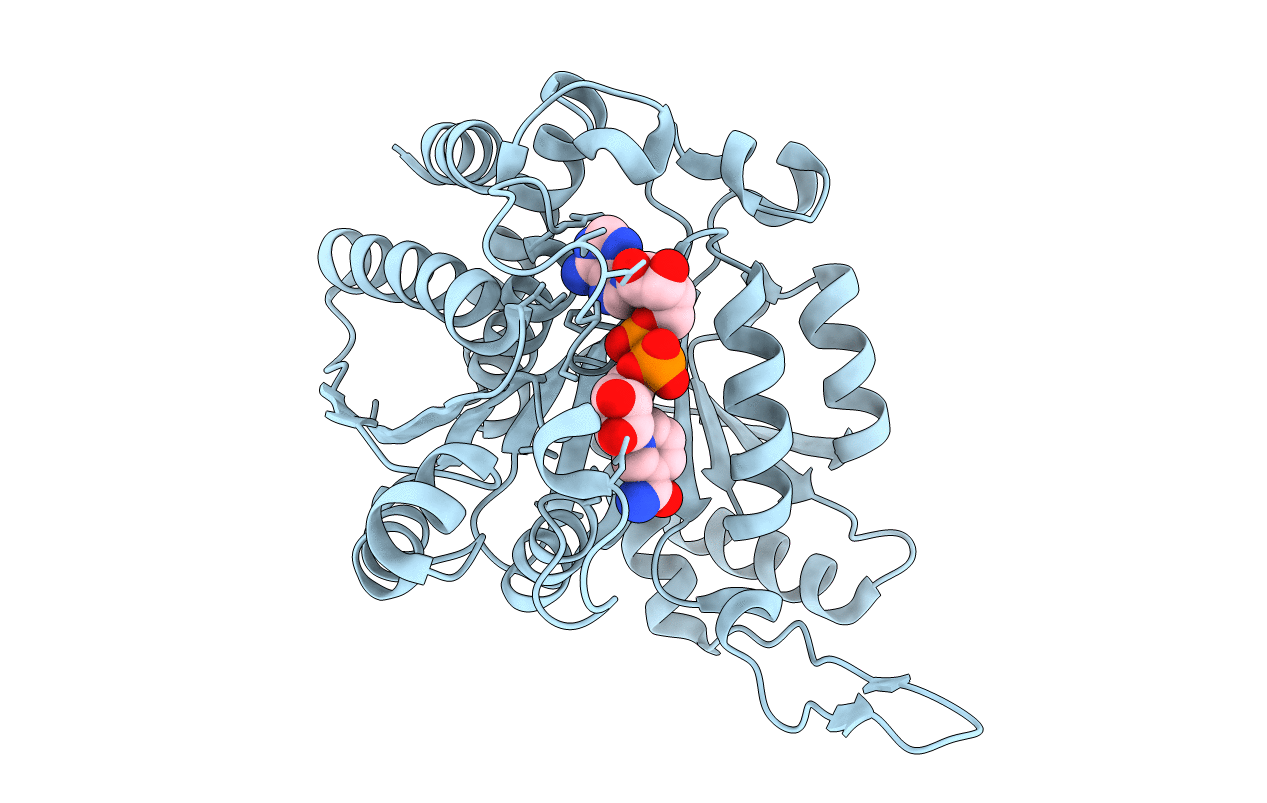
STRUCTURE OF 3-ISOPROPYLMALATE DEHYDROGENASE IN COMPLEX WITH NAD+: LIGAND-INDUCED LOOP-CLOSING AND MECHANISM FOR COFACTOR SPECIFICITY
Biological Source:
Source Organism:
Host Organism:
Method Details:
Experimental Method:
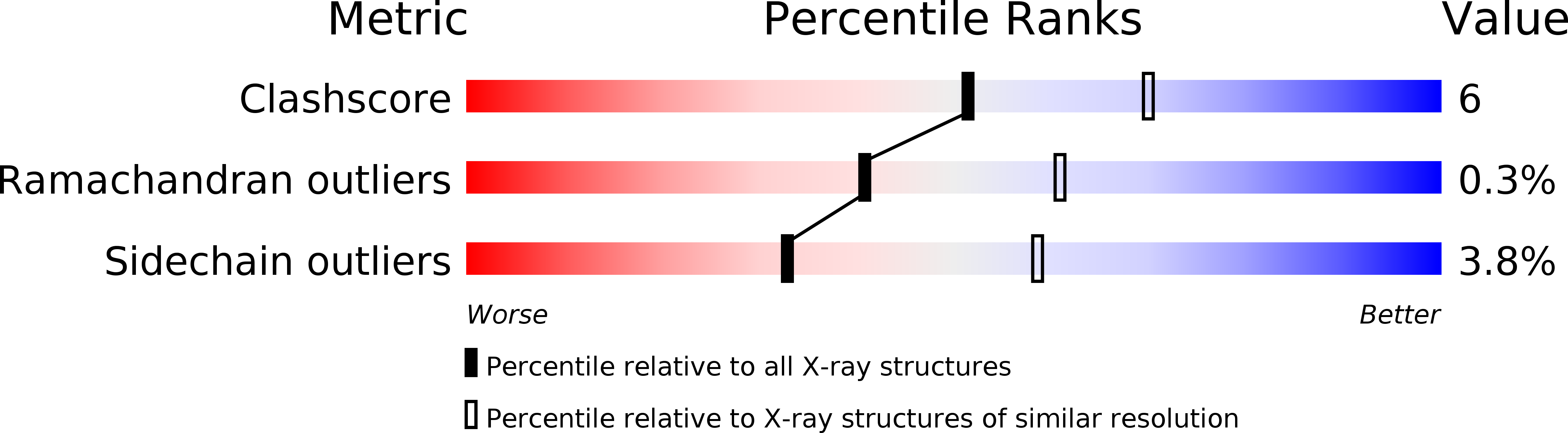
Resolution:
2.50 Å
R-Value Work:
0.18
R-Value Observed:
0.18
Space Group:
P 61 2 2
Macromolecular Entities
Structures with similar UniProt ID
Protein Blast
Polymer Type:polypeptide(L)
Molecule:3-ISOPROPYLMALATE DEHYDROGENASE
Gene (Uniprot):leuB
Chain IDs:A
Chain Length:345
Number of Molecules:1
Biological Source:Thermus thermophilus
Ligand Molecules
Primary Citation
Structure of 3-isopropylmalate dehydrogenase in complex with NAD+: ligand-induced loop closing and mechanism for cofactor specificity.
Structure 2 1007 1016 (1994)
PMID: 7881901 DOI: 10.1016/S0969-2126(94)00104-9

Abstact

BACKGROUND The leucine biosynthetic enzyme 3-isopropylmalate dehydrogenase (IMDH) belongs to a unique class of bifunctional decarboxylating dehydrogenases. The two best-known members of this family, IMDH and isocitrate dehydrogenase (IDH), share a common structural framework and catalytic mechanism but have different substrate and cofactor specificities. IMDH is NAD(+)-dependent, while IDHs occur in both NAD(+)-dependent and NADP(+)-dependent forms. RESULTS We have co-crystallized Thermus thermophilus IMDH with NAD+ and have determined the structure at 2.5 A resolution. NAD+ binds in an extended conformation. Comparisons with the structure in the absence of cofactor show that binding induces structural changes of up to 2.5 A in the five loops which form the dinucleotide-binding site. The adenine and diphosphate moieties of NAD+ are bound via interactions which are also present in the NADP(+)-IDH complex. Amino acids which interact with the NADP+ 2'-phosphate in IDH are substituted or absent in IMDH. The adenosine ribose forms two hydrogen bonds with Asp278, and the nicotinamide and nicotinamide ribose interact with Glu87 and Asp78, all unique to IMDH. CONCLUSIONS NAD+ binding induces a conformational transition in IMDH, resulting in a structure that is intermediate between the most 'open' and 'closed' decarboxylating dehydrogenase conformations. Physiological specificity of IMDH for NAD+ versus NADP+ can be explained by the unique interaction between Asp278 and the free 2'-hydroxyl of the NAD+ adenosine, discrimination against the presence of the 2'-phosphate by the negative charge on Asp278, and the absence of potential favorable interactions with the 2'-phosphate of NADP+.

Legend

Protein

Chemical

Disease

Primary Citation of related structures
Feedback Form
Name
Email
Institute
Feedback