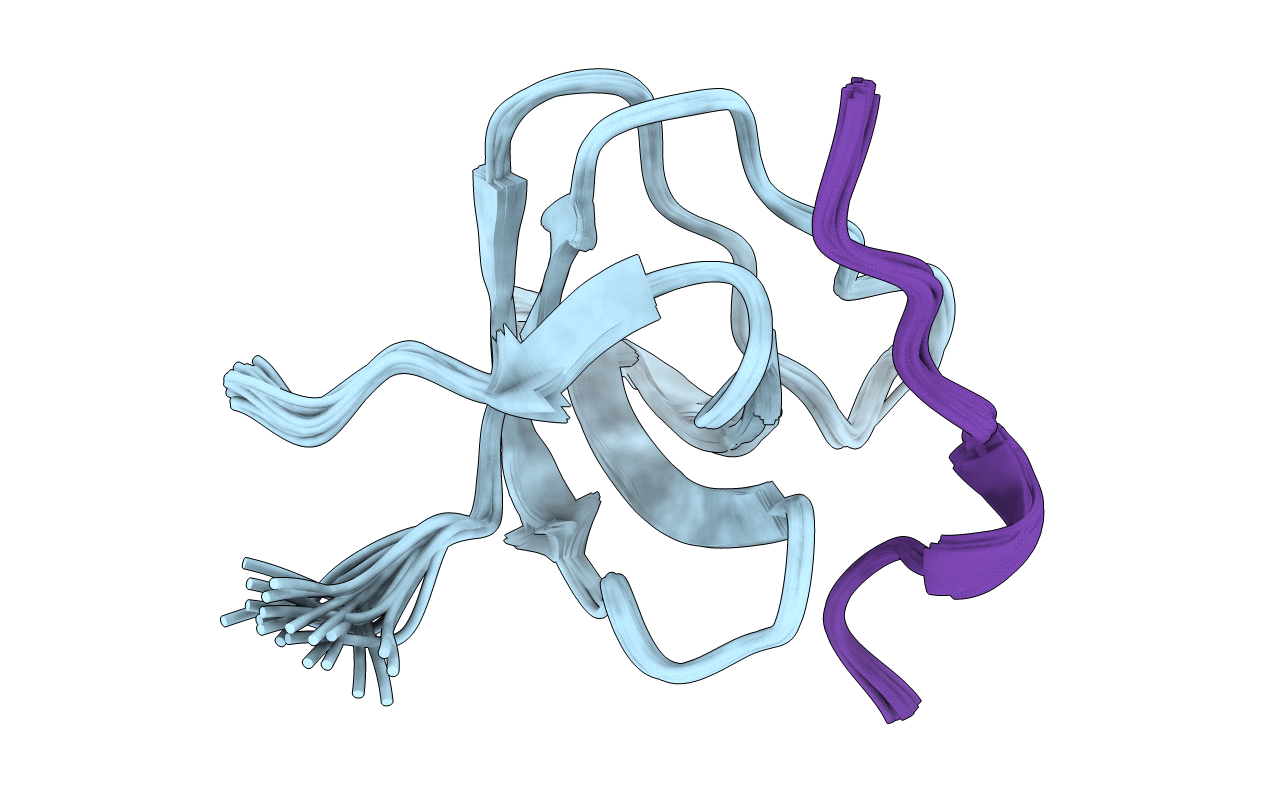
1H3H image
Deposition Date 2002-09-03
Release Date 2003-03-06
Last Version Date 2024-05-15
Entry Detail
PDB ID:
1H3H
Keywords:
Title:
Structural Basis for Specific Recognition of an RxxK-containing SLP-76 peptide by the Gads C-terminal SH3 domain
Biological Source:
Source Organism:
MUS MUSCULUS (Taxon ID: 10090)
HOMO SAPIENS (Taxon ID: 9606)
Host Organism:
Method Details:
Experimental Method:
Conformers Calculated:
100
Conformers Submitted:
20
Selection Criteria:
LOWEST ENERGY

Macromolecular Entities
Structures with similar UniProt ID
Protein Blast
Polymer Type:polypeptide(L)
Molecule:GRB2-RELATED ADAPTOR PROTEIN 2
Gene (Uniprot):Grap2
Chain IDs:A
Chain Length:60
Number of Molecules:1
Biological Source:MUS MUSCULUS
Structures with similar UniProt ID
Protein Blast
Polymer Type:polypeptide(L)
Molecule:LYMPHOCYTE CYTOSOLIC PROTEIN 2
Gene (Uniprot):LCP2
Chain IDs:B
Chain Length:11
Number of Molecules:1
Biological Source:HOMO SAPIENS
Ligand Molecules
Primary Citation
Structural Basis for Specific Binding of the Gads SH3 Domain to an Rxxk Motif-Containing Slp-76 Peptide: A Novel Mode of Peptide Recognition
Mol.Cell 11 471 ? (2003)
PMID: 12620234 DOI: 10.1016/S1097-2765(03)00046-7

Abstact

The SH3 domain, which normally recognizes proline-rich sequences, has the potential to bind motifs with an RxxK consensus. To explore this novel specificity, we have determined the solution structure of the Gads T cell adaptor C-terminal SH3 domain in complex with an RSTK-containing peptide, representing its physiological binding site on the SLP-76 docking protein. The SLP-76 peptide engages four distinct binding pockets on the surface of the Gads SH3 domain and upon binding adopts a unique structure characterized by a right-handed 3(10) helix at the RSTK locus, in contrast to the left-handed polyproline type II helix formed by canonical proline-rich SH3 ligands. The structure, and supporting mutagenesis and peptide binding data, reveal a novel mode of ligand recognition by SH3 domains.

Legend

Protein

Chemical

Disease

Primary Citation of related structures
Feedback Form
Name
Email
Institute
Feedback