1GXJ image
Deposition Date 2002-04-07
Release Date 2002-04-29
Last Version Date 2024-05-08
Entry Detail
PDB ID:
1GXJ
Title:
SMC hinge domain from T. maritima w/o coiled coil
Biological Source:
Source Organism:
Method Details:
Experimental Method:
Resolution:
2.00 Å
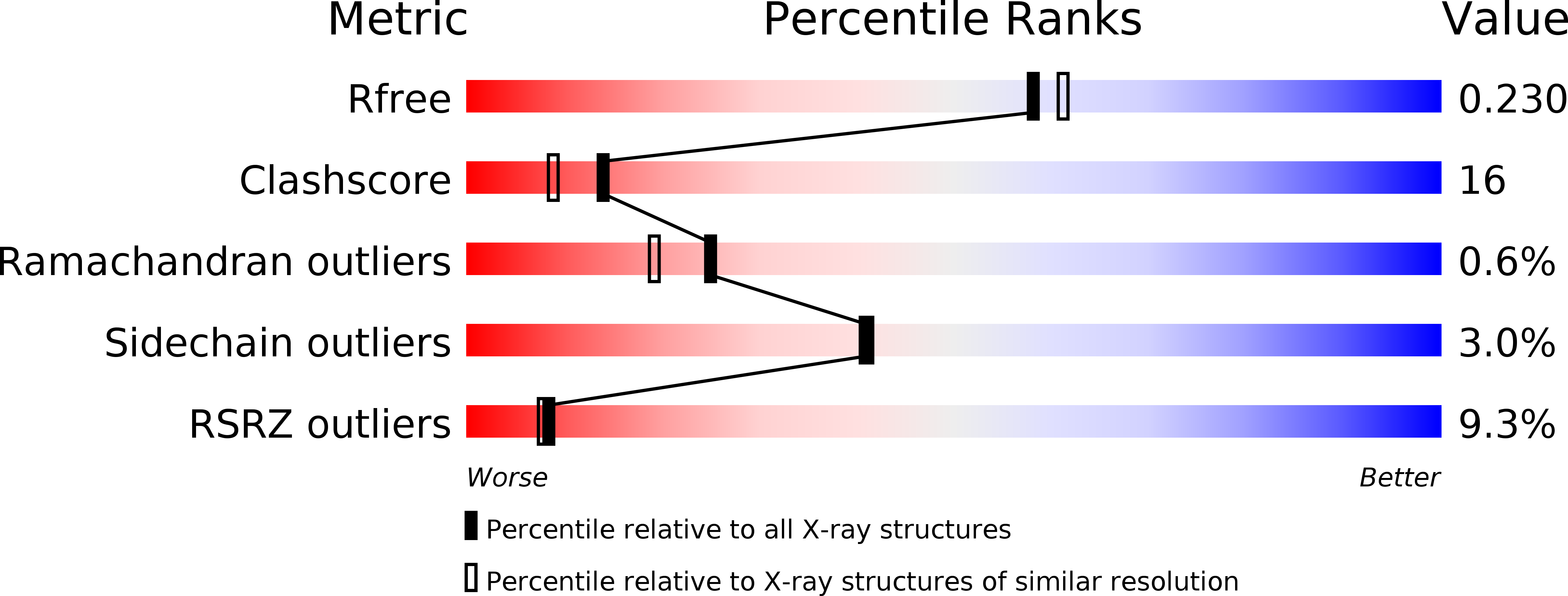
R-Value Free:
0.26
R-Value Work:
0.22
R-Value Observed:
0.22
Space Group:
P 1 21 1
Macromolecular Entities
Structures with similar UniProt ID
Protein Blast
Polymer Type:polypeptide(L)
Molecule:CHROMOSOME SEGREGATION SMC PROTEIN
Gene (Uniprot):smc
Chain IDs:A, B
Chain Length:186
Number of Molecules:2
Biological Source:THERMOTOGA MARITIMA
Primary Citation
Molecular Architecture of Smc Proteins and the Yeast Cohesin Complex
Mol.Cell 9 773 ? (2002)
PMID: 11983169 DOI: 10.1016/S1097-2765(02)00515-4

Abstact

Sister chromatids are held together by the multisubunit cohesin complex, which contains two SMC (Smc1 and Smc3) and two non-SMC (Scc1 and Scc3) proteins. The crystal structure of a bacterial SMC "hinge" region along with EM studies and biochemical experiments on yeast Smc1 and Smc3 proteins show that SMC protamers fold up individually into rod-shaped molecules. A 45 nm long intramolecular coiled coil separates the hinge region from the ATPase-containing "head" domain. Smc1 and Smc3 bind to each other via heterotypic interactions between their hinges to form a V-shaped heterodimer. The two heads of the V-shaped dimer are connected by different ends of the cleavable Scc1 subunit. Cohesin therefore forms a large proteinaceous loop within which sister chromatids might be entrapped after DNA replication.

Legend

Protein

Chemical

Disease

Primary Citation of related structures
Feedback Form
Name
Email
Institute
Feedback