1GPP image
Deposition Date 2001-11-07
Release Date 2002-09-19
Last Version Date 2023-12-13
Entry Detail
PDB ID:
1GPP
Keywords:
Title:
Crystal structure of the S.cerevisiae Homing Endonuclease PI-SceI Domain I
Biological Source:
Source Organism:
Host Organism:
Method Details:
Experimental Method:
Resolution:
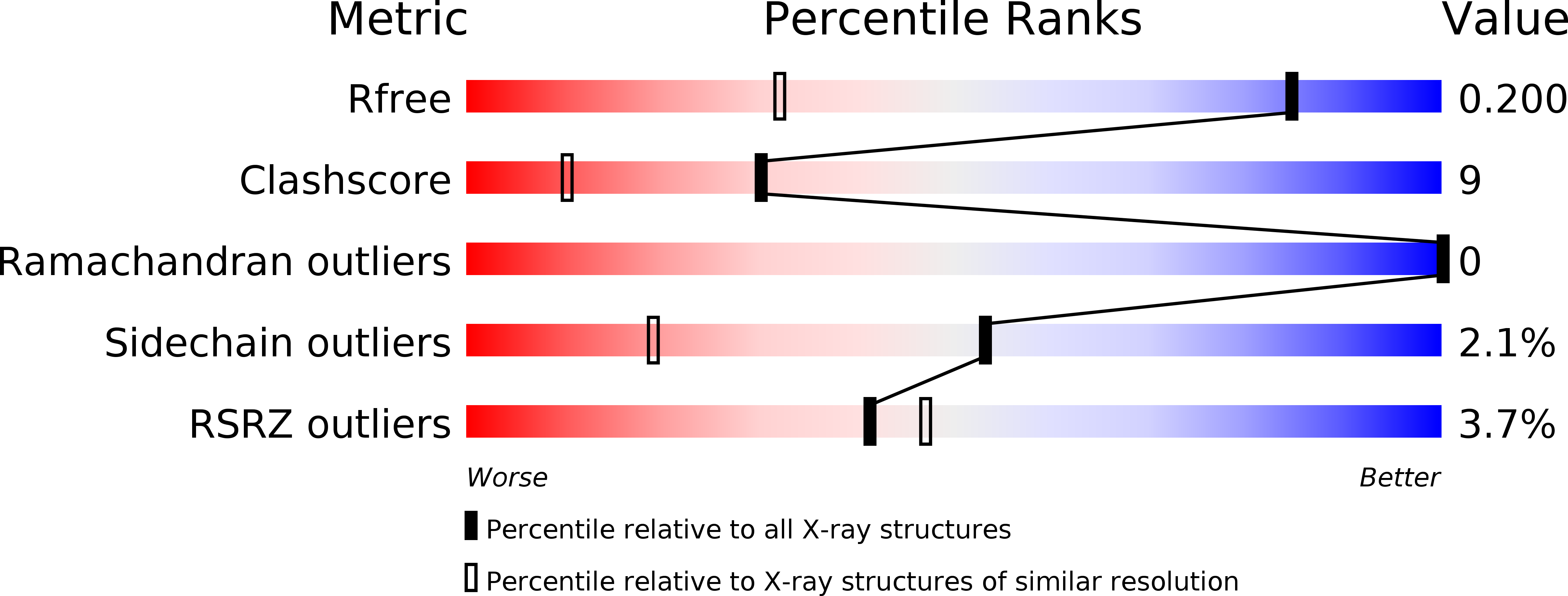
1.35 Å
R-Value Free:
0.18
R-Value Work:
0.15
R-Value Observed:
0.15
Space Group:
C 1 2 1
Macromolecular Entities
Structures with similar UniProt ID
Protein Blast
Polymer Type:polypeptide(L)
Molecule:ENDONUCLEASE PI-SCEI
Gene (Uniprot):VMA1
Mutagens:YES
Chain IDs:A
Chain Length:237
Number of Molecules:1
Biological Source:SACCHAROMYCES CEREVISIAE
Primary Citation
High Resolution Crystal Structure of Domain I of the Saccharomyces Cerevisiae Homing Endonuclease Pi-Scei
Nucleic Acids Res. 30 3962 ? (2002)
PMID: 12235380 DOI: 10.1093/NAR/GKF523

Abstact

The homing endonuclease PI-SceI from Saccharo myces cerevisiae consists of two domains. The protein splicing domain I catalyzes the excision of the mature endonuclease (intein) from a precursor protein and the religation of the flanking amino acid sequences (exteins) to a functional protein. Furthermore, domain I is involved in binding and recognition of the specific DNA substrate. Domain II of PI-SceI, the endonuclease domain, which is structurally homologous to other homing endonucleases from the LAGLIDADG family, harbors the endonucleolytic center of PI-SceI, which in vivo initiates the homing process by introducing a double-strand cut in the approximately 35 bp recognition sequence. At 1.35 A resolution, the crystal structure of PI-SceI domain I provides a detailed view of the part of the protein that is responsible for tight and specific DNA binding. A geometry-based docking of the 75 degrees bent recognition sequence to the full-length protein implies a conformational change or hinge movement of a subdomain of domain I, the tongs part, that is predicted to reach into the major groove near base pairs +16 to +18.

Legend

Protein

Chemical

Disease

Primary Citation of related structures
Feedback Form
Name
Email
Institute
Feedback