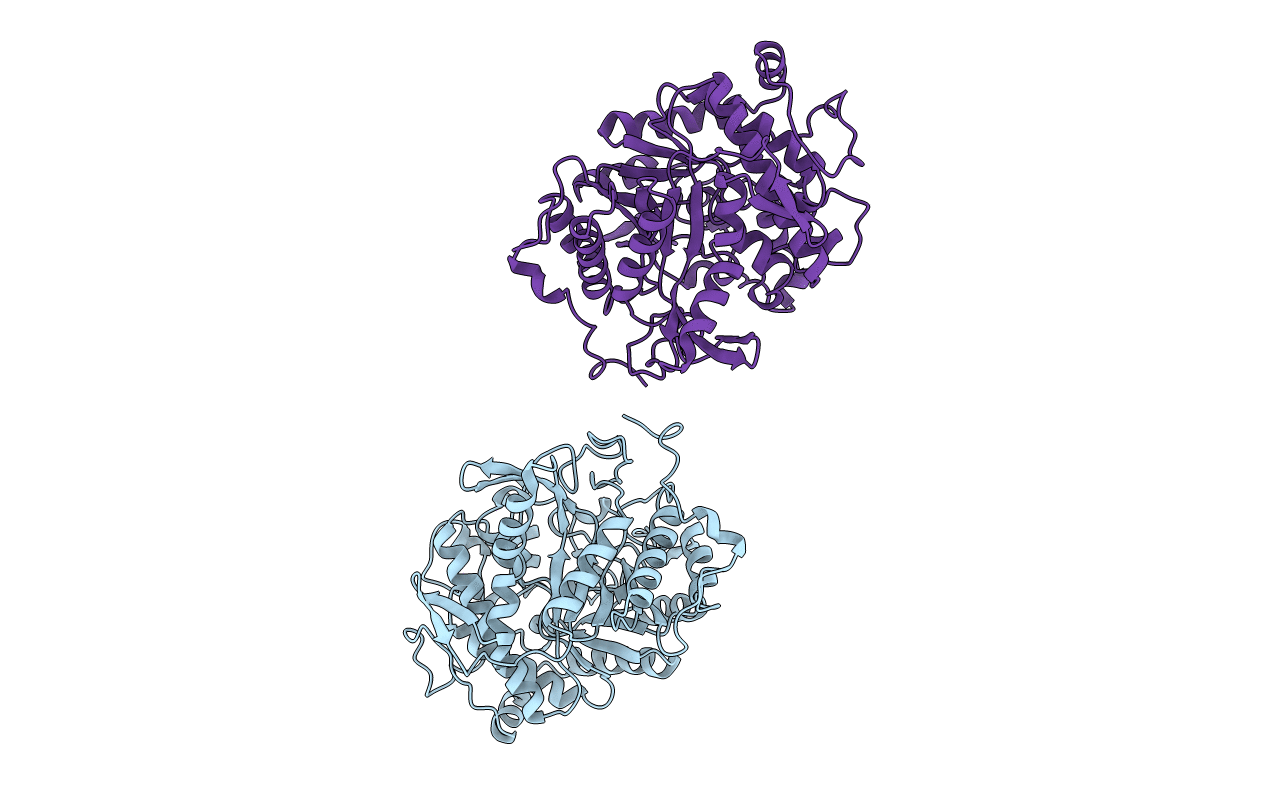
1GOW image
Deposition Date 1996-09-19
Release Date 1997-08-20
Last Version Date 2024-02-07
Entry Detail
PDB ID:
1GOW
Keywords:
Title:
BETA-GLYCOSIDASE FROM SULFOLOBUS SOLFATARICUS
Biological Source:
Source Organism:
Method Details:
Experimental Method:
Resolution:
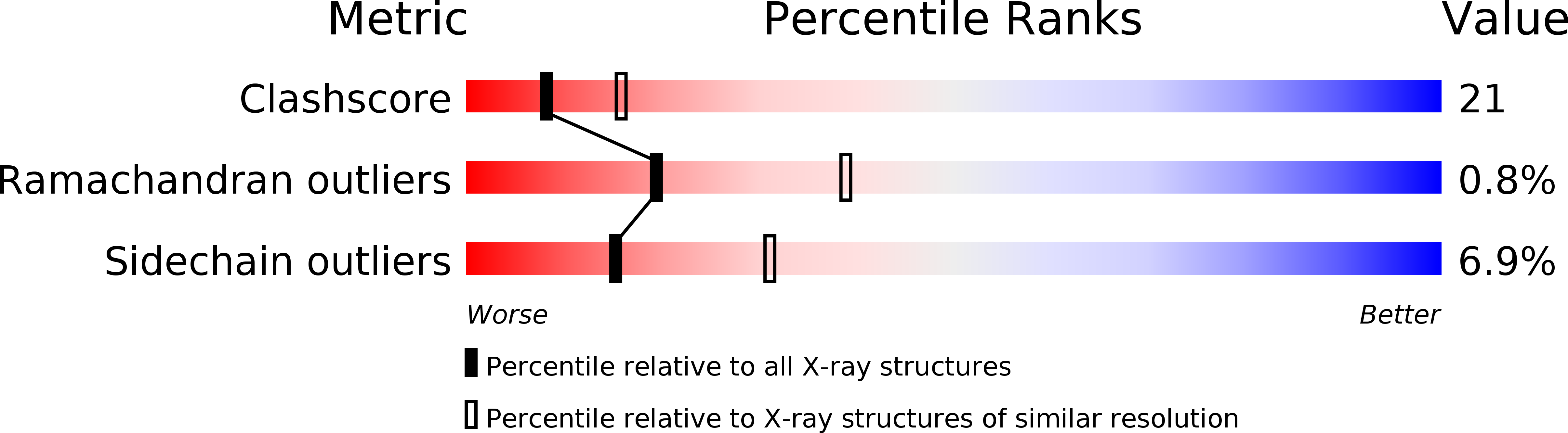
2.60 Å
R-Value Free:
0.25
R-Value Work:
0.21
R-Value Observed:
0.21
Space Group:
P 31 2 1
Macromolecular Entities
Structures with similar UniProt ID
Protein Blast
Polymer Type:polypeptide(L)
Molecule:BETA-GLYCOSIDASE
Gene (Uniprot):lacS
Chain IDs:A, B
Chain Length:489
Number of Molecules:2
Biological Source:Sulfolobus solfataricus
Primary Citation
Crystal structure of the beta-glycosidase from the hyperthermophilic archeon Sulfolobus solfataricus: resilience as a key factor in thermostability.
J.Mol.Biol. 271 789 802 (1997)
PMID: 9299327 DOI: 10.1006/jmbi.1997.1215

Abstact

Enzymes from hyperthermophilic organisms must operate at temperatures which rapidly denature proteins from mesophiles. The structural basis of this thermostability is still poorly understood. Towards a further understanding of hyperthermostability, we have determined the crystal structure of the beta-glycosidase (clan GH-1A, family 1) from the hyperthermophilic archaeon Sulfolobus solfataricus at 2.6 A resolution. The enzyme is a tetramer with subunit molecular mass at 60 kDa, and crystallises with half of the tetramer in the asymmetric unit. The structure is a (betaalpha)8 barrel, but with substantial elaborations between the beta-strands and alpha-helices in each repeat. The active site occurs at the centre of the top face of the barrel and is connected to the surface by a radial channel which becomes a blind-ended tunnel in the tetramer, and probably acts as the binding site for extended oligosaccharide substrates. Analysis of the structure reveals two features which differ significantly from mesophile proteins; (1) an unusually large proportion of surface ion-pairs involved in networks that cross-link sequentially separate structures on the protein surface, and (2) an unusually large number of solvent molecules buried in hydrophilic cavities between sequentially separate structures in the protein core. These factors suggest a model for hyperthermostability via resilience rather than rigidity.

Legend

Protein

Chemical

Disease

Primary Citation of related structures
Feedback Form
Name
Email
Institute
Feedback