1GKK image
Deposition Date 2001-08-15
Release Date 2001-12-13
Last Version Date 2024-11-13
Entry Detail
PDB ID:
1GKK
Keywords:
Title:
Feruloyl esterase domain of XynY from clostridium thermocellum
Biological Source:
Source Organism:
Host Organism:
Method Details:
Experimental Method:
Resolution:
1.60 Å
R-Value Free:
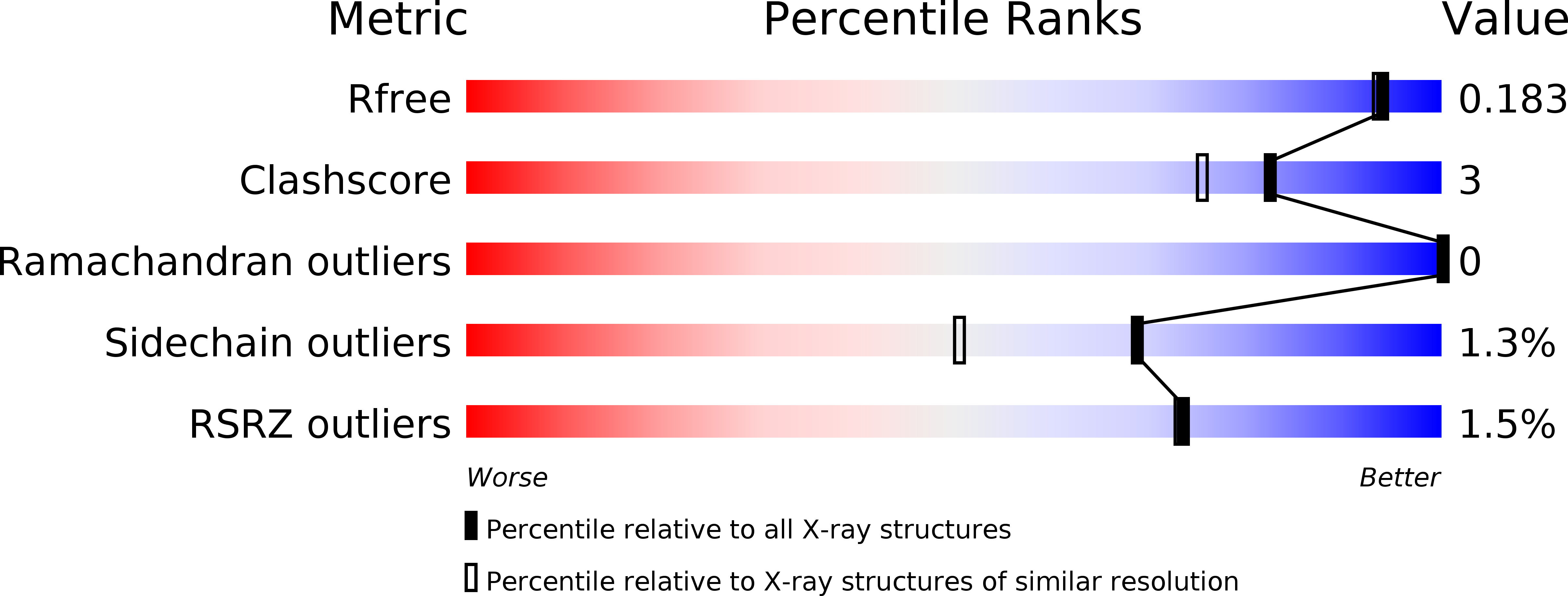
0.17
R-Value Work:
0.15
R-Value Observed:
0.15
Space Group:
P 21 21 21
Macromolecular Entities
Structures with similar UniProt ID
Protein Blast
Polymer Type:polypeptide(L)
Molecule:ENDO-1,4-BETA-XYLANASE Y
Gene (Uniprot):xynY
Chain IDs:A, B
Chain Length:297
Number of Molecules:2
Biological Source:CLOSTRIDIUM THERMOCELLUM
Modified Residue
Compound ID Chain ID Parent Comp ID Details 2D Image
MSE A MET SELENOMETHIONINE
SEP A SER PHOSPHOSERINE
Primary Citation
The Structure of the Feruloyl Esterase Module of Xylanase 10B from Clostridium Thermocellum Provides Insights Into Substrate Recognition
Structure 9 1183 ? (2001)
PMID: 11738044 DOI: 10.1016/S0969-2126(01)00684-0

Abstact

BACKGROUND: Degradation of the plant cell wall requires the synergistic action of a consortium of predominantly modular enzymes. In Clostridiae, these biocatalysts are organized into a supramolecular assembly termed a "cellulosome." This multienzyme complex possesses, in addition to its well-described cellulolytic activity, an apparatus specific for xylan degradation. Cinnamic acid esterases hydrolyze the ferulate groups involved in the crosslinking of arabinoxylans to lignin and thus play a key role in the degradation of the plant cell wall in addition to having promising industrial and medical applications. RESULTS: We have cloned and overexpressed the feruloyl esterase module from a 5 domain xylanase, Xyn10B from Clostridium thermocellum. The native structure at 1.6 A resolution has been solved with selenomethionine multiple wavelength anomalous dispersion and refined to a final R(free) of 17.8%. The structure of a hydrolytically inactive mutant, S954A, in complex with the reaction product ferulic acid has been refined at a resolution of 1.4 A with an R(free) of 16.0%. CONCLUSIONS: The C. thermocellum Xyn10B ferulic acid esterase displays the alpha/beta-hydrolase fold and possesses a classical Ser-His-Asp catalytic triad. Ferulate esterases are characterized by their specificity, and the active center reveals the binding site for ferulic acid and related compounds. Ferulate binds in a small surface depression that possesses specificity determinants for both the methoxy and hydroxyl ring substituents of the substrate. There appears to be a lack of specificity for the xylan backbone, which may reflect the intrinsic chemical heterogeneity of the natural substrate.

Legend

Protein

Chemical

Disease

Primary Citation of related structures
Feedback Form
Name
Email
Institute
Feedback