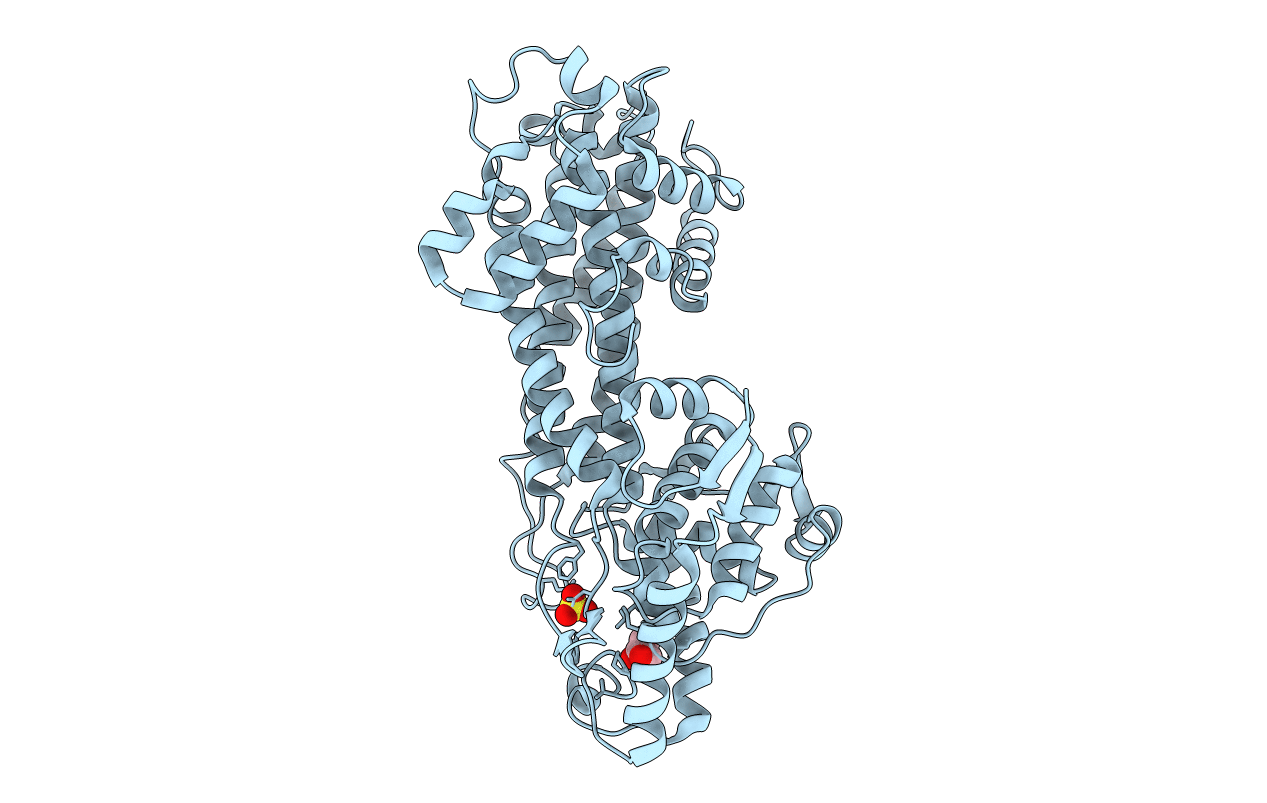
1GKJ image
Deposition Date 2001-08-15
Release Date 2002-04-05
Last Version Date 2024-11-13
Entry Detail
PDB ID:
1GKJ
Keywords:
Title:
Histidine Ammonia-Lyase (HAL) Mutant Y280F from Pseudomonas putida
Biological Source:
Source Organism:
Method Details:
Experimental Method:
Resolution:
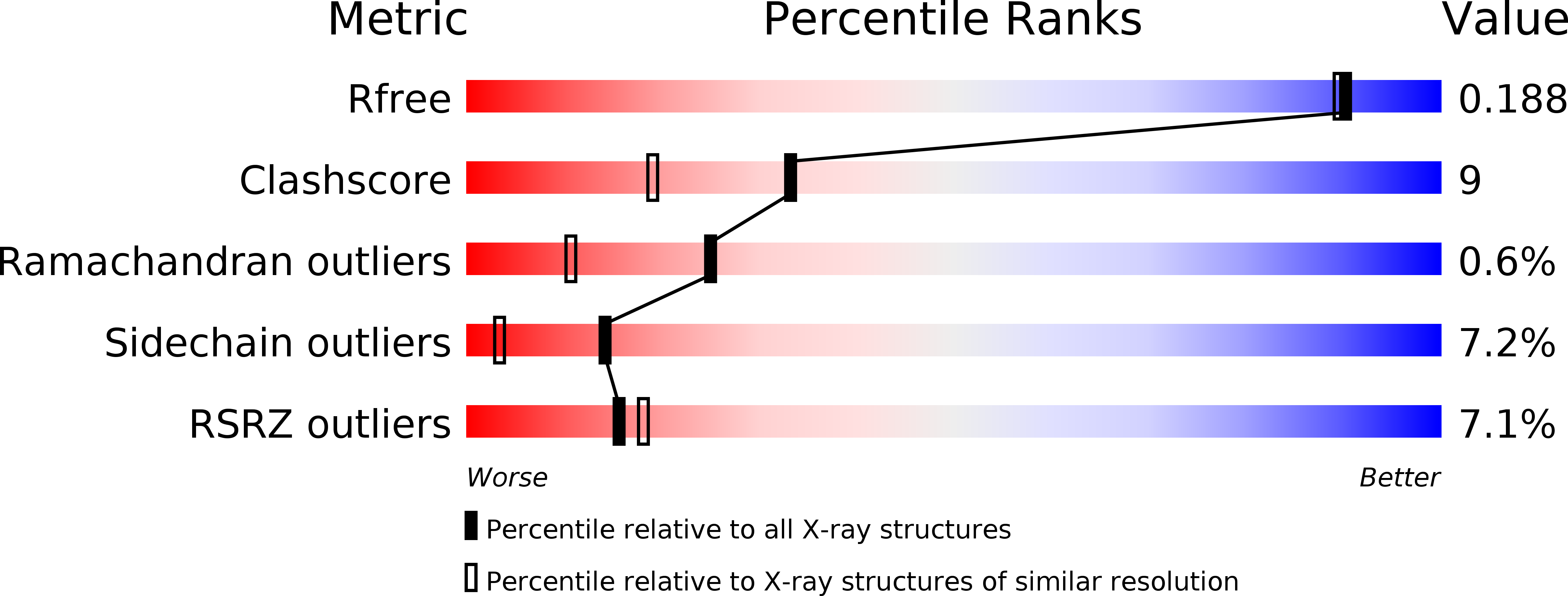
1.70 Å
R-Value Free:
0.23
R-Value Observed:
0.19
Space Group:
I 2 2 2
Macromolecular Entities
Structures with similar UniProt ID
Protein Blast
Polymer Type:polypeptide(L)
Molecule:HISTIDINE AMMONIA-LYASE
Gene (Uniprot):hutH
Mutagens:YES
Chain IDs:A
Chain Length:509
Number of Molecules:1
Biological Source:PSEUDOMONAS PUTIDA
Modified Residue
Compound ID Chain ID Parent Comp ID Details 2D Image
MDO A ALA ?
Primary Citation
Structures of Two Histidine Ammonia-Lyase Modifications and Implications for the Catalytic Mechanism
Eur.J.Biochem. 269 1790 1797 (2002)
PMID: 11895450 DOI: 10.1046/J.1432-1327.2002.02827.X

Abstact

Histidine ammonia-lyase (EC 4.3.1.3) catalyzes the nonoxidative elimination of the alpha-amino group of histidine using a 4-methylidene-imidazole-5-one (MIO), which is formed autocatalytically from the internal peptide segment 142Ala-Ser-Gly. The structure of the enzyme inhibited by a reaction with l-cysteine was established at the very high resolution of 1.0 A. Five active center mutants were produced and their catalytic activities were measured. Among them, mutant Tyr280-->Phe could be crystallized and its structure could be determined at 1.7 A resolution. It contains a planar sp2-hybridized 144-N atom of MIO, in contrast to the pyramidal sp3-hybridized 144-N of the wild-type. With the planar 144-N atom, MIO assumes the conformation of a putative intermediate aromatic state of the reaction, demonstrating that the conformational barrier between aromatic and wild-type states is very low. The data led to a new proposal for the geometry for the catalyzed reaction, which also applies to the closely related phenylalanine ammonia-lyase (EC 4.3.1.5). Moreover, it suggested an intermediate binding site for the released ammonia.

Legend

Protein

Chemical

Disease

Primary Citation of related structures
Feedback Form
Name
Email
Institute
Feedback