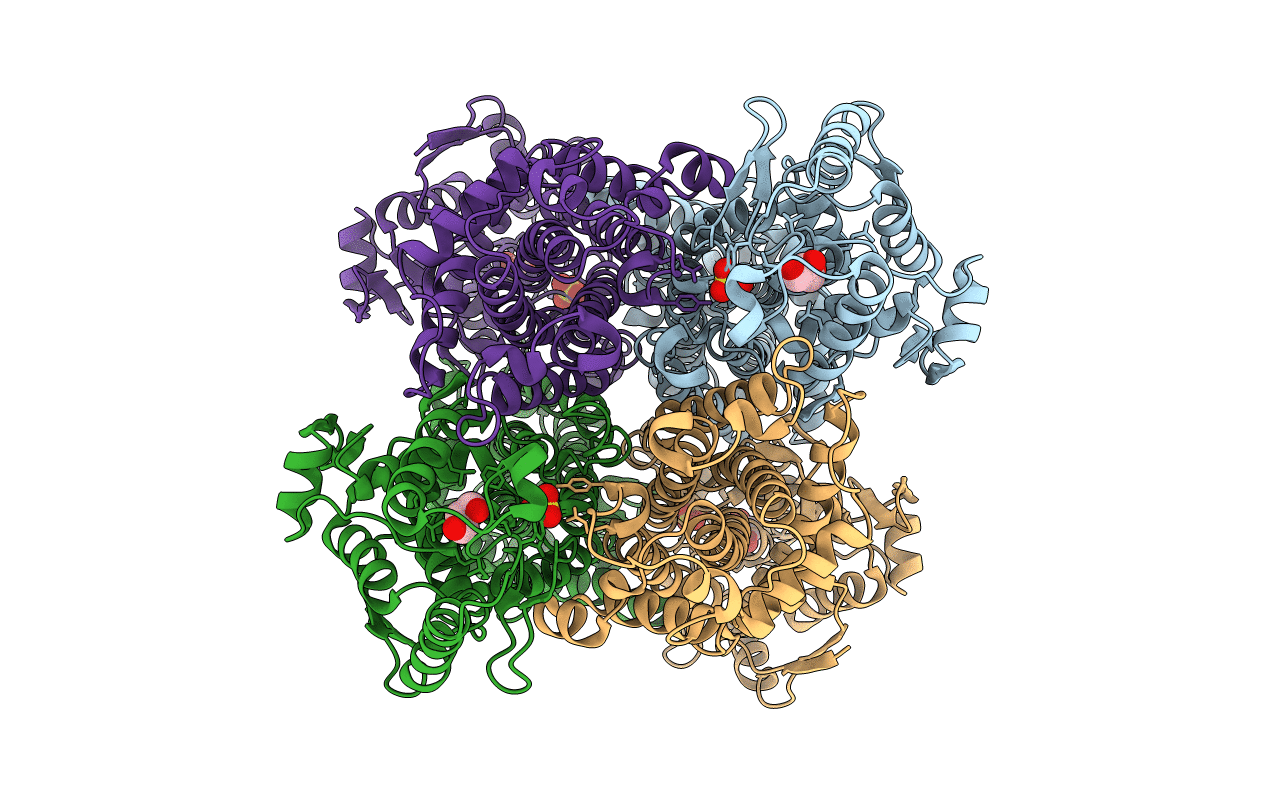
1GK2 image
Deposition Date 2001-08-07
Release Date 2002-02-21
Last Version Date 2024-05-08
Entry Detail
PDB ID:
1GK2
Keywords:
Title:
Histidine Ammonia-Lyase (HAL) Mutant F329G from Pseudomonas putida
Biological Source:
Source Organism:
Host Organism:
Method Details:
Experimental Method:
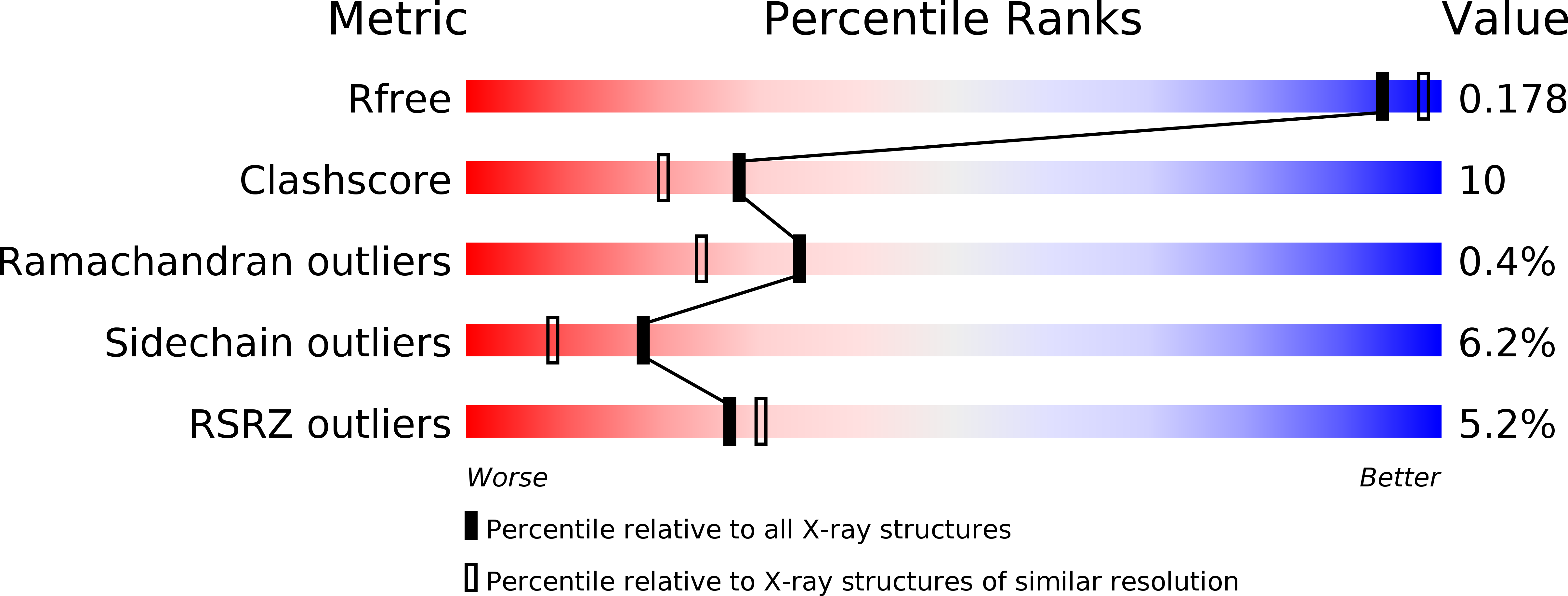
Resolution:
1.90 Å
R-Value Free:
0.22
R-Value Observed:
0.17
Space Group:
P 1 21 1
Macromolecular Entities
Structures with similar UniProt ID
Protein Blast
Polymer Type:polypeptide(L)
Molecule:HISTIDINE AMMONIA-LYASE
Gene (Uniprot):hutH
Mutagens:YES
Chain IDs:A, B, C, D
Chain Length:509
Number of Molecules:4
Biological Source:PSEUDOMONAS PUTIDA
Primary Citation
Autocatalytic Peptide Cyclization During Chain Folding of Histidine Ammonia-Lyase.
Structure 10 61 67 (2002)
PMID: 11796111 DOI: 10.1016/S0969-2126(01)00692-X

Abstact

Histidine ammonia-lyase requires a 4-methylidene-imidazole-5-one group (MIO) that is produced autocatalytically by a cyclization and dehydration step in a 3-residue loop of the polypeptide. The crystal structures of three mutants have been established. Two mutants were inactive and failed to form MIO, but remained unchanged elsewhere. The third mutant showed very low activity and formed MIO, although it differed from an MIO-less mutant only by an additional 329-C(beta) atom. This atom forms one constraint during MIO formation, the other being the strongly connected Asp145. An exploration of the conformational space of the MIO-forming loop showed that the cyclization is probably enforced by a mechanic compression in a late stage of chain folding and is catalyzed by a well-connected internal water molecule. The cyclization of the respective 3-residue loop of green fluorescent protein is likely to occur in a similar reaction.

Legend

Protein

Chemical

Disease

Primary Citation of related structures
Feedback Form
Name
Email
Institute
Feedback