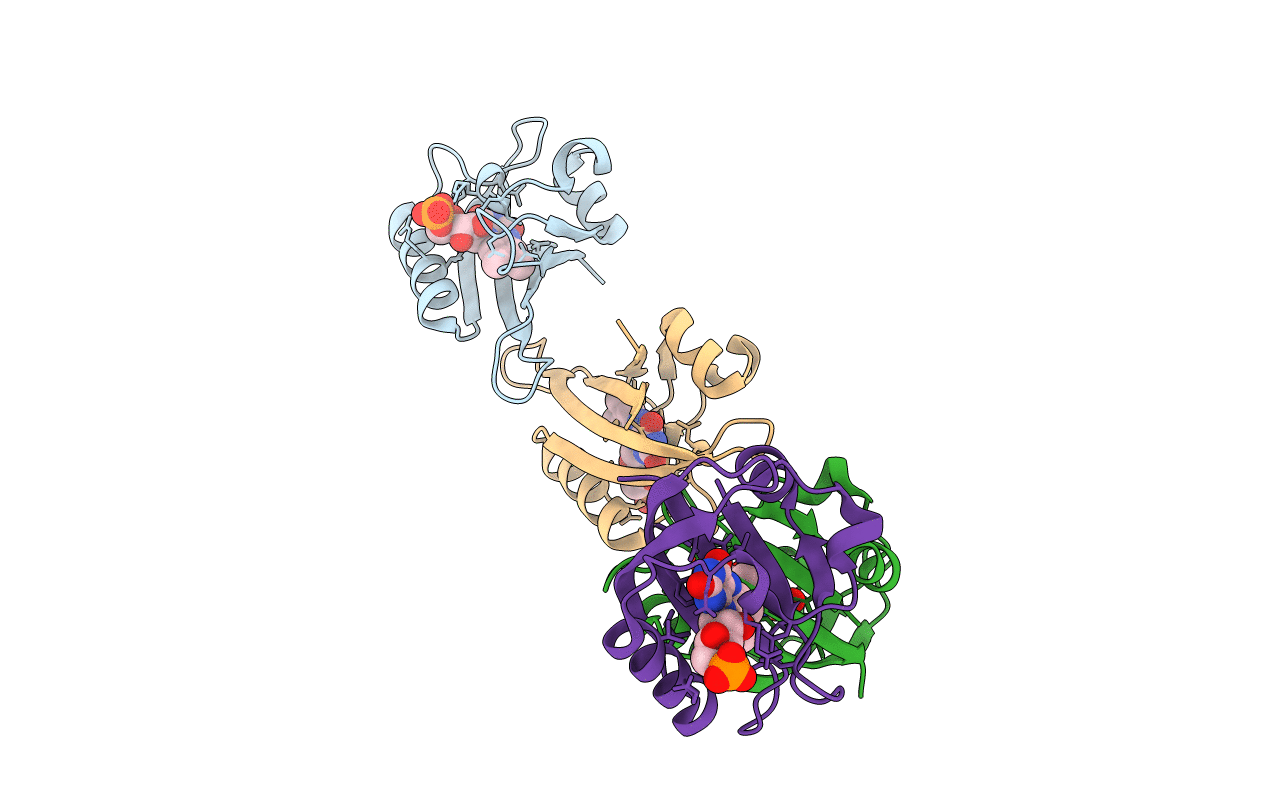
1G28 image
Deposition Date 2000-10-17
Release Date 2001-03-21
Last Version Date 2024-02-07
Entry Detail
PDB ID:
1G28
Title:
STRUCTURE OF A FLAVIN-BINDING DOMAIN, LOV2, FROM THE CHIMERIC PHYTOCHROME/PHOTOTROPIN PHOTORECEPTOR PHY3
Biological Source:
Source Organism:
Host Organism:
Method Details:
Experimental Method:
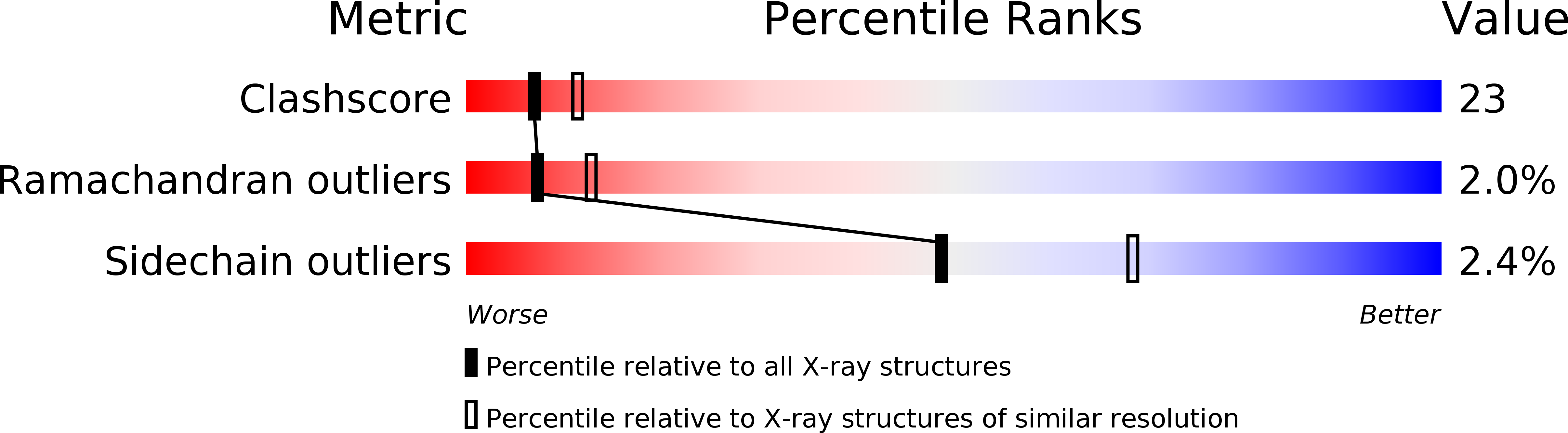
Resolution:
2.73 Å
R-Value Free:
0.27
R-Value Work:
0.24
R-Value Observed:
0.24
Space Group:
P 1
Macromolecular Entities
Structures with similar UniProt ID
Protein Blast
Polymer Type:polypeptide(L)
Molecule:PHY3 PROTEIN
Gene (Uniprot):PHY3
Chain IDs:A, B, C, D
Chain Length:104
Number of Molecules:4
Biological Source:Adiantum capillus-veneris
Ligand Molecules
Primary Citation
Structure of a flavin-binding plant photoreceptor domain: insights into light-mediated signal transduction
Proc.Natl.Acad.Sci.USA 98 2995 3000 (2001)
PMID: 11248020 DOI: 10.1073/pnas.051520298

Abstact

Phototropin, a major blue-light receptor for phototropism in seed plants, exhibits blue-light-dependent autophosphorylation and contains two light, oxygen, or voltage (LOV) domains and a serine/threonine kinase domain. The LOV domains share homology with the PER-ARNT-SIM (PAS) superfamily, a diverse group of sensor proteins. Each LOV domain noncovalently binds a single FMN molecule and exhibits reversible photochemistry in vitro when expressed separately or in tandem. We have determined the crystal structure of the LOV2 domain from the phototropin segment of the chimeric fern photoreceptor phy3 to 2.7-A resolution. The structure constitutes an FMN-binding fold that reveals how the flavin cofactor is embedded in the protein. The single LOV2 cysteine residue is located 4.2 A from flavin atom C(4a), consistent with a model in which absorption of blue light induces formation of a covalent cysteinyl-C(4a) adduct. Residues that interact with FMN in the phototropin segment of the chimeric fern photoreceptor (phy3) LOV2 are conserved in LOV domains from phototropin of other plant species and from three proteins involved in the regulation of circadian rhythms in Arabidopsis and Neurospora. This conservation suggests that these domains exhibit the same overall fold and share a common mechanism for flavin binding and light-induced signaling.

Legend

Protein

Chemical

Disease

Primary Citation of related structures
Feedback Form
Name
Email
Institute
Feedback