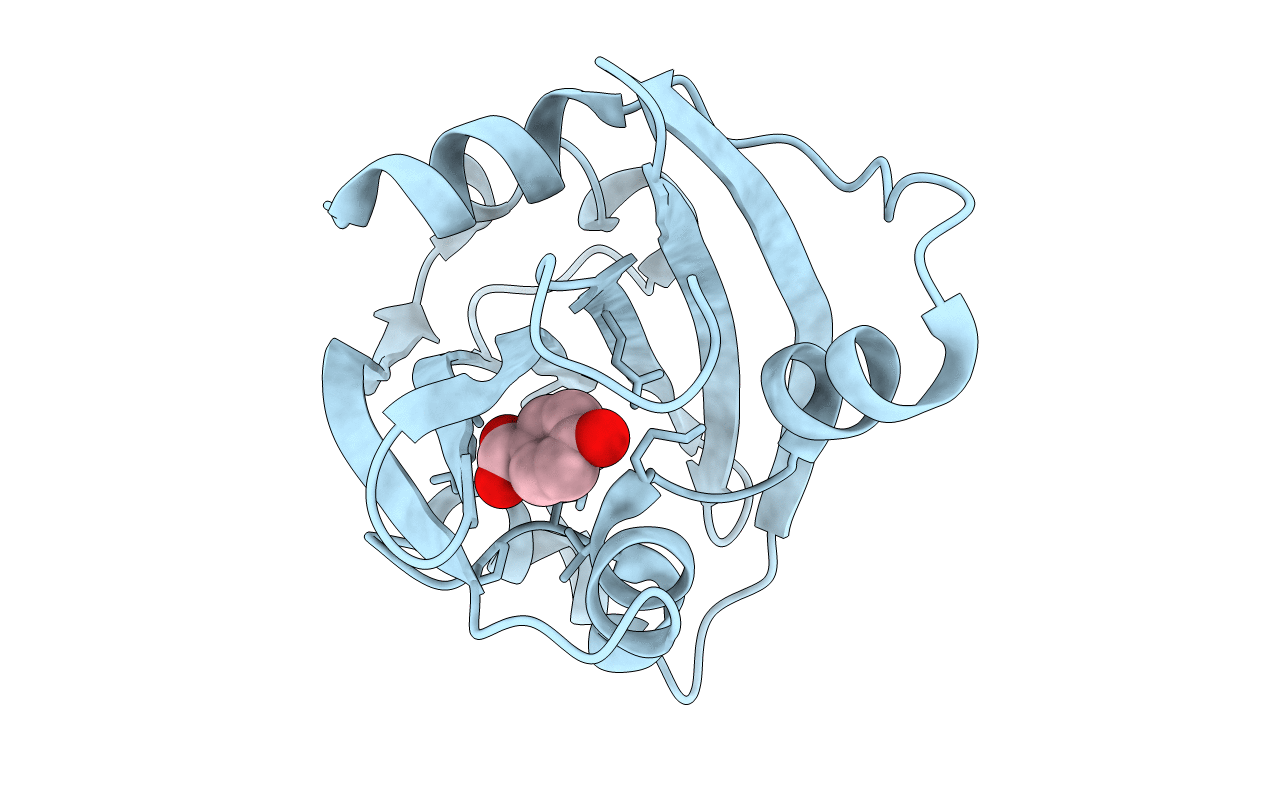
1FW9 image
Deposition Date 2000-09-22
Release Date 2001-03-22
Last Version Date 2024-02-07
Entry Detail
PDB ID:
1FW9
Keywords:
Title:
CHORISMATE LYASE WITH BOUND PRODUCT
Biological Source:
Source Organism:
Escherichia coli (Taxon ID: 562)
Method Details:
Experimental Method:
Resolution:
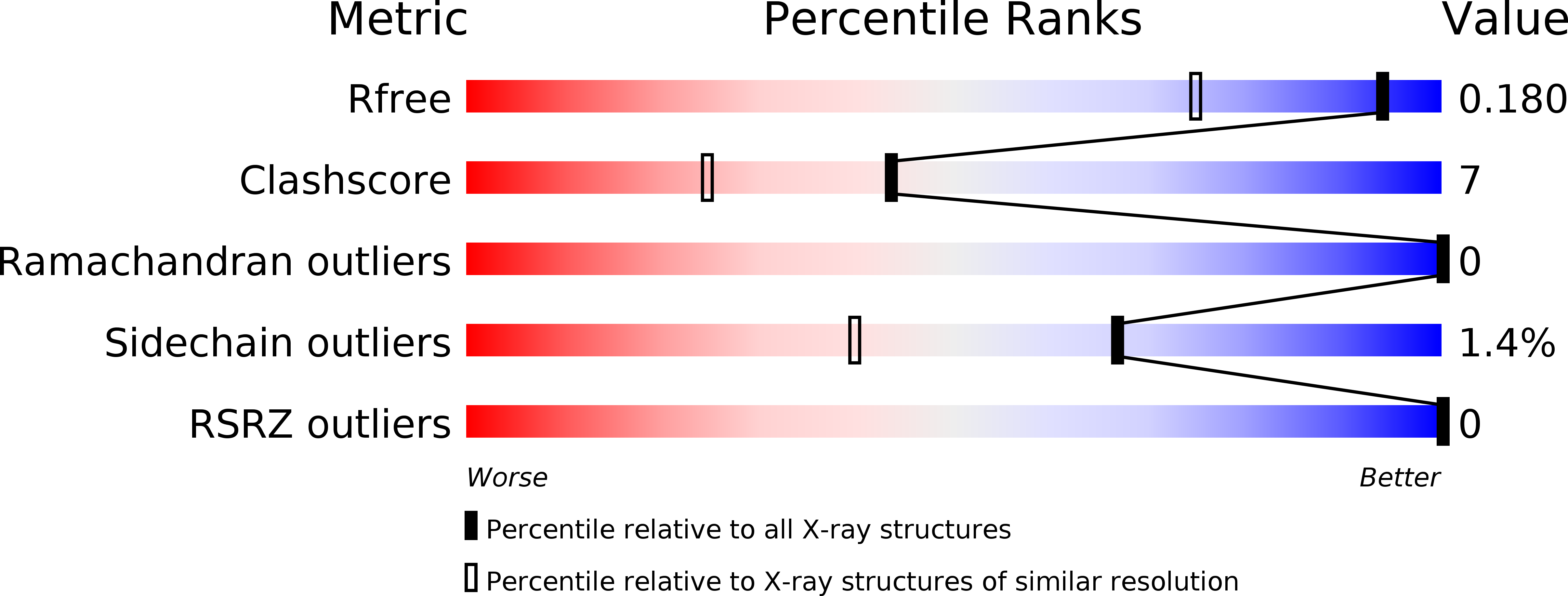
1.40 Å
R-Value Free:
0.18
R-Value Work:
0.16
R-Value Observed:
0.16
Space Group:
P 1
Macromolecular Entities
Structures with similar UniProt ID
Protein Blast
Polymer Type:polypeptide(L)
Molecule:CHORISMATE LYASE
Gene (Uniprot):ubiC
Mutagens:DOUBLE MUTANT C14S,C81S
Chain IDs:A
Chain Length:164
Number of Molecules:1
Biological Source:Escherichia coli
Ligand Molecules
Primary Citation
The crystal structure of chorismate lyase shows a new fold and a tightly retained product.
Proteins 44 304 311 (2001)
PMID: 11455603 DOI: 10.1002/prot.1095

Abstact

The enzyme chorismate lyase (CL) catalyzes the removal of pyruvate from chorismate to produce 4-hydroxy benzoate (4HB) for the ubiquinone pathway. In Escherichia coli, CL is monomeric, with 164 residues. We have determined the structure of the CL product complex by crystallographic heavy-atom methods and report the structure at 1.4-A resolution for a fully active double Cys-to-Ser mutant and at 2.0-A resolution for the wild-type. The fold involves a 6-stranded antiparallel beta-sheet with no spanning helices and novel connectivity. The product is bound internally, adjacent to the sheet, with its polar groups coordinated by two main-chain amides and by the buried side-chains of Arg 76 and Glu 155. The 4HB is completely sequestered from solvent in a largely hydrophobic environment behind two helix-turn-helix loops. The extensive product binding that is observed is consistent with biochemical measurements of slow product release and 10-fold stronger binding of product than substrate. Substrate binding and kinetically rate-limiting product release apparently require the rearrangement of these active-site-covering loops. Implications for the biological function of the high product binding are considered in light of the unique cellular role of 4HB, which is produced by cytoplasmic CL but is used by the membrane-bound enzyme 4HB octaprenyltransferase.

Legend

Protein

Chemical

Disease

Primary Citation of related structures
Feedback Form
Name
Email
Institute
Feedback