Planned Maintenance: Some services may turn out to be unavailable from 15th January, 2026 to 16th January, 2026. We apologize for the inconvenience!

1FU1 image
Deposition Date 2000-09-13
Release Date 2000-12-11
Last Version Date 2024-11-06
Entry Detail
PDB ID:
1FU1
Keywords:
Title:
CRYSTAL STRUCTURE OF HUMAN XRCC4
Method Details:
Experimental Method:
Resolution:
2.70 Å
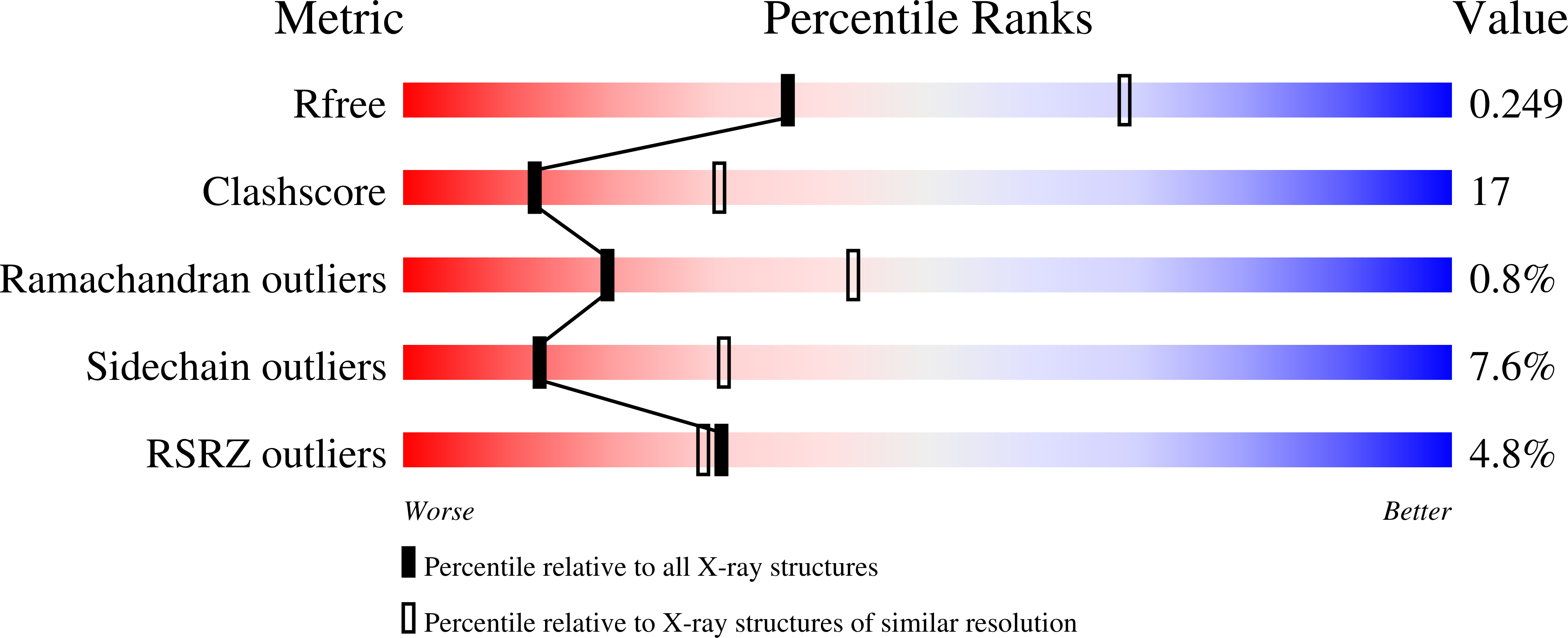
R-Value Free:
0.26
R-Value Work:
0.23
R-Value Observed:
0.24
Space Group:
C 1 2 1
Macromolecular Entities
Structures with similar UniProt ID
Protein Blast
Polymer Type:polypeptide(L)
Molecule:DNA REPAIR PROTEIN XRCC4
Gene (Uniprot):XRCC4
Mutagens:T135I
Chain IDs:A, B
Chain Length:203
Number of Molecules:2
Biological Source:Homo sapiens
Modified Residue
Compound ID Chain ID Parent Comp ID Details 2D Image
CAS A CYS S-(DIMETHYLARSENIC)CYSTEINE
Ligand Molecules
Primary Citation
Crystal structure of the Xrcc4 DNA repair protein and implications for end joining.
EMBO J. 19 5962 5970 (2000)
PMID: 11080143 DOI: 10.1093/emboj/19.22.5962

Abstact

XRCC4 is essential for carrying out non-homologous DNA end joining (NHEJ) in all eukaryotes and, in particular, V(D)J recombination in vertebrates. Xrcc4 protein forms a complex with DNA ligase IV that rejoins two DNA ends in the last step of V(D)J recombination and NHEJ to repair double strand breaks. XRCC4-defective cells are extremely sensitive to ionizing radiation, and disruption of the XRCC4 gene results in embryonic lethality in mice. Here we report the crystal structure of a functional fragment of Xrcc4 at 2.7 A resolution. Xrcc4 protein forms a strikingly elongated dumb-bell-like tetramer. Each of the N-terminal globular head domains consists of a beta-sandwich and a potentially DNA-binding helix- turn-helix motif. The C-terminal stalk comprising a single alpha-helix >120 A in length is partly incorporated into a four-helix bundle in the Xrcc4 tetramer and partly involved in interacting with ligase IV. The Xrcc4 structure suggests a possible mode of coupling ligase IV association with DNA binding for effective ligation of DNA ends.

Legend

Protein

Chemical

Disease

Primary Citation of related structures
Feedback Form
Name
Email
Institute
Feedback