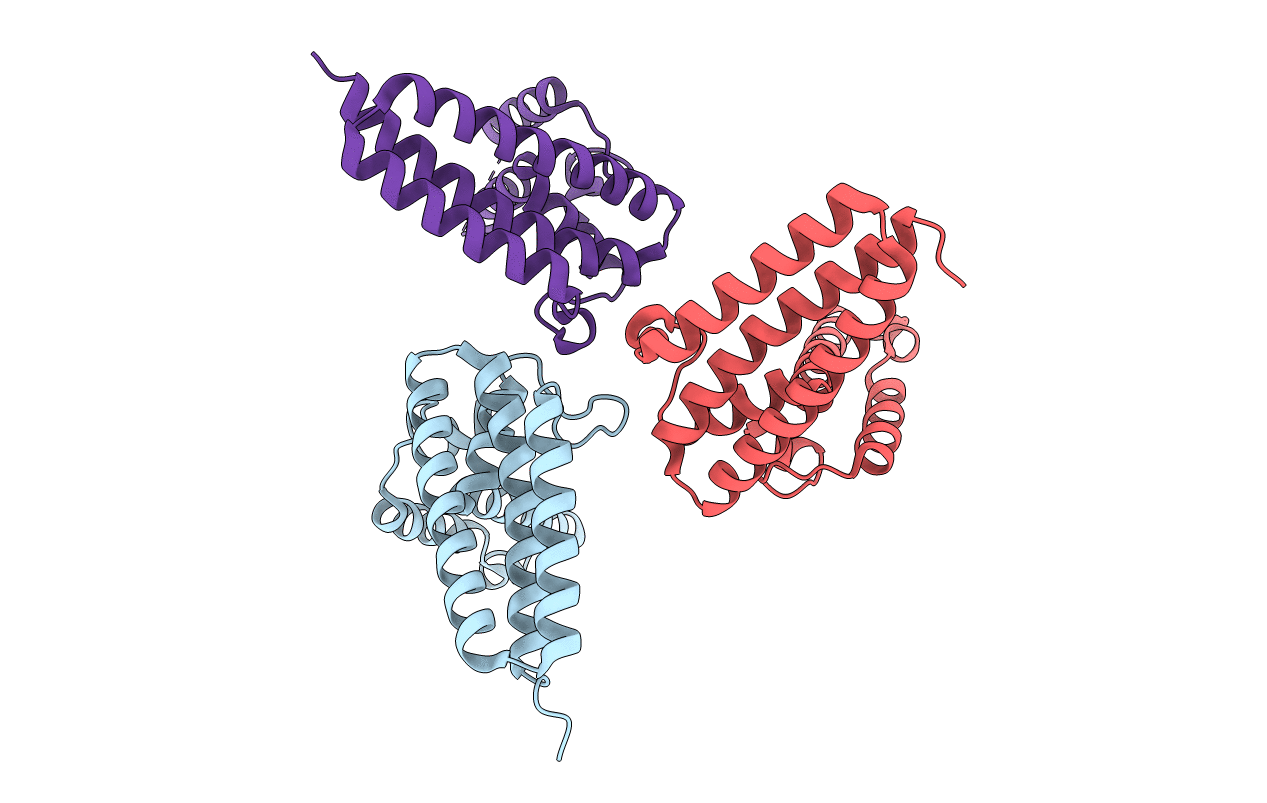
1FPO image
Deposition Date 2000-08-31
Release Date 2000-12-08
Last Version Date 2024-02-07
Entry Detail
PDB ID:
1FPO
Keywords:
Title:
HSC20 (HSCB), A J-TYPE CO-CHAPERONE FROM E. COLI
Biological Source:
Source Organism:
Escherichia coli (Taxon ID: 562)
Host Organism:
Method Details:
Experimental Method:
Resolution:
1.80 Å
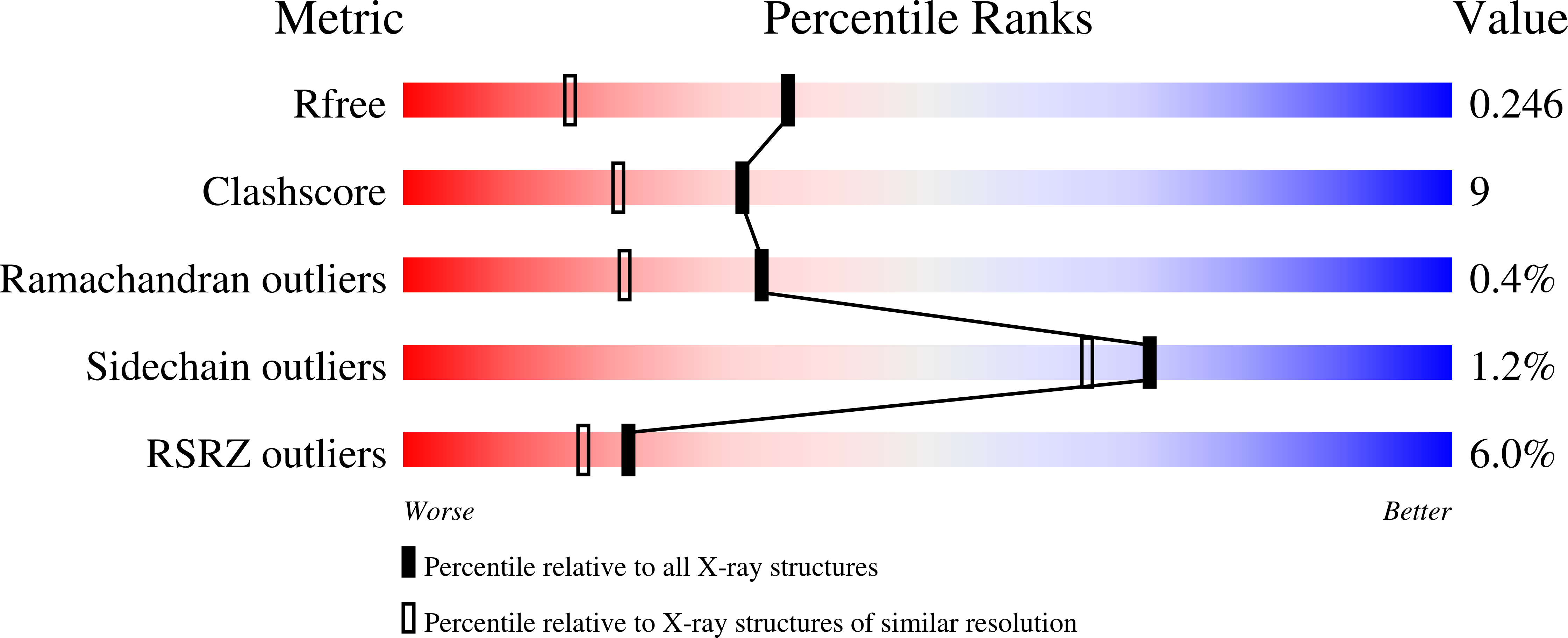
R-Value Free:
0.24
R-Value Work:
0.21
R-Value Observed:
0.21
Space Group:
C 1 2 1
Macromolecular Entities
Structures with similar UniProt ID
Protein Blast
Polymer Type:polypeptide(L)
Molecule:CHAPERONE PROTEIN HSCB
Gene (Uniprot):hscB
Mutagens:V148C
Chain IDs:A, B, C
Chain Length:171
Number of Molecules:3
Biological Source:Escherichia coli
Primary Citation
Crystal structure of Hsc20, a J-type Co-chaperone from Escherichia coli.
J.Mol.Biol. 304 835 845 (2000)
PMID: 11124030 DOI: 10.1006/jmbi.2000.4252

Abstact

Hsc20 is a 20 kDa J-protein that regulates the ATPase activity and peptide-binding specificity of Hsc66, an hsp70-class molecular chaperone. We report herein the crystal structure of Hsc20 from Escherichia coli determined to a resolution of 1.8 A using a combination of single isomorphous replacement (SIR) and multi-wavelength anomalous diffraction (MAD). The overall structure of Hsc20 consists of two distinct domains, an N-terminal J-domain containing residues 1-75 connected by a short loop to a C-terminal domain containing residues 84-171. The structure of the J-domain, involved in interactions with Hsc66, resembles the alpha-topology of J-domain fragments of Escherichia coli DnaJ and human Hdj1 previously determined by solution NMR methods. The C-terminal domain, implicated in binding and targeting proteins to Hsc66, consists of a three-helix bundle in which two helices comprise an anti-parallel coiled-coil. The two domains make contact through an extensive hydrophobic interface ( approximately 650 A(2)) suggesting that their relative orientations are fixed. Thus, Hsc20, in addition to its role in the regulation of the ATPase activity of Hsc66, may also function as a rigid scaffold to facilitate positioning of the protein substrates targeted to Hsc66.

Legend

Protein

Chemical

Disease

Primary Citation of related structures
Feedback Form
Name
Email
Institute
Feedback