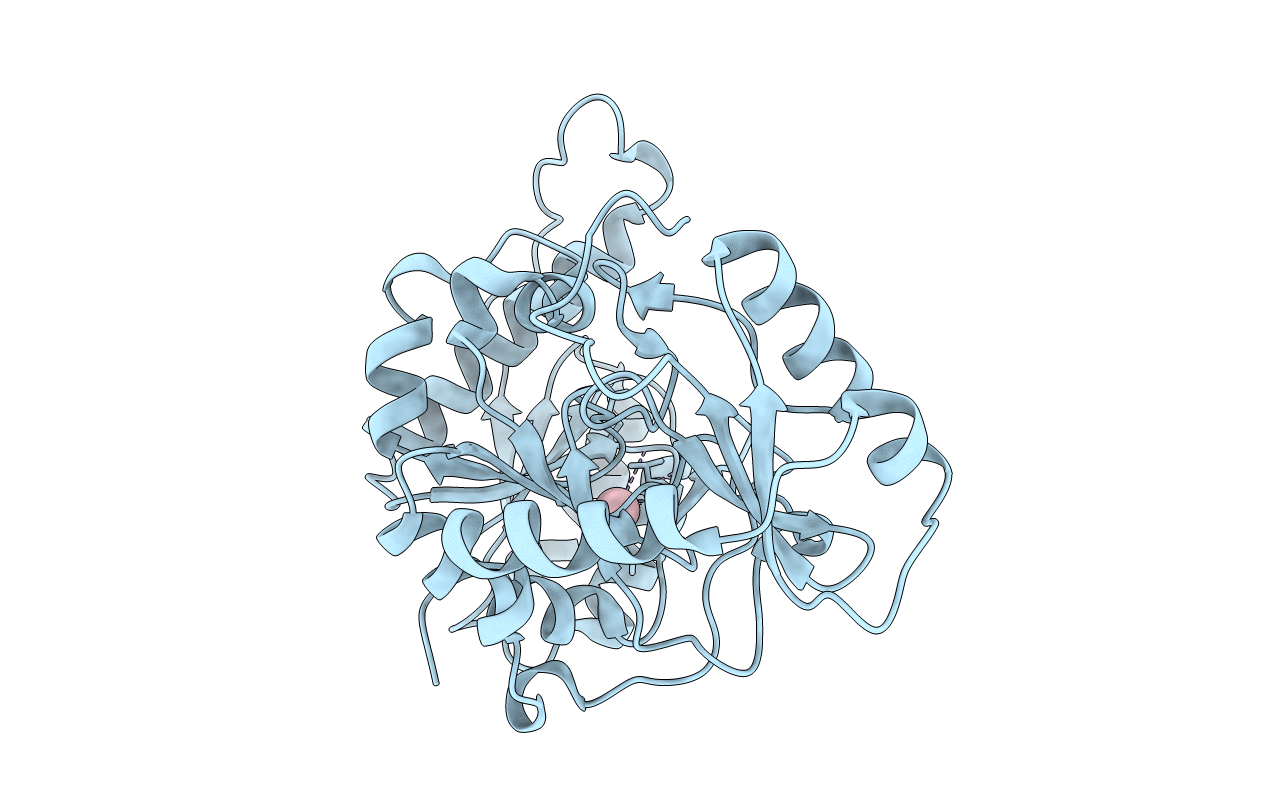
1FO8 image
Deposition Date 2000-08-26
Release Date 2001-04-25
Last Version Date 2024-10-23
Entry Detail
PDB ID:
1FO8
Keywords:
Title:
CRYSTAL STRUCTURE OF N-ACETYLGLUCOSAMINYLTRANSFERASE I
Biological Source:
Source Organism:
Host Organism:
Method Details:
Experimental Method:
Resolution:
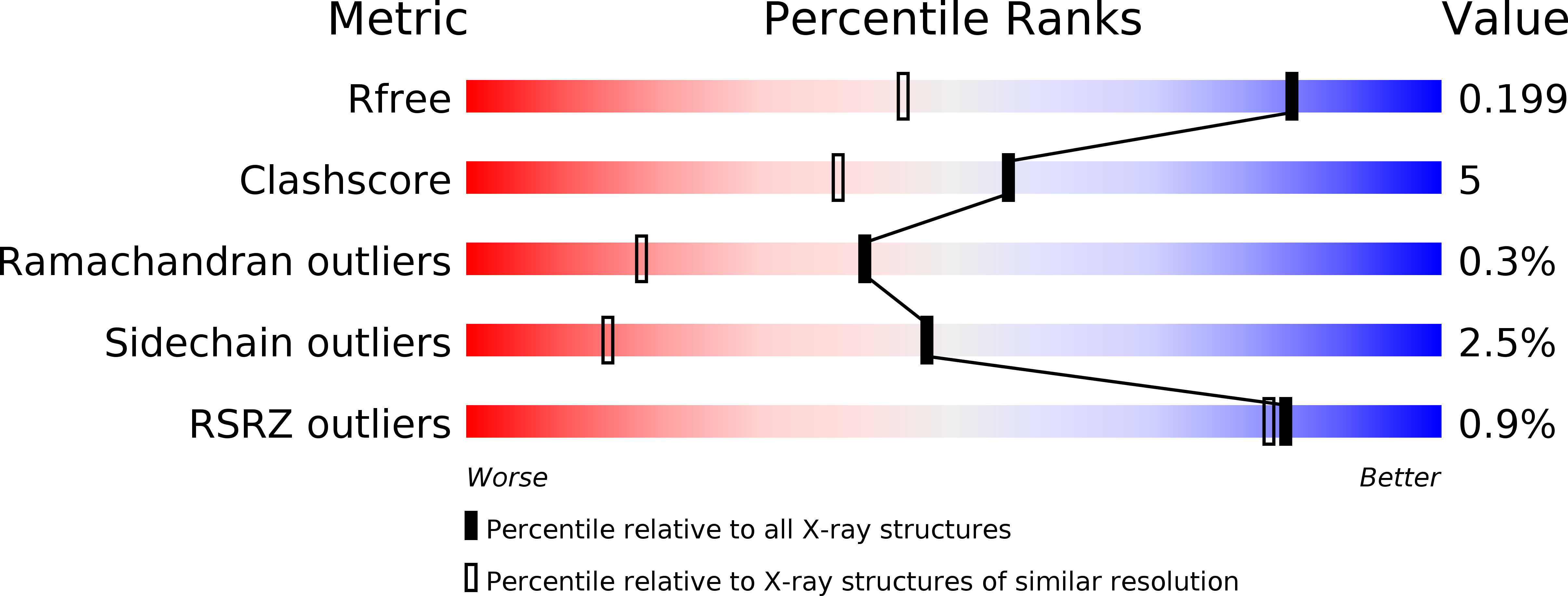
1.40 Å
R-Value Free:
0.18
R-Value Work:
0.16
R-Value Observed:
0.16
Space Group:
P 21 21 21
Macromolecular Entities
Structures with similar UniProt ID
Protein Blast
Polymer Type:polypeptide(L)
Molecule:ALPHA-1,3-MANNOSYL-GLYCOPROTEIN BETA-1,2-N-ACETYLGLUCOSAMINYLTRANSFERASE
Gene (Uniprot):MGAT1
Chain IDs:A
Chain Length:343
Number of Molecules:1
Biological Source:Oryctolagus cuniculus
Ligand Molecules
Primary Citation
X-ray crystal structure of rabbit N-acetylglucosaminyltransferase I: catalytic mechanism and a new protein superfamily.
EMBO J. 19 5269 5280 (2000)
PMID: 11032794 DOI: 10.1093/emboj/19.20.5269

Abstact

N:-acetylglucosaminyltransferase I (GnT I) serves as the gateway from oligomannose to hybrid and complex N:-glycans and plays a critical role in mammalian development and possibly all metazoans. We have determined the X-ray crystal structure of the catalytic fragment of GnT I in the absence and presence of bound UDP-GlcNAc/Mn(2+) at 1.5 and 1.8 A resolution, respectively. The structures identify residues critical for substrate binding and catalysis and provide evidence for similarity, at the mechanistic level, to the deglycosylation step of retaining beta-glycosidases. The structuring of a 13 residue loop, resulting from UDP-GlcNAc/Mn(2+) binding, provides an explanation for the ordered sequential 'Bi Bi' kinetics shown by GnT I. Analysis reveals a domain shared with Bacillus subtilis glycosyltransferase SpsA, bovine beta-1,4-galactosyl transferase 1 and Escherichia coli N:-acetylglucosamine-1-phosphate uridyltransferase. The low sequence identity, conserved fold and related functional features shown by this domain define a superfamily whose members probably share a common ancestor. Sequence analysis and protein threading show that the domain is represented in proteins from several glycosyltransferase families.

Legend

Protein

Chemical

Disease

Primary Citation of related structures
Feedback Form
Name
Email
Institute
Feedback