1FLC image
Deposition Date 1999-02-22
Release Date 2000-03-01
Last Version Date 2024-11-06
Entry Detail
PDB ID:
1FLC
Keywords:
Title:
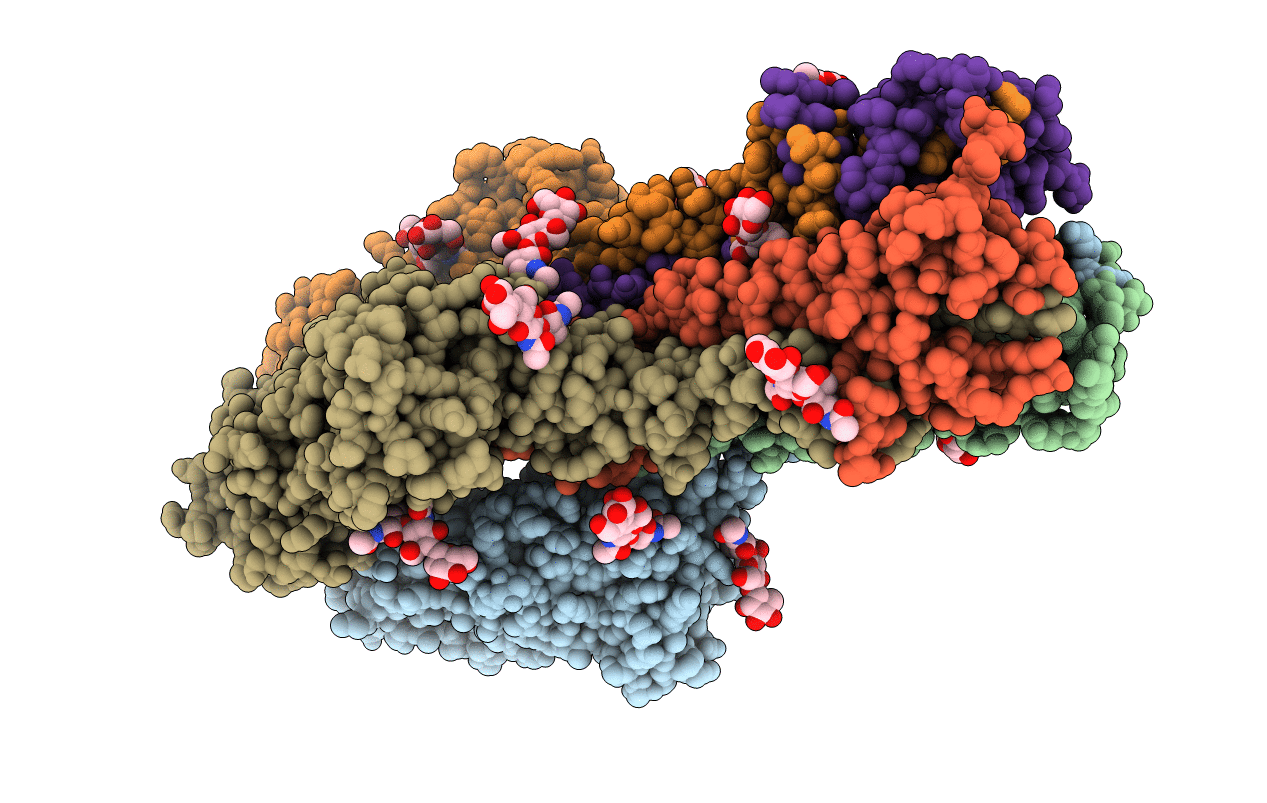
X-RAY STRUCTURE OF THE HAEMAGGLUTININ-ESTERASE-FUSION GLYCOPROTEIN OF INFLUENZA C VIRUS
Biological Source:
Source Organism:
Method Details:
Experimental Method:
Resolution:
3.20 Å
R-Value Free:
0.26
R-Value Work:
0.22
R-Value Observed:
0.22
Space Group:
P 43 2 2

Macromolecular Entities
Structures with similar UniProt ID
Protein Blast
Polymer Type:polypeptide(L)
Molecule:HAEMAGGLUTININ-ESTERASE-FUSION GLYCOPROTEIN
Gene (Uniprot):HE
Chain IDs:A, C, E
Chain Length:432
Number of Molecules:3
Biological Source:Influenza C virus (C/Johannesburg/1/66)
Structures with similar UniProt ID
Protein Blast
Polymer Type:polypeptide(L)
Molecule:HAEMAGGLUTININ-ESTERASE-FUSION GLYCOPROTEIN
Chain IDs:B, D, F
Chain Length:175
Number of Molecules:3
Biological Source:Influenza C virus (C/Johannesburg/1/66)
Modified Residue
Compound ID Chain ID Parent Comp ID Details 2D Image
ASN A ASN GLYCOSYLATION SITE
Ligand Molecules
Primary Citation
Structure of the haemagglutinin-esterase-fusion glycoprotein of influenza C virus.
Nature 396 92 96 (1998)
PMID: 9817207 DOI: 10.1038/23974

Abstact

The spike glycoproteins of the lipid-enveloped orthomyxoviruses and paramyxoviruses have three functions: to recognize the receptor on the cell surface, to mediate viral fusion with the cell membrane, and to destroy the receptor. In influenza C virus, a single glycoprotein, the haemagglutinin-esterase-fusion (HEF) protein, possesses all three functions. In influenza A and B, the first two activities are mediated by haemagglutinin and the third by a second glycoprotein, neuraminidase. Here we report the crystal structure of the HEF envelope glycoprotein of influenza C virus. We have identified the receptor-binding site and the receptor-destroying enzyme (9-O-acetylesterase) sites, by using receptor analogues. The receptor-binding domain is structurally similar to the sialic acid-binding domain of influenza A haemagglutinin, but binds 9-O-acetylsialic acid. The esterase domain has a structure similar to the esterase from Streptomyces scabies and a brain acetylhydrolase. The receptor domain is inserted into a surface loop of the esterase domain and the esterase domain is inserted into a surface loop of the stem. The stem domain is similar to that of influenza A haemagglutinin, except that the triple-stranded, alpha-helical bundle diverges at both of its ends, and the amino terminus of HEF2, the fusion peptide, is partially exposed. The segregation of HEF's three functions into structurally distinct domains suggests that the entire stem region, including sequences at the amino and carboxy termini of HEF1 which precede the post-translational cleavage site between HEF1 and HEF2, forms an independent fusion domain which is probably derived from an ancestral membrane fusion protein.

Legend

Protein

Chemical

Disease

Primary Citation of related structures
Feedback Form
Name
Email
Institute
Feedback