1FI1 image
Deposition Date 2000-08-03
Release Date 2001-08-29
Last Version Date 2024-11-13
Entry Detail
PDB ID:
1FI1
Keywords:
Title:
FhuA in complex with lipopolysaccharide and rifamycin CGP4832
Biological Source:
Source Organism:
Host Organism:
Method Details:
Experimental Method:
Resolution:
2.90 Å
R-Value Free:
0.27
R-Value Work:
0.23
R-Value Observed:
0.23
Space Group:
P 61
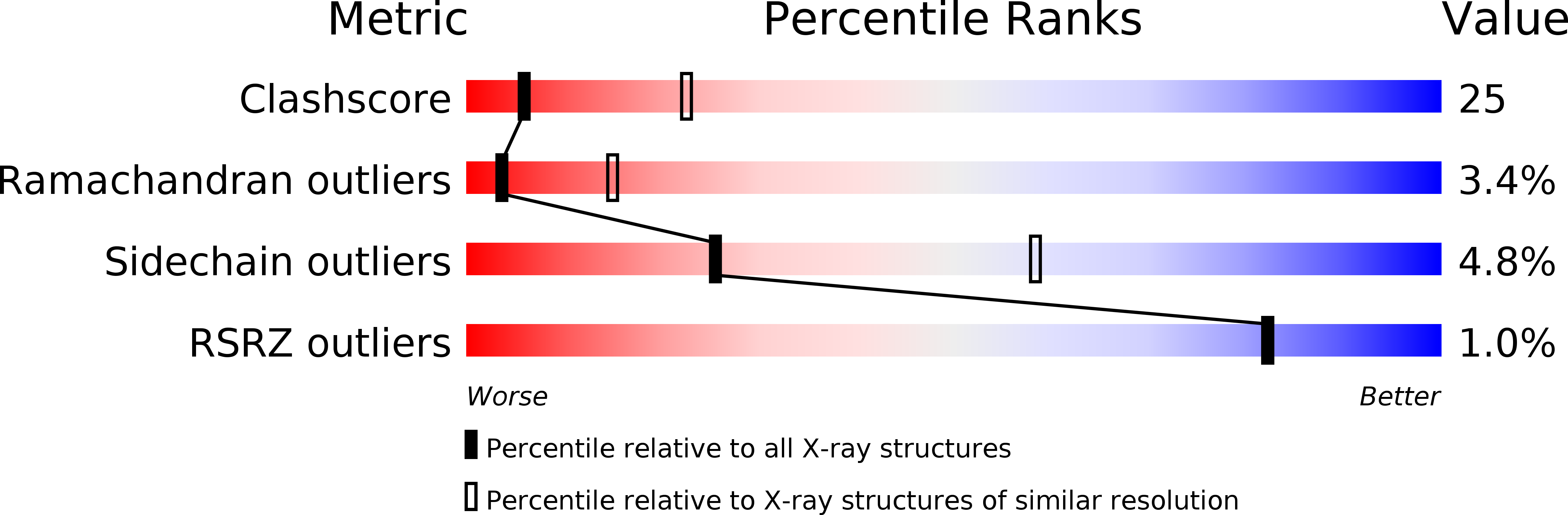
Macromolecular Entities
Structures with similar UniProt ID
Protein Blast
Polymer Type:polypeptide(L)
Molecule:FERRICHROME-IRON RECEPTOR
Gene (Uniprot):fhuA
Mutagens:HEXAHISTIDINE TAG PLUS FIVE LINKER RESIDUES HAVE BEEN GENETICALLY INSERTED AFTER RESIDUE 405 OF THE MATURE SEQUENCE
Chain IDs:A
Chain Length:707
Number of Molecules:1
Biological Source:Escherichia coli K12
Primary Citation

Abstact

BACKGROUND: FhuA, an integral membrane protein of Escherichia coli, actively transports ferrichrome and the structurally related antibiotic albomycin across the outer membrane. The transport is coupled to the proton motive force, which energizes FhuA through the inner-membrane protein TonB. FhuA also transports the semisynthetic rifamycin derivative CGP 4832, although the chemical structure of this antibiotic differs markedly from that of ferric hydroxamates. RESULTS: X-ray crystallography revealed that rifamycin CGP 4832 occupies the same ligand binding site as ferrichrome and albomycin, thus demonstrating a surprising lack of selectivity. However, the binding of rifamycin CGP 4832 is deviant from the complexes of FhuA with hydroxamate-type ligands in that it does not result in the unwinding of the switch helix but only in its destabilization, as reflected by increased B factors. Unwinding of the switch helix is proposed to be required for efficient binding of TonB to FhuA and for coupling the proton motive force of the cytoplasmic membrane with energy-dependent ligand transport. The transport data from cells expressing mutant FhuA proteins indicated conserved structural and mechanistic requirements for the transport of both types of compounds. CONCLUSIONS: We conclude that the binding of rifamycin CGP 4832 destabilizes the switch helix and promotes the formation of a transport-competent FhuA-TonB complex, albeit with lower efficiency than ferrichrome. Active transport of this rifamycin derivative explains the 200-fold increase in potency as compared to rifamycin, which is not a FhuA-specific ligand and permeates across the cell envelope by passive diffusion only.

Legend

Protein

Chemical

Disease

Primary Citation of related structures
Feedback Form
Name
Email
Institute
Feedback