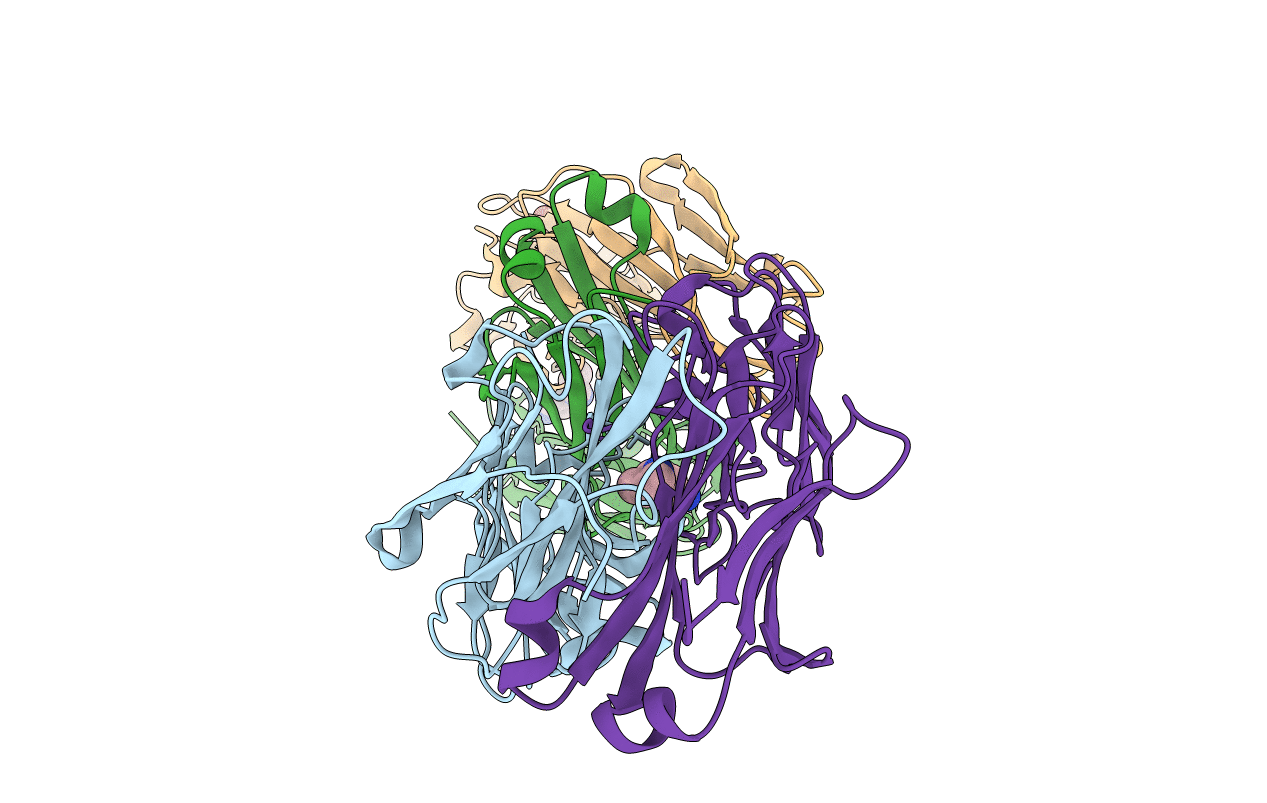
1F3D image
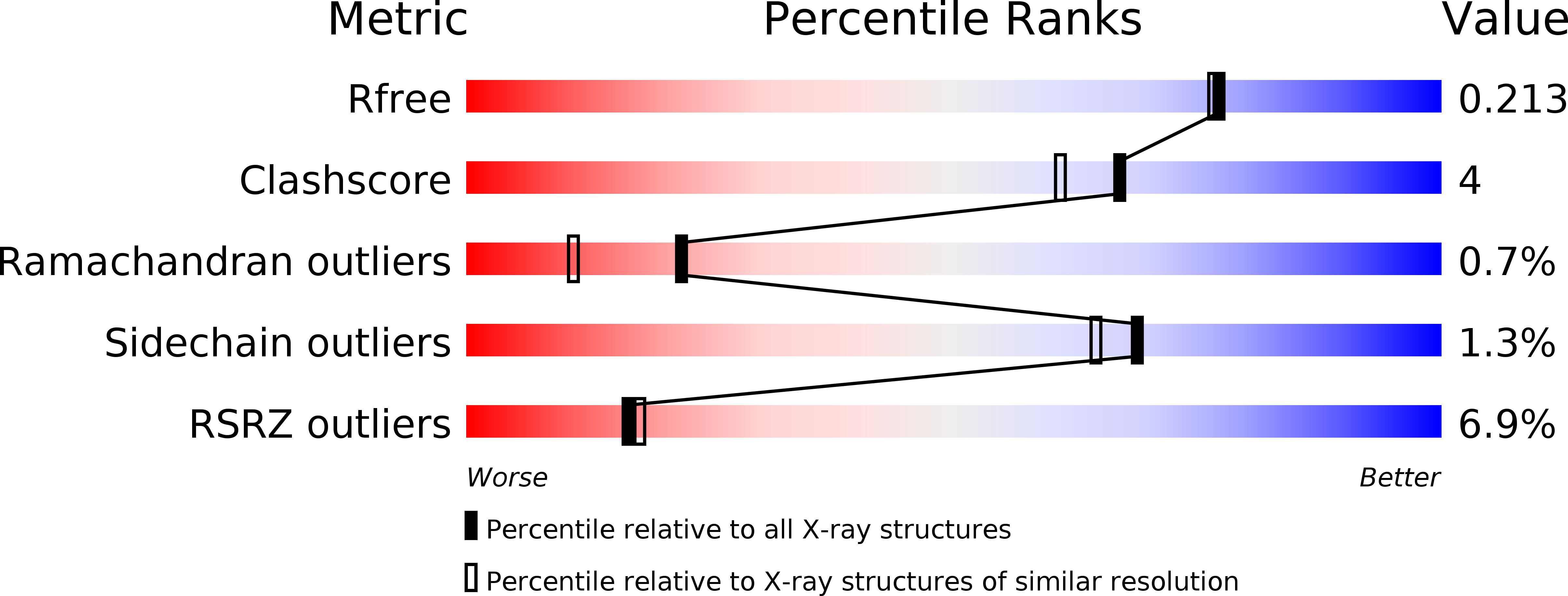
Deposition Date 2000-06-02
Release Date 2000-09-13
Last Version Date 2024-10-30
Entry Detail
PDB ID:
1F3D
Keywords:
Title:
CATALYTIC ANTIBODY 4B2 IN COMPLEX WITH ITS AMIDINIUM HAPTEN.
Biological Source:
Source Organism:
Mus musculus (Taxon ID: 10090)
Method Details:
Experimental Method:
Resolution:
1.87 Å
R-Value Free:
0.21
R-Value Work:
0.19
Space Group:
P 1 21 1
Macromolecular Entities
Polymer Type:polypeptide(L)
Molecule:CATALYTIC ANTIBODY 4B2
Chain IDs:B (auth: H), D (auth: K)
Chain Length:217
Number of Molecules:2
Biological Source:Mus musculus
Structures with similar UniProt ID
Protein Blast
Polymer Type:polypeptide(L)
Molecule:CATALYTIC ANTIBODY 4B2
Chain IDs:A (auth: L), C (auth: J)
Chain Length:219
Number of Molecules:2
Biological Source:Mus musculus
Primary Citation
Structural evidence for a programmed general base in the active site of a catalytic antibody.
Proc.Natl.Acad.Sci.USA 97 9892 9895 (2000)
PMID: 10963661 DOI: 10.1073/pnas.97.18.9892

Abstact

The crystal structure of the complex of a catalytic antibody with its cationic hapten at 1.9-A resolution demonstrates that the hapten amidinium group is stabilized through an ionic pair interaction with the carboxylate of a combining-site residue. The location of this carboxylate allows it to act as a general base in an allylic rearrangement. When compared with structures of other antibody complexes in which the positive moiety of the hapten is stabilized mostly by cation-pi interactions, this structure shows that the amidinium moiety is a useful candidate to elicit a carboxylate in an antibody combining site at a predetermined location with respect to the hapten. More generally, this structure highlights the advantage of a bidentate hapten for the programmed positioning of a chemically reactive residue in an antibody through charge complementarity to the hapten.

Legend

Protein

Chemical

Disease

Primary Citation of related structures
Feedback Form
Name
Email
Institute
Feedback