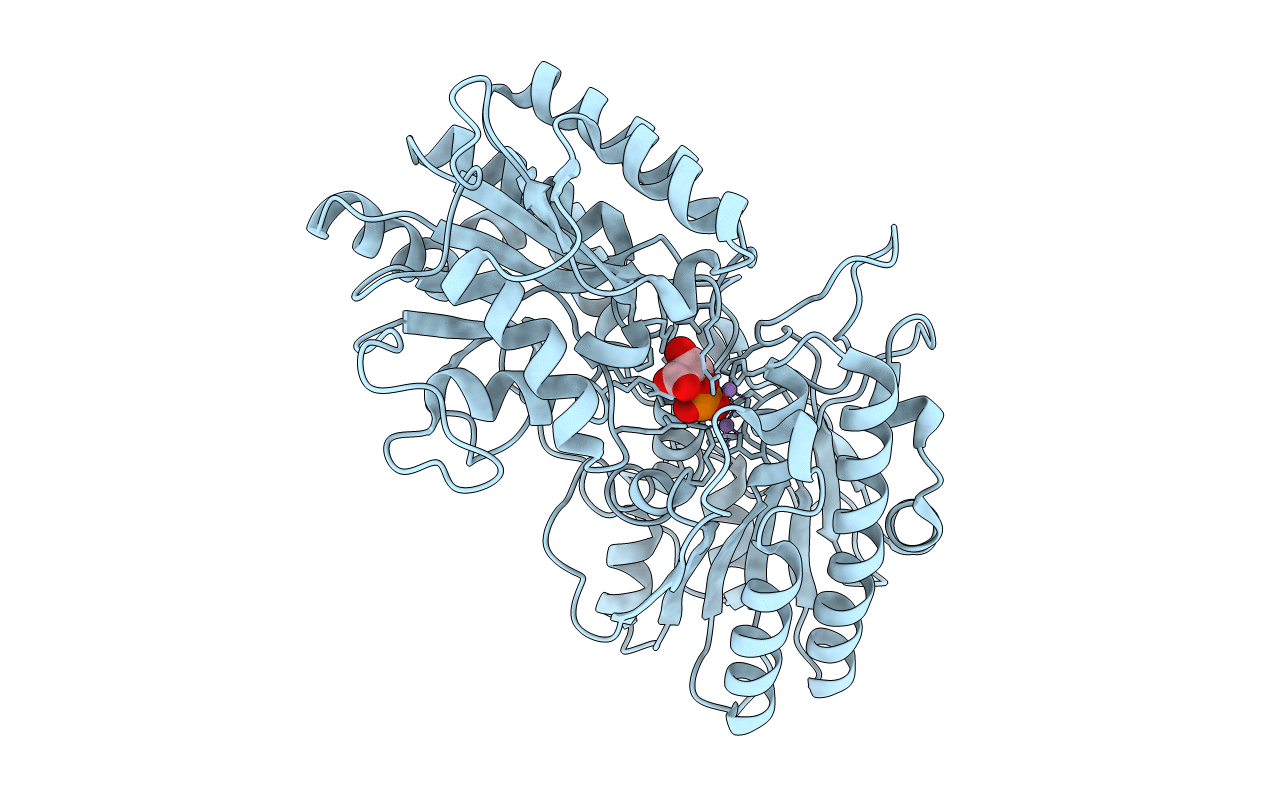
1EJJ image
Deposition Date 2000-03-02
Release Date 2001-03-02
Last Version Date 2024-02-07
Entry Detail
PDB ID:
1EJJ
Keywords:
Title:
CRYSTAL STRUCTURAL ANALYSIS OF PHOSPHOGLYCERATE MUTASE COCRYSTALLIZED WITH 3-PHOSPHOGLYCERATE
Biological Source:
Source Organism:
Host Organism:
Method Details:
Experimental Method:
Resolution:
1.90 Å
R-Value Free:
0.24
R-Value Work:
0.20
Space Group:
C 2 2 21

Macromolecular Entities
Structures with similar UniProt ID
Protein Blast
Polymer Type:polypeptide(L)
Molecule:PHOSPHOGLYCERATE MUTASE
Gene (Uniprot):gpmI
Chain IDs:A
Chain Length:511
Number of Molecules:1
Biological Source:Geobacillus stearothermophilus
Primary Citation
Structure and mechanism of action of a novel phosphoglycerate mutase from Bacillus stearothermophilus.
EMBO J. 19 1419 1431 (2000)
PMID: 10747010 DOI: 10.1093/emboj/19.7.1419

Abstact

Bacillus stearothermophilus phosphoglycerate mutase (PGM), which interconverts 2- and 3-phosphoglyceric acid (PGA), does not require 2,3-diphosphoglyceric acid for activity. However, this enzyme does have an absolute and specific requirement for Mn(2+) ions for catalysis. Here we report the crystal structure of this enzyme complexed with 3PGA and manganese ions to 1.9 A resolution; this is the first crystal structure of a diphosphoglycerate-independent PGM to be determined. This information, plus the location of the two bound Mn(2+) ions and the 3PGA have allowed formulation of a possible catalytic mechanism for this PGM. In this mechanism Mn(2+) ions facilitate the transfer of the substrate's phosphate group to Ser62 to form a phosphoserine intermediate. In the subsequent phosphotransferase part of the reaction, the phosphate group is transferred from Ser62 to the O2 or O3 positions of the reoriented glycerate to yield the PGA product. Site-directed mutagenesis studies were used to confirm our mechanism and the involvement of specific enzyme residues in Mn(2+) binding and catalysis.

Legend

Protein

Chemical

Disease

Primary Citation of related structures
Feedback Form
Name
Email
Institute
Feedback