1EFQ image
Deposition Date 2000-02-09
Release Date 2001-02-09
Last Version Date 2024-10-30
Entry Detail
PDB ID:
1EFQ
Keywords:
Title:
Q38D mutant of LEN
Biological Source:
Source Organism:
Homo sapiens (Taxon ID: 9606)
Host Organism:
Method Details:
Experimental Method:
Resolution:
1.60 Å
R-Value Free:
0.28
R-Value Work:
0.23
Space Group:
P 63
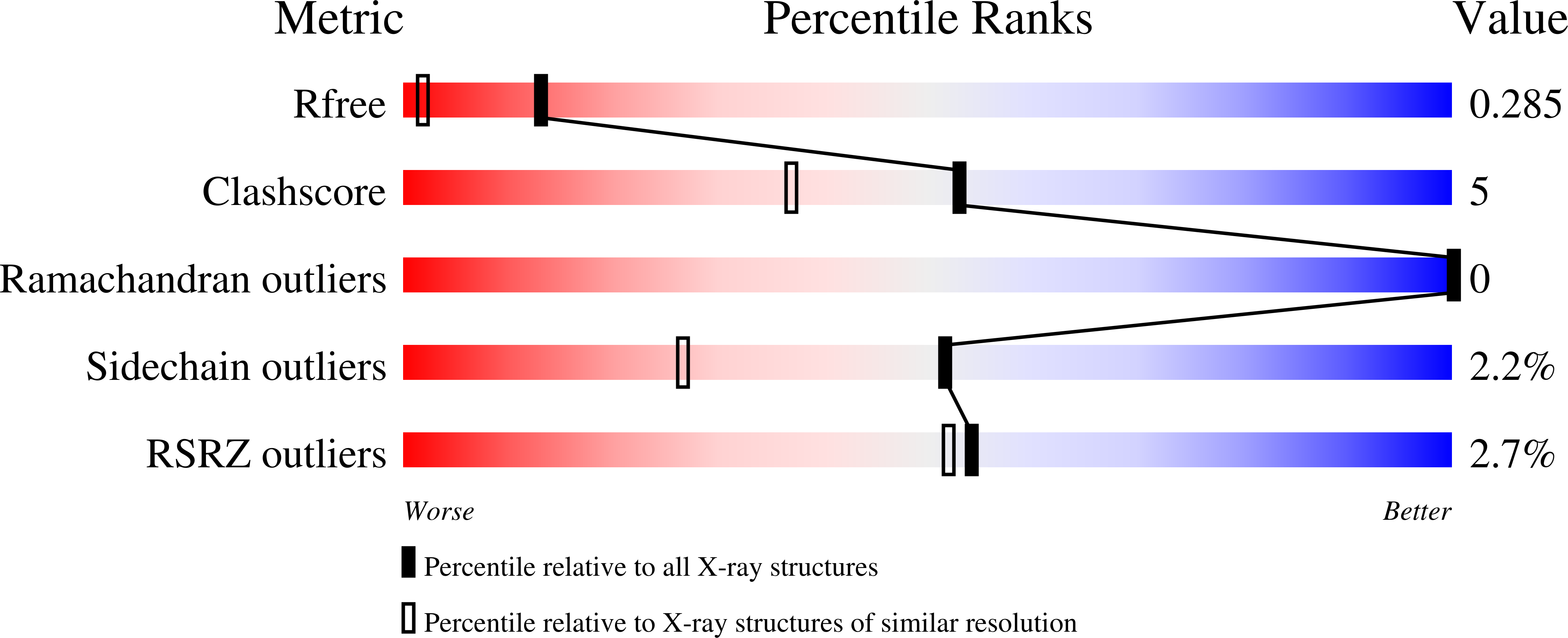
Macromolecular Entities
Structures with similar UniProt ID
Protein Blast
Polymer Type:polypeptide(L)
Molecule:KAPPA-4 IMMUNOGLOBULIN (LIGHT CHAIN)
Mutagens:Q38D
Chain IDs:A
Chain Length:114
Number of Molecules:1
Biological Source:Homo sapiens
Primary Citation
Factors contributing to decreased protein stability when aspartic acid residues are in beta-sheet regions.
Protein Sci. 11 1687 1694 (2002)
PMID: 12070321 DOI: 10.1110/ps.4920102

Abstact

Asp residues are significantly under represented in beta-sheet regions of proteins, especially in the middle of beta-strands, as found by a number of studies using statistical, modeling, or experimental methods. To further understand the reasons for this under representation of Asp, we prepared and analyzed mutants of a beta-domain. Two Gln residues of the immunoglobulin light-chain variable domain (V(L)) of protein Len were replaced with Asp, and then the effects of these changes on protein stability and protein structure were studied. The replacement of Q38D, located at the end of a beta-strand, and that of Q89D, located in the middle of a beta-strand, reduced the stability of the parent immunoglobulin V(L) domain by 2.0 kcal/mol and 5.3 kcal/mol, respectively. Because the Q89D mutant of the wild-type V(L)-Len domain was too unstable to be expressed as a soluble protein, we prepared the Q89D mutant in a triple mutant background, V(L)-Len M4L/Y27dD/T94H, which was 4.2 kcal/mol more stable than the wild-type V(L)-Len domain. The structures of mutants V(L)-Len Q38D and V(L)-Len Q89D/M4L/Y27dD/T94H were determined by X-ray diffraction at 1.6 A resolution. We found no major perturbances in the structures of these Q-->D mutant proteins relative to structures of the parent proteins. The observed stability changes have to be accounted for by cumulative effects of the following several factors: (1) by changes in main-chain dihedral angles and in side-chain rotomers, (2) by close contacts between some atoms, and, most significantly, (3) by the unfavorable electrostatic interactions between the Asp side chain and the carbonyls of the main chain. We show that the Asn side chain, which is of similar size but neutral, is less destabilizing. The detrimental effect of Asp within a beta-sheet of an immunoglobulin-type domain can have very serious consequences. A somatic mutation of a beta-strand residue to Asp could prevent the expression of the domain both in vitro and in vivo, or it could contribute to the pathogenic potential of the protein in vivo.

Legend

Protein

Chemical

Disease

Primary Citation of related structures
Feedback Form
Name
Email
Institute
Feedback