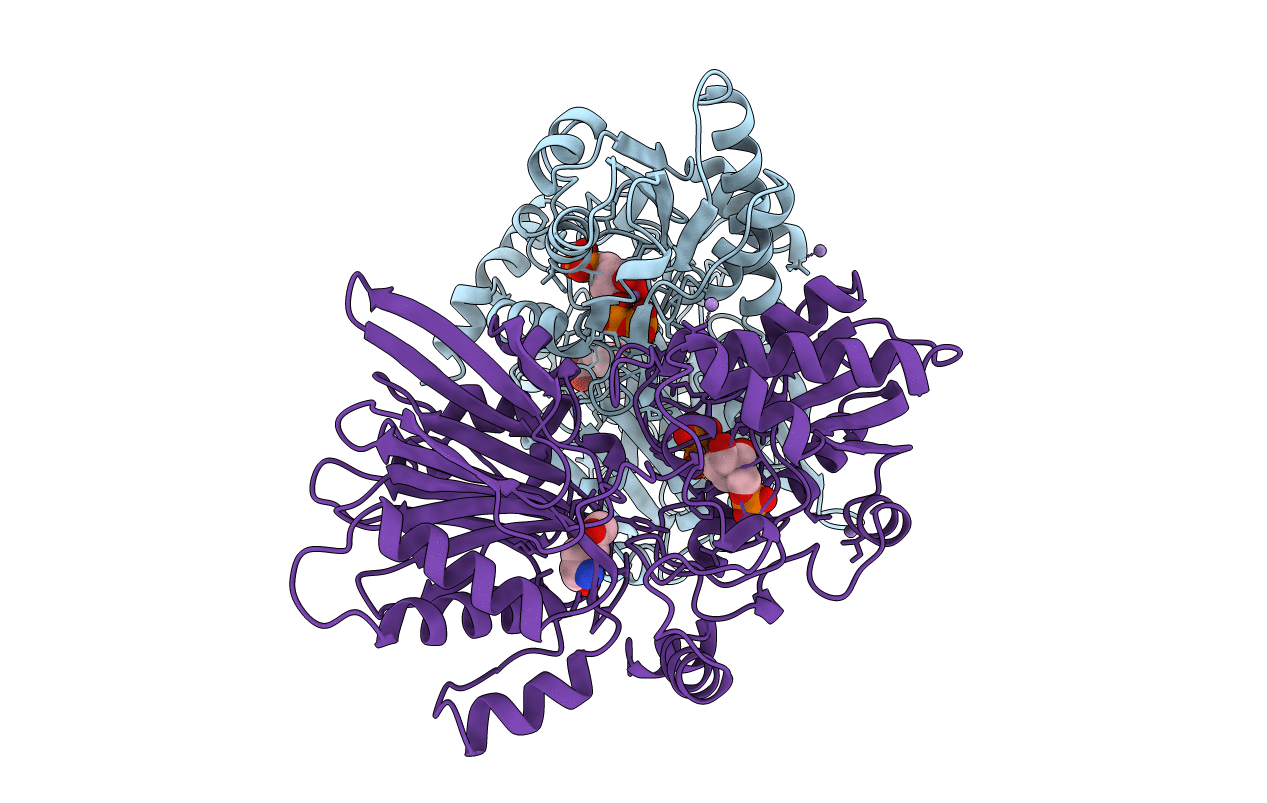
1ECC image
Deposition Date 1997-07-09
Release Date 1998-04-15
Last Version Date 2023-08-09
Entry Detail
PDB ID:
1ECC
Keywords:
Title:
ESCHERICHIA COLI GLUTAMINE PHOSPHORIBOSYLPYROPHOSPHATE (PRPP) AMIDOTRANSFERASE COMPLEXED WITH MN-CPRPP AND 5-OXO-NORLEUCINE
Biological Source:
Source Organism:
Escherichia coli (Taxon ID: 562)
Method Details:
Experimental Method:
Resolution:
2.40 Å
R-Value Free:
0.26
R-Value Work:
0.17
R-Value Observed:
0.17
Space Group:
P 43 21 2
Macromolecular Entities
Structures with similar UniProt ID
Protein Blast
Polymer Type:polypeptide(L)
Molecule:GLUTAMINE PHOSPHORIBOSYLPYROPHOSPHATE AMIDOTRANSFERASE
Chain IDs:A, B
Chain Length:504
Number of Molecules:2
Biological Source:Escherichia coli
Primary Citation
Coupled formation of an amidotransferase interdomain ammonia channel and a phosphoribosyltransferase active site.
Biochemistry 36 11061 11068 (1997)
PMID: 9333323 DOI: 10.1021/bi9714114

Abstact

Activation of gluatmine phosphoribosylpyrophosphate (RPPP) amidotransferase (GPATase) by binding of a PRPP substrate analog results in the formation of a 20 A channel connecting the active site for glutamine hydrolysis in one domain with the PRPP site in a second domain. This solvent-inaccessible channel permits transfer of the NH3 intermediate between the two active sites. Tunneling of NH3 may be a common mechanism for glutamine amidotransferase-catalyzed nitrogen transfer and for coordination of catalysis at two distinct active sites in complex enzymes. The 2.4 A crystal structure of the active conformer of GPATase also provides the first description of an intact active site for the phosphoribosyltransferase (PRTase) family of nucleotide synthesis and salvage enzymes. Chemical assistance to catalysis is provided primarily by the substrate and secondarily by the enzyme in the proposed structure-based mechanism. Different catalytic and inhibitory modes of divalent cation binding to the PRTase active site are revealed in the active conformer of the enzyme and in a feedback-inhibited GMP complex.

Legend

Protein

Chemical

Disease

Primary Citation of related structures
Feedback Form
Name
Email
Institute
Feedback