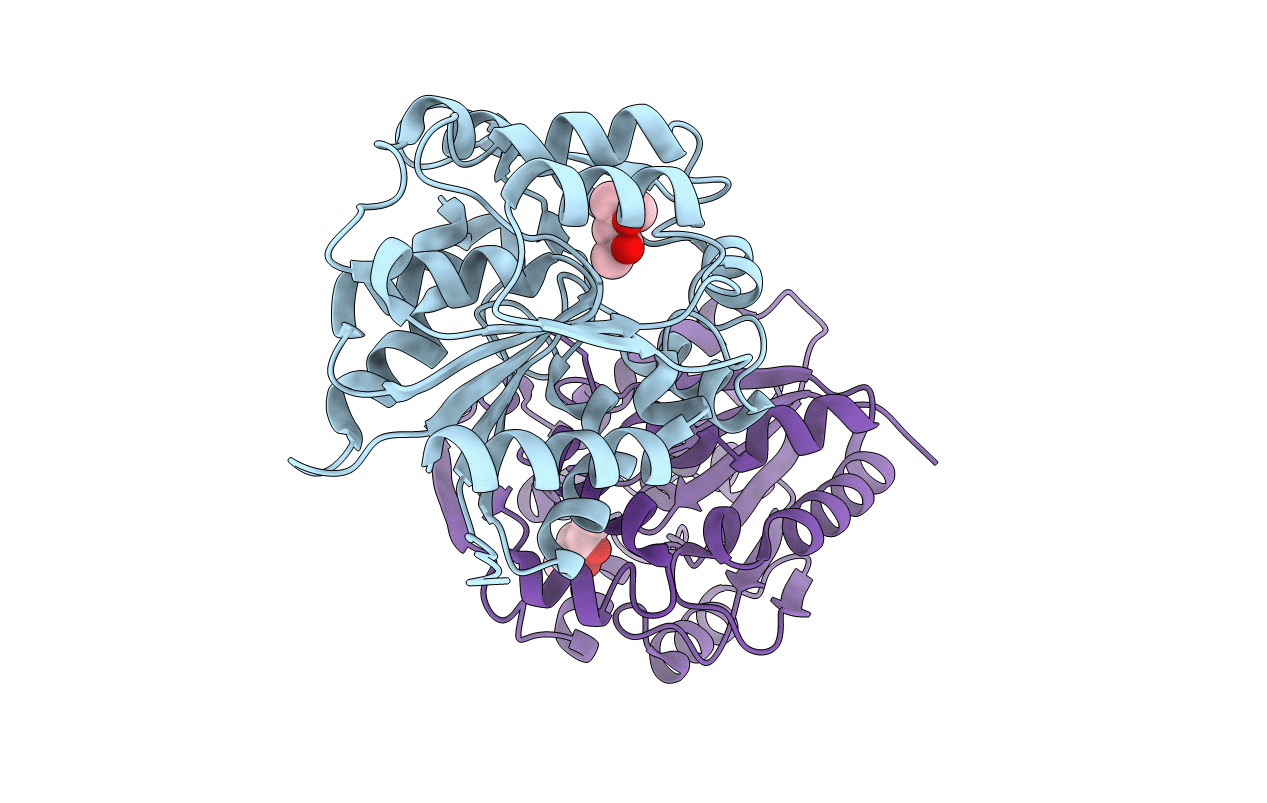
1EB8 image
Deposition Date 2001-07-24
Release Date 2002-01-01
Last Version Date 2023-12-13
Entry Detail
PDB ID:
1EB8
Keywords:
Title:
Structure Determinants of Substrate Specificity of Hydroxynitrile Lyase from Manihot esculenta
Biological Source:
Source Organism:
Host Organism:
Method Details:
Experimental Method:
Resolution:
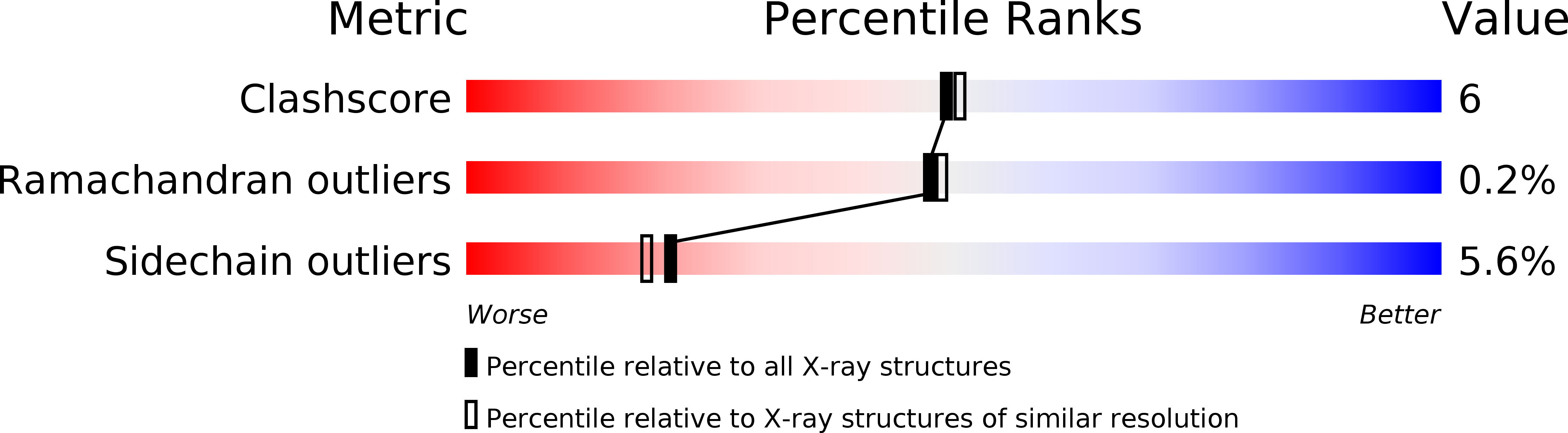
2.10 Å
R-Value Free:
0.23
R-Value Work:
0.19
R-Value Observed:
0.19
Space Group:
P 41 21 2
Macromolecular Entities
Structures with similar UniProt ID
Protein Blast
Polymer Type:polypeptide(L)
Molecule:(S)-ACETONE-CYANOHYDRIN LYASE
Gene (Uniprot):HNL
Mutagens:YES
Chain IDs:A, B
Chain Length:262
Number of Molecules:2
Biological Source:MANIHOT ESCULENTA
Ligand Molecules
Primary Citation
Structure Determinants of Substrate Specificity of Hydroxynitrile Lyase from Manihot Esculenta.
Protein Sci. 11 65 ? (2002)
PMID: 11742123 DOI: 10.1110/PS.PS.33702

Abstact

Tryptophan 128 of hydroxynitrile lyase of Manihot esculenta (MeHNL) covers a significant part of a hydrophobic channel that gives access to the active site of the enzyme. This residue was therefore substituted in the mutant MeHNL-W128A by alanine to study its importance for the substrate specificity of the enzyme. Wild-type MeHNL and MeHNL-W128A showed comparable activity on the natural substrate acetone cyanohydrin (53 and 40 U/mg, respectively). However, the specific activities of MeHNL-W128A for the unnatural substrates mandelonitrile and 4-hydroxymandelonitrile are increased 9-fold and approximately 450-fold, respectively, compared with the wild-type MeHNL. The crystal structure of the MeHNL-W128A substrate-free form at 2.1 A resolution indicates that the W128A substitution has significantly enlarged the active-site channel entrance, and thereby explains the observed changes in substrate specificity for bulky substrates. Surprisingly, the MeHNL-W128A--4-hydroxybenzaldehyde complex structure at 2.1 A resolution shows the presence of two hydroxybenzaldehyde molecules in a sandwich type arrangement in the active site with an additional hydrogen bridge to the reacting center.

Legend

Protein

Chemical

Disease

Primary Citation of related structures
Feedback Form
Name
Email
Institute
Feedback