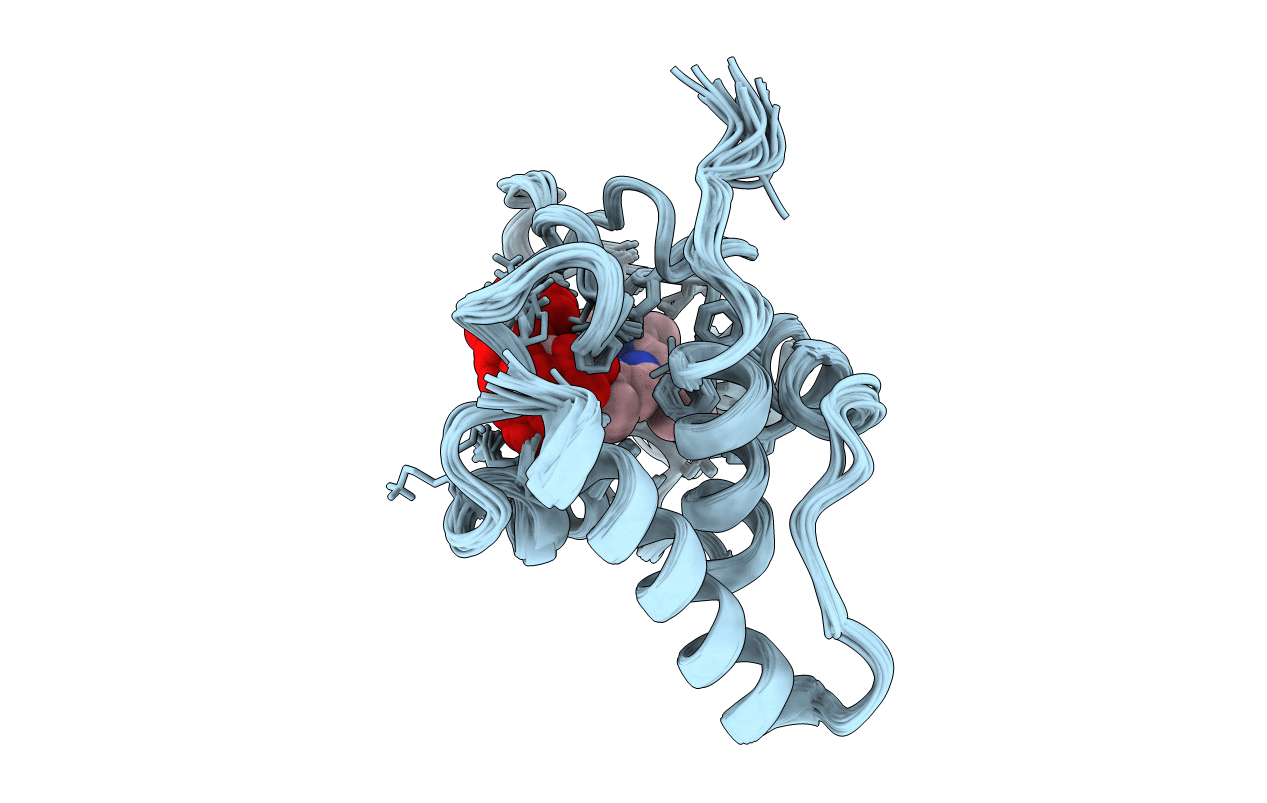
1E8E image
Deposition Date 2000-09-20
Release Date 2001-09-20
Last Version Date 2024-10-23
Entry Detail
PDB ID:
1E8E
Title:
Solution Structure of Methylophilus methylotrophus Cytochrome c''. Insights into the Structural Basis of Haem-Ligand Detachment
Biological Source:
Source Organism:
Method Details:
Experimental Method:
Conformers Calculated:
400
Conformers Submitted:
20
Selection Criteria:
LEAST RESTRAINT VIOLATION

Macromolecular Entities
Structures with similar UniProt ID
Protein Blast
Polymer Type:polypeptide(L)
Molecule:CYTOCHROME C''
Gene (Uniprot):cycA
Chain IDs:A
Chain Length:124
Number of Molecules:1
Biological Source:METHYLOPHILUS METHYLOTROPHUS
Ligand Molecules
Primary Citation
Solution Structure of Methylophilus Methylotrophus Cytochrome C": Insights Into the Structural Basis of Haem-Ligand Detachment
J.Mol.Biol. 308 353 ? (2001)
PMID: 11327772 DOI: 10.1006/JMBI.2001.4600

Abstact

Cytochrome c" from Methylophilus methylotrophus is a monohaem protein with 124 amino acid residues. The iron has two histidine ligands in the oxidised form, one of which detaches and picks up a proton when the protein is reduced. Thus, both forms are paramagnetic. The structure of the oxidised form in solution, determined from NMR data is presented. The family of structures has an average backbone rmsd value of 0.53 A, and a heavy atom rmsd value of 0.95 A, within a target function range of 32 %. This structure is related to class I cytochromes with an additional helix at the N terminus. The haem-binding site occurs in a domain essentially lacking secondary structure motifs and the axial histidinyl residues were found in an unusual near perpendicular orientation. Moreover, a disulfide bridge is present, an uncommon structural feature among c-type cytochromes. The disulfide bridge, linking cysteine residues 96 and 104, forms a loop that confers rigidity and is essential to the detachment of the axial histidine (His95) as demonstrated by chemical disruption of the S-S bond. A route for protonation of the distal histidine involving haem propionate 17 is proposed and discussed in the light of available models for complex membrane proton pumps.

Legend

Protein

Chemical

Disease

Primary Citation of related structures
Feedback Form
Name
Email
Institute
Feedback