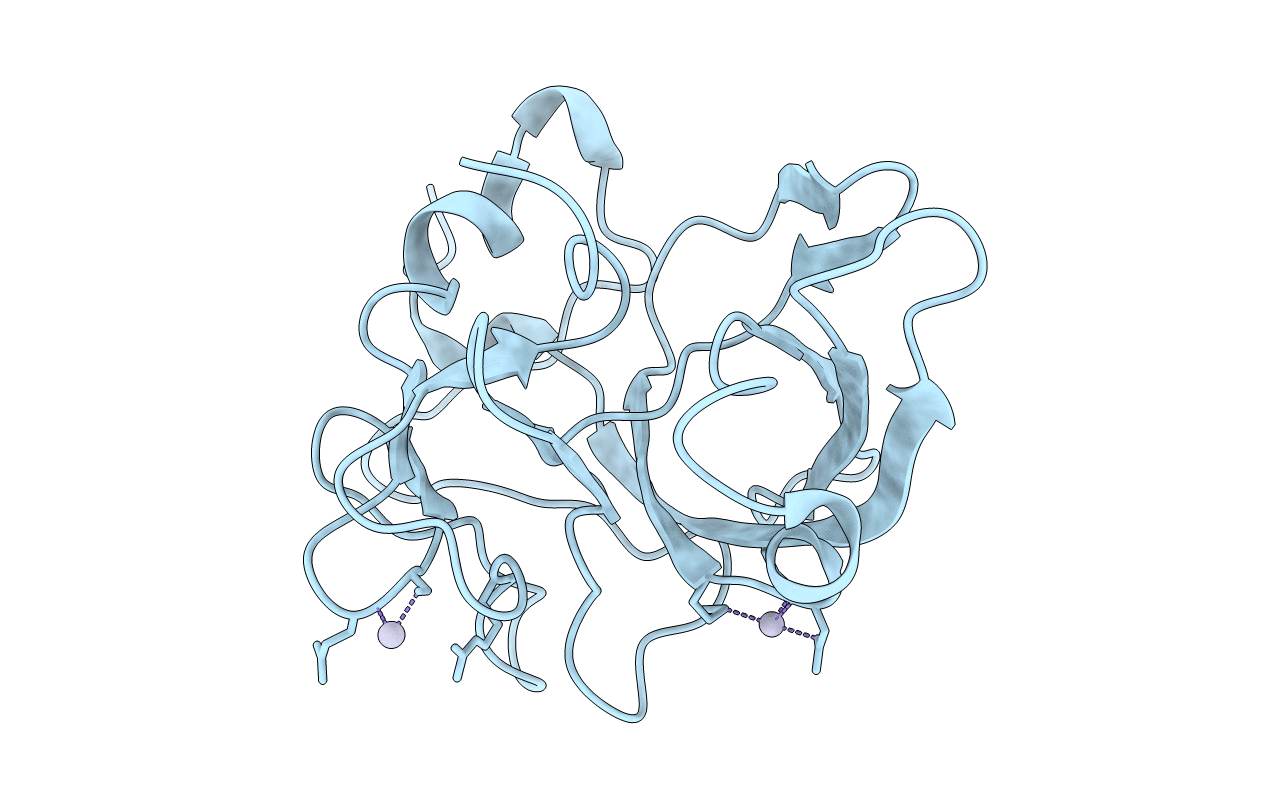
1E7Z image
Deposition Date 2000-09-13
Release Date 2000-11-27
Last Version Date 2023-12-13
Entry Detail
PDB ID:
1E7Z
Title:
Crystal structure of the EMAP2/RNA binding domain of the p43 protein from human aminoacyl-tRNA synthetase complex
Biological Source:
Source Organism:
HOMO SAPIENS (Taxon ID: 9606)
Host Organism:
Method Details:
Experimental Method:
Resolution:
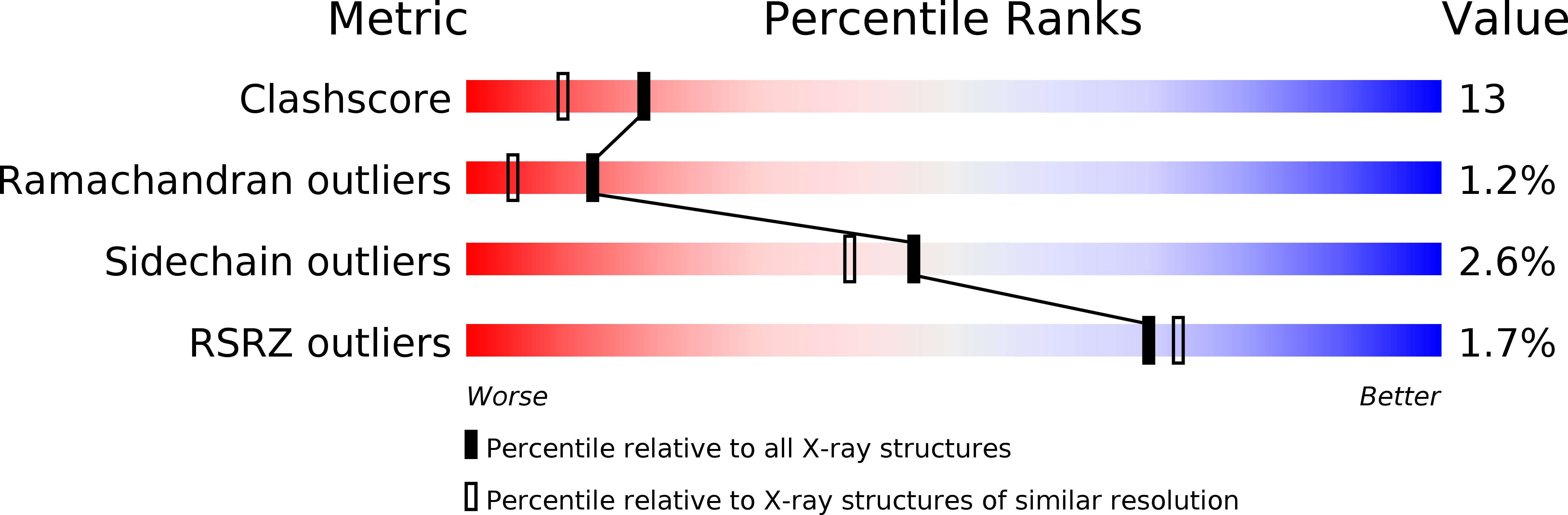
2.05 Å
R-Value Free:
0.27
R-Value Work:
0.22
R-Value Observed:
0.22
Space Group:
P 1 21 1
Macromolecular Entities
Structures with similar UniProt ID
Protein Blast
Polymer Type:polypeptide(L)
Molecule:ENDOTHELIAL-MONOCYTE ACTIVATING POLYPEPTIDE II
Gene (Uniprot):AIMP1
Chain IDs:A
Chain Length:174
Number of Molecules:1
Biological Source:HOMO SAPIENS
Ligand Molecules
Primary Citation
Structure of the Emapii Domain of Human Aminoacyl-tRNA Synthetase Complex Reveals Evolutionary Dimeric Mimicry
Embo J. 20 570 ? (2001)
PMID: 11157763 DOI: 10.1093/EMBOJ/20.3.570

Abstact

The EMAPII (endothelial monocyte-activating polypeptide II) domain is a tRNA-binding domain associated with several aminoacyl-tRNA synthetases, which becomes an independent domain with inflammatory cytokine activity upon apoptotic cleavage from the p43 component of the multisynthetase complex. It comprises a domain that is highly homologous to bacterial tRNA-binding proteins (Trbp), followed by an extra domain without homology to known proteins. Trbps, which may represent ancient tRNA chaperones, form dimers and bind one tRNA per dimer. In contrast, EMAPII domains are monomers. Here we report the crystal structure at 1.14 Angstroms of human EMAPII. The structure reveals that the Trbp-like domain, which forms an oligonucleotide-binding (OB) fold, is related by degenerate 2-fold symmetry to the extra-domain. The pseudo-axis coincides with the dyad axis of bacterial TtCsaA, a Trbp whose structure was solved recently. The interdomain interface in EMAPII mimics the intersubunit interface in TtCsaA, and may thus generate a novel OB-fold-based tRNA-binding site. The low sequence homology between the extra domain of EMAPII and either its own OB fold or that of Trbps suggests that dimer mimicry originated from convergent evolution rather than gene duplication.

Legend

Protein

Chemical

Disease

Primary Citation of related structures
Feedback Form
Name
Email
Institute
Feedback