1DZO image
Deposition Date 2000-03-06
Release Date 2000-06-11
Last Version Date 2024-11-20
Entry Detail
PDB ID:
1DZO
Keywords:
Title:
Truncated PAK pilin from Pseudomonas aeruginosa
Biological Source:
Source Organism:
Host Organism:
Method Details:
Experimental Method:
Resolution:
1.63 Å
R-Value Free:
0.18
R-Value Work:
0.15
Space Group:
P 41 21 2
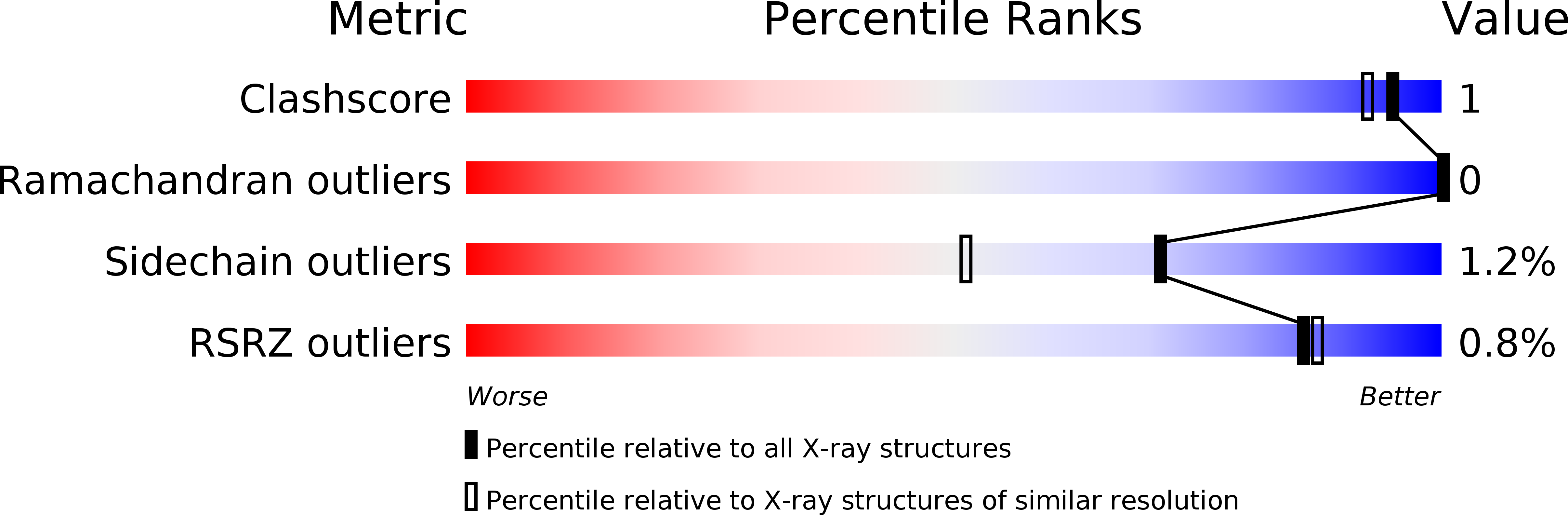
Macromolecular Entities
Structures with similar UniProt ID
Protein Blast
Polymer Type:polypeptide(L)
Molecule:TYPE IV PILIN
Gene (Uniprot):pilA
Mutagens:YES
Chain IDs:A
Chain Length:123
Number of Molecules:1
Biological Source:PSEUDOMONAS AERUGINOSA PAK
Primary Citation
Crystal Structure of Pseudomonas Aeruginosa Pak Pilin Suggests a Main-Chain-Dominated Mode of Receptor Binding
J.Mol.Biol. 299 1005 ? (2000)
PMID: 10843854 DOI: 10.1006/JMBI.2000.3801

Abstact

Fibers of pilin monomers (pili) form the dominant adhesin of Pseudomonas aeruginosa, and they play an important role in infections by this opportunistic bacterial pathogen. Blocking adhesion is therefore a target for vaccine development. The receptor-binding site is located in a C-terminal disulphide-bonded loop of each pilin monomer, but functional binding sites are displayed only at the tip of the pilus. A factor complicating vaccination is that different bacterial strains produce distinct, and sometimes highly divergent, pilin variants. It is surprising that all strains still appear to bind a common receptor, asialo-GM1. Here, we present the 1.63 A crystal structure of pilin from P. aeruginosa strain PAK. The structure shows that the proposed receptor-binding site is formed by two beta-turns that create a surface dominated by main-chain atoms. Receptor specificity could therefore be maintained, whilst allowing side-chain variation, if the main-chain conformation is conserved. The location of the binding site relative to the proposed packing of the pilus fiber raises new issues and suggests that the current fiber model may have to be reconsidered. Finally, the structure of the C-terminal disulphide-bonded loop will provide the template for the structure-based design of a consensus sequence vaccine.

Legend

Protein

Chemical

Disease

Primary Citation of related structures
Feedback Form
Name
Email
Institute
Feedback