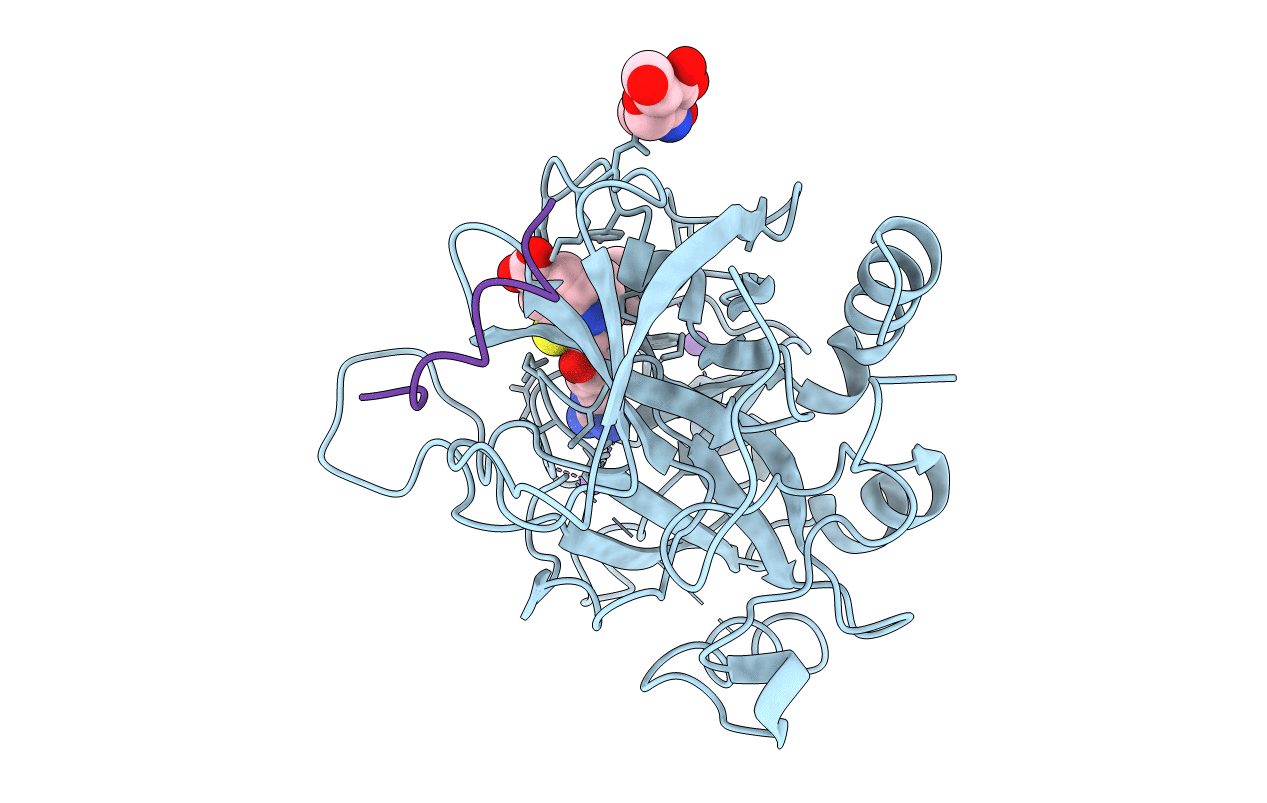
1DOJ image
Deposition Date 1999-12-21
Release Date 2000-11-03
Last Version Date 2024-10-30
Entry Detail
PDB ID:
1DOJ
Title:
Crystal structure of human alpha-thrombin*RWJ-51438 complex at 1.7 A
Biological Source:
Source Organism:
Homo sapiens (Taxon ID: 9606)
Method Details:
Experimental Method:
Resolution:
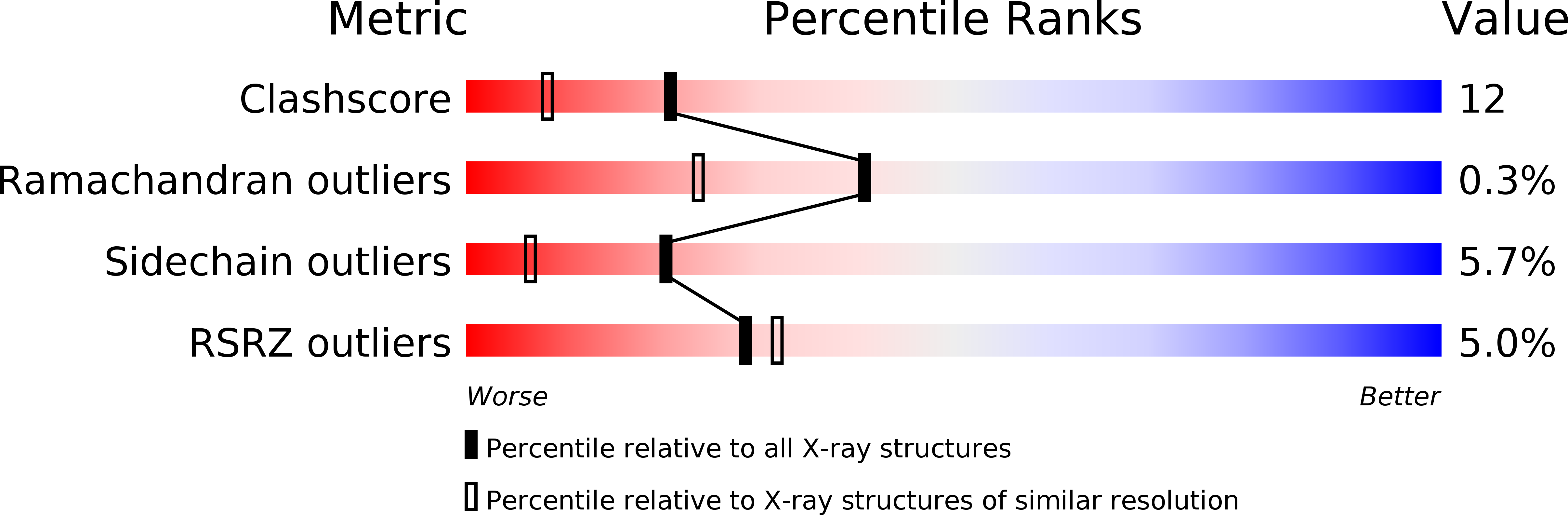
1.70 Å
R-Value Free:
0.21
R-Value Work:
0.17
R-Value Observed:
0.17
Space Group:
P 21 21 2
Macromolecular Entities
Structures with similar UniProt ID
Protein Blast
Polymer Type:polypeptide(L)
Molecule:ALPHA-THROMBIN
Gene (Uniprot):F2
Chain IDs:A
Chain Length:295
Number of Molecules:1
Biological Source:Homo sapiens
Structures with similar UniProt ID
Protein Blast
Polymer Type:polypeptide(L)
Molecule:HIRUGEN
Chain IDs:B
Chain Length:11
Number of Molecules:1
Biological Source:
Modified Residue
Compound ID Chain ID Parent Comp ID Details 2D Image
ASN A ASN GLYCOSYLATION SITE
TYS B TYR O-SULFO-L-TYROSINE
Peptide-like Molecules
PRD_000623
Primary Citation
Structure of human alpha-thrombin complexed with RWJ-51438 at 1.7 A: unusual perturbation of the 60A-60I insertion loop.
Acta Crystallogr.,Sect.D 56 1395 1400 (2000)
PMID: 11053836 DOI: 10.1107/S0907444900010763

Abstact

The three-dimensional structure of the ternary complex consisting of human alpha-thrombin, hirugen and the active-site inhibitor RWJ-51438 has been determined at 1.7 A resolution. The crystals of the complex belong to the orthorhombic space group P2(1)2(1)2, with unit-cell parameters a = 62.98, b = 117.52, c = 47.99 A. The refined R and R(free) values are 0.196 and 0.232, respectively. The ketone carbonyl group of the inhibitor is covalently linked to the hydroxyl O atom of Ser195, forming a tetrahedral intermediate hemiketal structure; the benzothiazole ring N atom of RWJ-51438 forms a hydrogen bond with His57. Surprisingly, the carboxylate substituent on the benzothiazole group forms salt bridges with Lys60F NZ and the NZ of the symmetry-related residues Lys236 and Lys240, which introduces steric effects that perturb the 60A-60I insertion loop, especially at residues Trp60D and Phe60H.

Legend

Protein

Chemical

Disease

Primary Citation of related structures
Feedback Form
Name
Email
Institute
Feedback