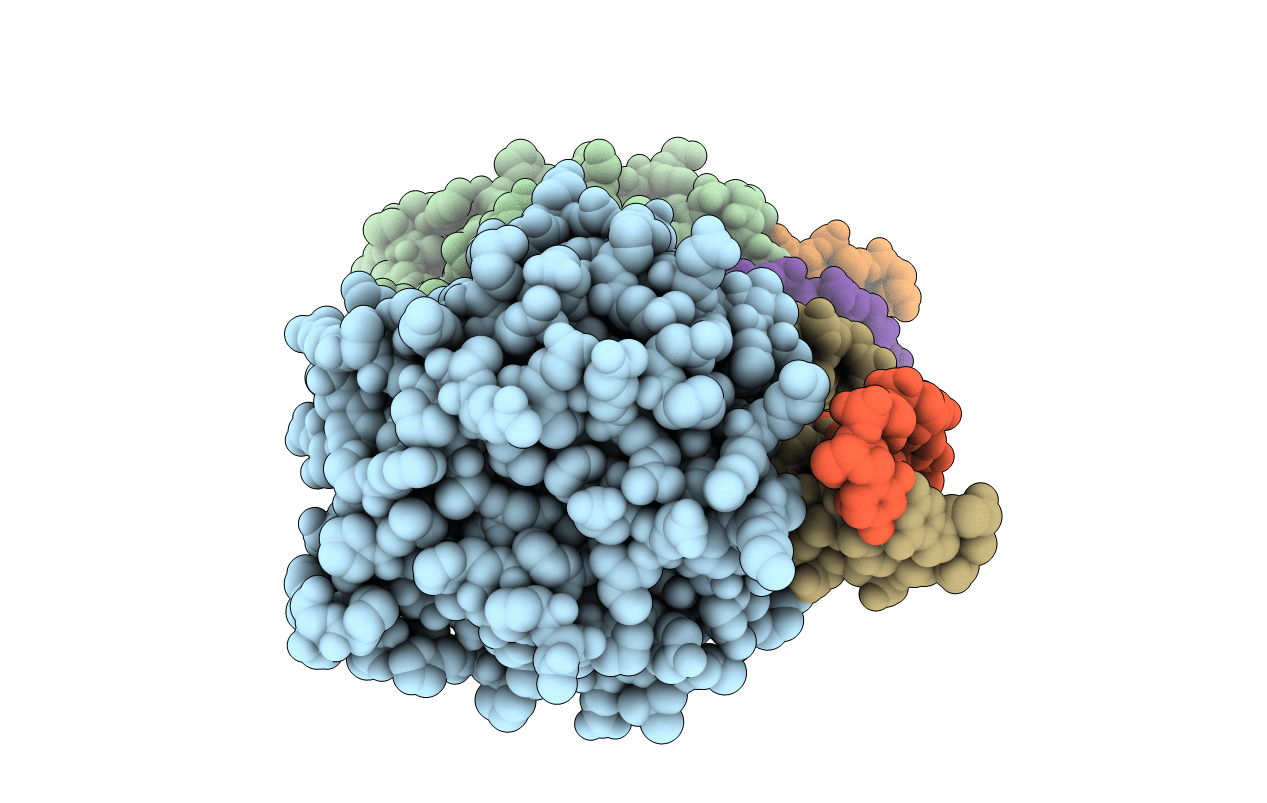
1DE8 image
Deposition Date 1999-11-13
Release Date 2000-02-02
Last Version Date 2024-02-07
Entry Detail
PDB ID:
1DE8
Keywords:
Title:
HUMAN APURINIC/APYRIMIDINIC ENDONUCLEASE-1 (APE1) BOUND TO ABASIC DNA
Biological Source:
Source Organism:
Homo sapiens (Taxon ID: 9606)
Host Organism:
Method Details:
Experimental Method:
Resolution:
2.95 Å
R-Value Free:
0.31
R-Value Work:
0.19
R-Value Observed:
0.19
Space Group:
I 41

Macromolecular Entities
Structures with similar UniProt ID
Protein Blast
Polymer Type:polypeptide(L)
Molecule:MAJOR APURINIC/APYRIMIDINIC ENDONUCLEASE
Gene (Uniprot):APEX1
Chain IDs:E (auth: B), F (auth: A)
Chain Length:276
Number of Molecules:2
Biological Source:Homo sapiens
Primary Citation
DNA-bound structures and mutants reveal abasic DNA binding by APE1 and DNA repair coordination [corrected
Nature 403 451 456 (2000)
PMID: 10667800 DOI: 10.1038/35000249

Abstact

Non-coding apurinic/apyrimidinic (AP) sites in DNA are continually created in cells both spontaneously and by damage-specific DNA glycosylases. The biologically critical human base excision repair enzyme APE1 cleaves the DNA sugar-phosphate backbone at a position 5' of AP sites to prime DNA repair synthesis. Here we report three co-crystal structures of human APE1 bound to abasic DNA which show that APE1 uses a rigid, pre-formed, positively charged surface to kink the DNA helix and engulf the AP-DNA strand. APE1 inserts loops into both the DNA major and minor grooves and binds a flipped-out AP site in a pocket that excludes DNA bases and racemized beta-anomer AP sites. Both the APE1 active-site geometry and a complex with cleaved AP-DNA and Mn2+ support a testable structure-based catalytic mechanism. Alanine substitutions of the residues that penetrate the DNA helix unexpectedly show that human APE1 is structurally optimized to retain the cleaved DNA product. These structural and mutational results show how APE1 probably displaces bound glycosylases and retains the nicked DNA product, suggesting that APE1 acts in vivo to coordinate the orderly transfer of unstable DNA damage intermediates between the excision and synthesis steps of DNA repair.

Legend

Protein

Chemical

Disease

Primary Citation of related structures
Feedback Form
Name
Email
Institute
Feedback