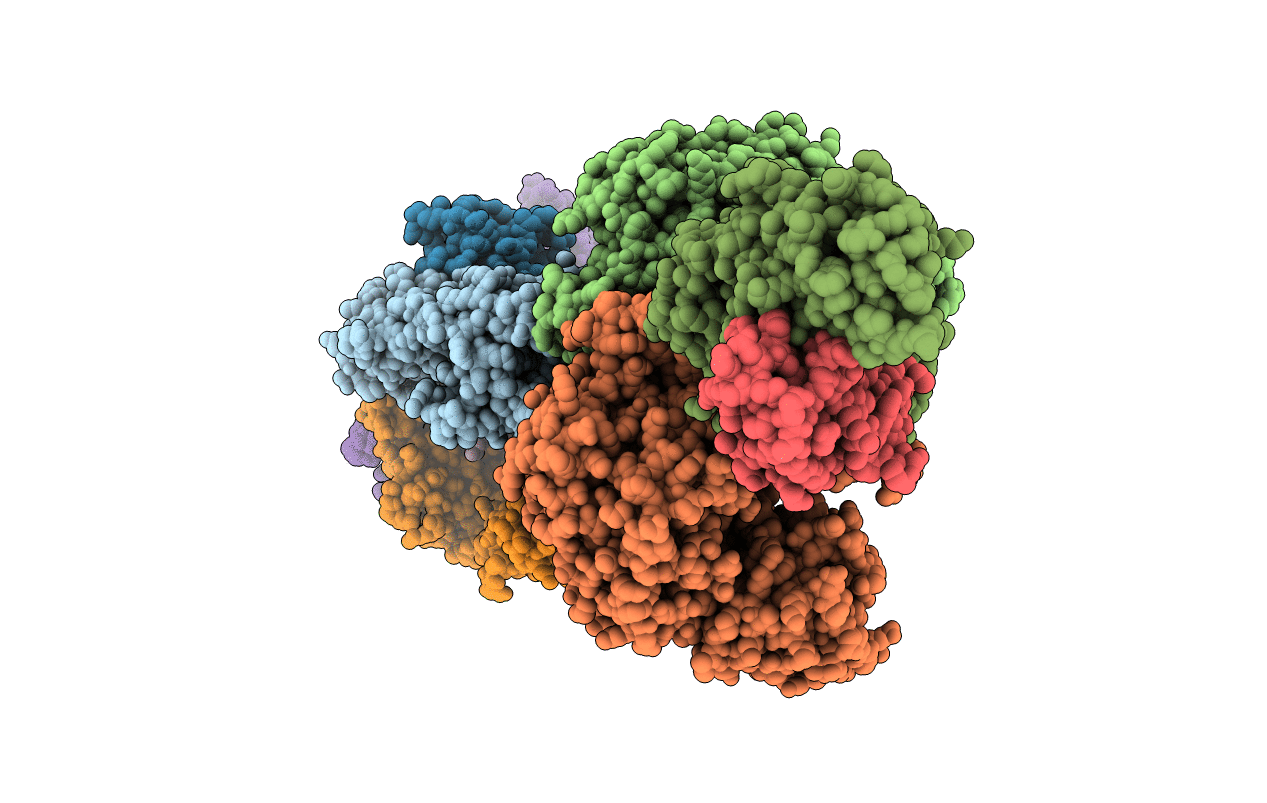
1DE4 image
Deposition Date 1999-11-12
Release Date 2000-01-19
Last Version Date 2024-11-06
Entry Detail
PDB ID:
1DE4
Title:
HEMOCHROMATOSIS PROTEIN HFE COMPLEXED WITH TRANSFERRIN RECEPTOR
Biological Source:
Source Organism:
Homo sapiens (Taxon ID: 9606)
Host Organism:
Method Details:
Experimental Method:
Resolution:
2.80 Å
R-Value Free:
0.26
R-Value Work:
0.23
R-Value Observed:
0.23
Space Group:
C 1 2 1
Macromolecular Entities
Structures with similar UniProt ID
Protein Blast
Polymer Type:polypeptide(L)
Molecule:HEMOCHROMATOSIS PROTEIN
Gene (Uniprot):HFE
Chain IDs:A, D, G
Chain Length:275
Number of Molecules:3
Biological Source:Homo sapiens
Structures with similar UniProt ID
Protein Blast
Polymer Type:polypeptide(L)
Molecule:BETA-2-MICROGLOBULIN
Gene (Uniprot):B2M
Chain IDs:B, E, H
Chain Length:99
Number of Molecules:3
Biological Source:Homo sapiens
Structures with similar UniProt ID
Protein Blast
Polymer Type:polypeptide(L)
Molecule:TRANSFERRIN RECEPTOR
Gene (Uniprot):TFRC
Chain IDs:C, F, I
Chain Length:640
Number of Molecules:3
Biological Source:Homo sapiens
Modified Residue
Compound ID Chain ID Parent Comp ID Details 2D Image
ASN C ASN GLYCOSYLATION SITE
Primary Citation
Crystal structure of the hereditary haemochromatosis protein HFE complexed with transferrin receptor.
Nature 403 46 53 (2000)
PMID: 10638746 DOI: 10.1038/47417

Abstact

HFE is related to major histocompatibility complex (MHC) class I proteins and is mutated in the iron-overload disease hereditary haemochromatosis. HFE binds to the transferrin receptor (TfR), a receptor by which cells acquire iron-loaded transferrin. The 2.8 A crystal structure of a complex between the extracellular portions of HFE and TfR shows two HFE molecules which grasp each side of a twofold symmetric TfR dimer. On a cell membrane containing both proteins, HFE would 'lie down' parallel to the membrane, such that the HFE helices that delineate the counterpart of the MHC peptide-binding groove make extensive contacts with helices in the TfR dimerization domain. The structures of TfR alone and complexed with HFE differ in their domain arrangement and dimer interfaces, providing a mechanism for communicating binding events between TfR chains. The HFE-TfR complex suggests a binding site for transferrin on TfR and sheds light upon the function of HFE in regulating iron homeostasis.

Legend

Protein

Chemical

Disease

Primary Citation of related structures
Feedback Form
Name
Email
Institute
Feedback