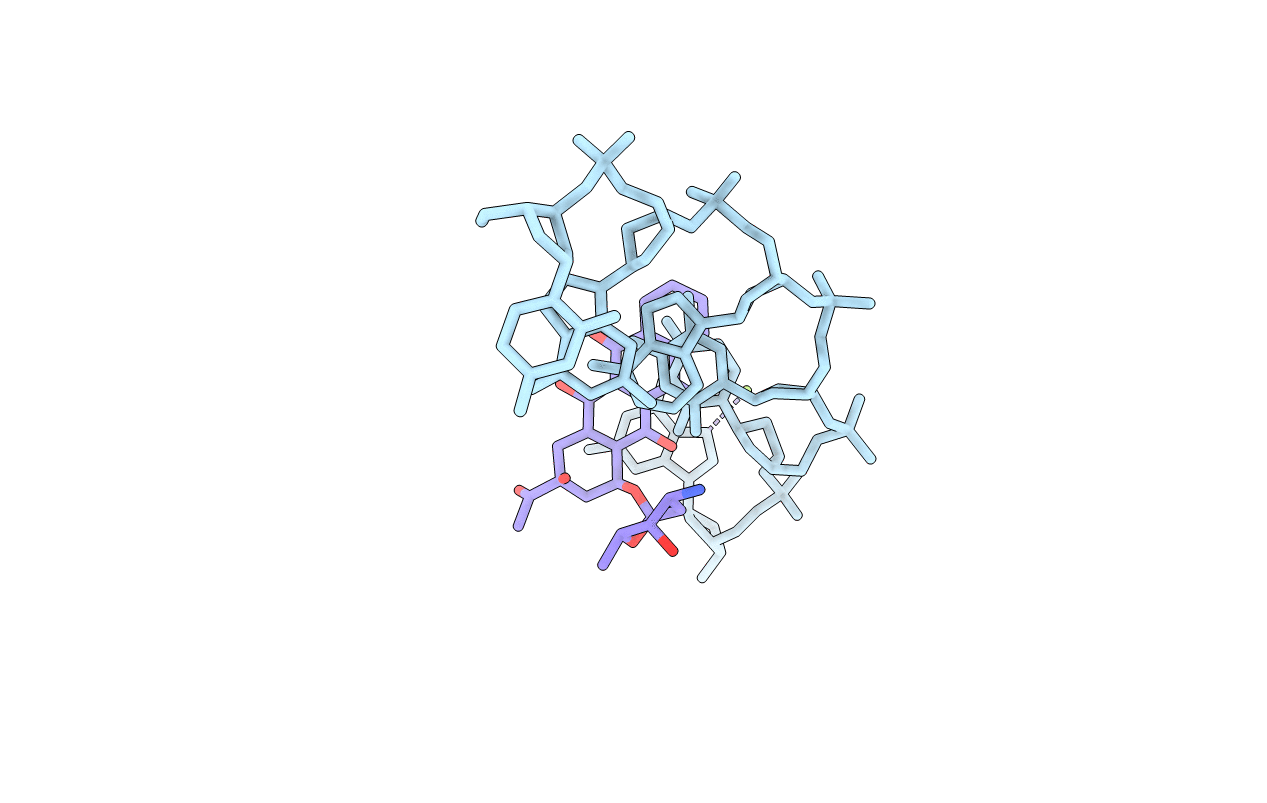
1D38 image
Deposition Date 1991-04-23
Release Date 1992-04-15
Last Version Date 2024-02-07
Entry Detail
PDB ID:
1D38
Keywords:
Title:
INFLUENCE OF AGLYCONE MODIFICATIONS ON THE BINDING OF ANTHRACYCLINE DRUGS TO DNA: THE MOLECULAR STRUCTURE OF IDARUBICIN AND 4-O-DEMETHYL-11-DEOXYDOXORUBICIN COMPLEXED TO D(CGATCG)
Biological Source:
Source Organism:
Method Details:
Experimental Method:
Resolution:
1.70 Å
R-Value Observed:
0.18
Space Group:
P 41 21 2

Macromolecular Entities
Polymer Type:polydeoxyribonucleotide
Molecule:DNA (5'-D(*CP*GP*AP*TP*CP*G)-3')
Chain IDs:A
Chain Length:6
Number of Molecules:1
Biological Source:
Primary Citation
Influence of aglycone modifications on the binding of anthracycline drugs to DNA: the molecular structure of idarubicin and 4-O-demethyl-11-deoxydoxorubicin complexed to d(CGATCG).
Anti-Cancer Drug Des. 6 137 149 (1991)
PMID: 1872945

Abstact

X-ray diffraction analyses of the complexes between two anthracycline antitumor compounds, idarubicin (IDR) and 4-O-demethyl-11-deoxydoxorubicin (ddDOX), with the DNA hexamer d(CGATCG) provided the detailed three-dimensional molecular structures at 1.7 A and 1.8 A resolution, respectively. Their structures have been refined with the constrained refinement procedure to final R-factors of 0.188 (1724 reflections for IDR) and 0.179 (1247 reflections for ddDOX). The overall structures of both complexes are similar to those of the previously studied DAU- and DOX-DNA complexes. In both complexes, two IDR (and ddDOX) molecules bind to the DNA hexamer double helix with the elongated aglycone chromophore intercalated between the CpG steps at both ends of the helix. The aglycone chromophore spans the GC Watson-Crick base pairs with its amino sugar lying in the minor groove where little structural difference is seen, compared with the daunorubicin-d(CGATCG) and doxorubicin-d(CGATCG) complexes. In contrast, the missing C4 methoxy of IDR and the missing methyl group at the O4 position of ddDOX result in a different binding surface in the major groove. The O4 hydroxyl group is capable of receiving and/or donating a hydrogen bond to proteins that bind to the drug-DNA complex. The missing O11 hydroxyl group in ring B creates an empty space in the intercalation cavity between the two GC base pairs, which appears to affect the stacking interactions between the aglycone and the DNA base pairs. Those structural changes in the major groove of the drug-DNA complexes due to the modifications of the aglycone chromophore may be responsible in part for the difference in their biological activities.

Legend

Protein

Chemical

Disease

Primary Citation of related structures
Feedback Form
Name
Email
Institute
Feedback