1CEM image
Deposition Date 1995-12-04
Release Date 1997-01-11
Last Version Date 2024-02-07
Entry Detail
PDB ID:
1CEM
Title:
ENDOGLUCANASE A (CELA) CATALYTIC CORE, RESIDUES 33-395
Biological Source:
Source Organism:
Host Organism:
Method Details:
Experimental Method:
Resolution:
1.65 Å
R-Value Free:
0.19
R-Value Work:
0.16
R-Value Observed:
0.16
Space Group:
P 21 21 21
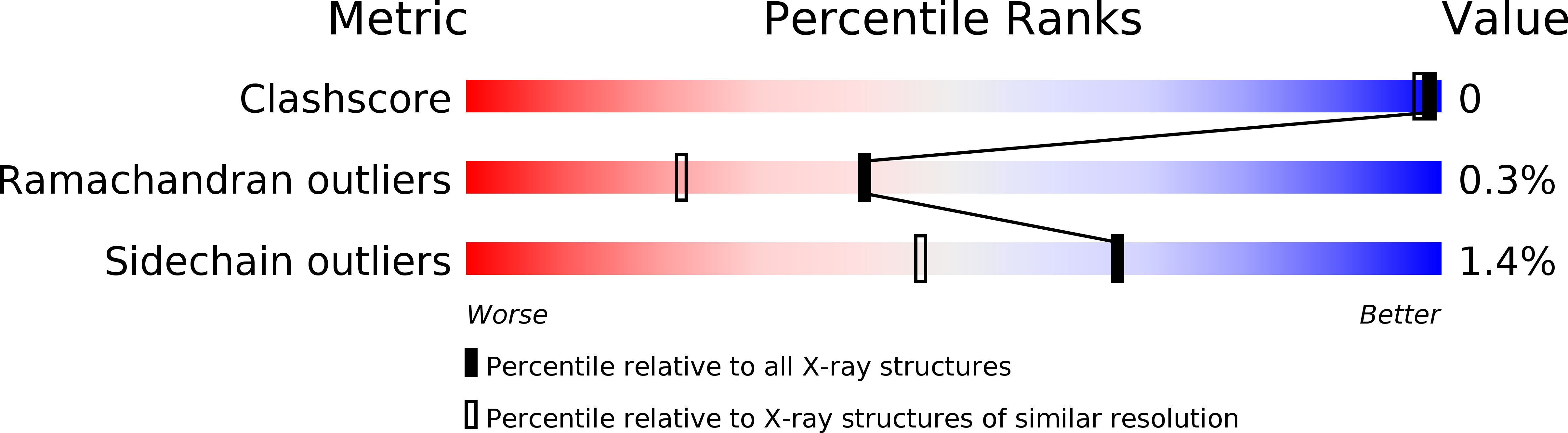
Macromolecular Entities
Structures with similar UniProt ID
Protein Blast
Polymer Type:polypeptide(L)
Molecule:CELLULASE CELA (1,4-BETA-D-GLUCAN-GLUCANOHYDROLASE)
Chain IDs:A
Chain Length:363
Number of Molecules:1
Biological Source:Clostridium thermocellum
Primary Citation
The crystal structure of endoglucanase CelA, a family 8 glycosyl hydrolase from Clostridium thermocellum.
Structure 4 265 275 (1996)
PMID: 8805535 DOI: 10.1016/S0969-2126(96)00031-7

Abstact

BACKGROUND Cellulases, which catalyze the hydrolysis of glycosidic bonds in cellulose, can be classified into several different protein families. Endoglucanase CelA is a member of glycosyl hydrolase family 8, a family for which no structural information was previously available. RESULTS The crystal structure of CelA was determined by multiple isomorphous replacement and refined to 1.65 A resolution. The protein folds into a regular (alpha/alpha)6 barrel formed by six inner and six outer alpha helices. Cello-oligosaccharides bind to an acidic cleft containing at least five D-glucosyl-binding subsites (A-E) such that the scissile glycosidic linkage lies between subsites C and D. The strictly conserved residue Glu95, which occupies the center of the substrate-binding cleft and is hydrogen bonded to the glycosidic oxygen, has been assigned the catalytic role of proton donor. CONCLUSIONS The present analysis provides a basis for modeling homologous family 8 cellulases. The architecture of the active-site cleft, presenting at least five glucosyl-binding subsites, explains why family 8 cellulases cleave cello-oligosaccharide polymers that are at least five D-glycosyl subunits long. Furthermore, the structure of CelA allows comparison with (alpha/alpha)6 barrel glycosidases that are not related in sequence, suggesting a possible, albeit distant, evolutionary relationship between different families of glycosyl hydrolases.

Legend

Protein

Chemical

Disease

Primary Citation of related structures
Feedback Form
Name
Email
Institute
Feedback