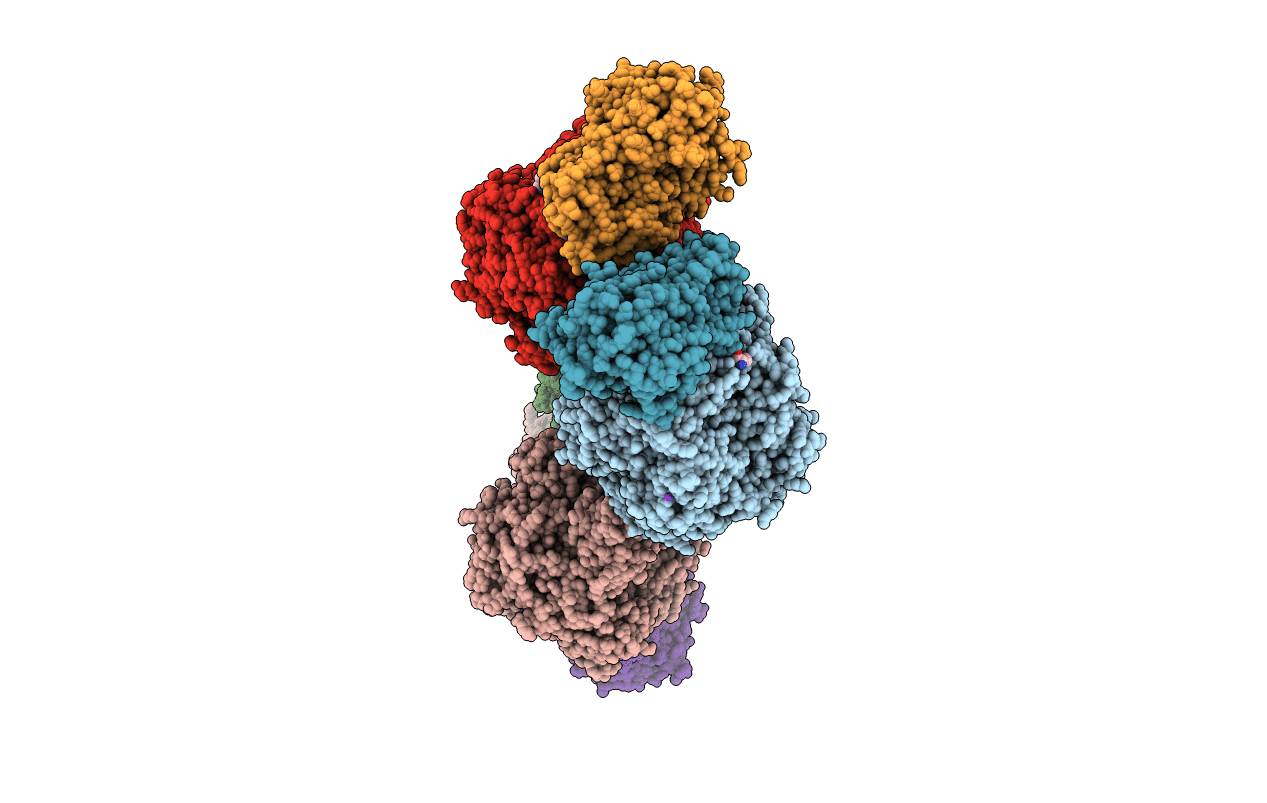
1CE8 image
Deposition Date 1999-03-18
Release Date 1999-07-26
Last Version Date 2023-09-20
Entry Detail
PDB ID:
1CE8
Keywords:
Title:
CARBAMOYL PHOSPHATE SYNTHETASE FROM ESCHERICHIS COLI WITH COMPLEXED WITH THE ALLOSTERIC LIGAND IMP
Biological Source:
Source Organism:
Escherichia coli (Taxon ID: 562)
Host Organism:
Method Details:
Experimental Method:
Resolution:
2.10 Å
R-Value Free:
0.25
R-Value Work:
0.19
R-Value Observed:
0.19
Space Group:
P 21 21 21

Macromolecular Entities
Structures with similar UniProt ID
Protein Blast
Polymer Type:polypeptide(L)
Molecule:PROTEIN (CARBAMOYL-PHOSPHATE SYNTHASE)
Gene (Uniprot):carB
Chain IDs:A, C, E, G
Chain Length:1073
Number of Molecules:4
Biological Source:Escherichia coli
Structures with similar UniProt ID
Protein Blast
Polymer Type:polypeptide(L)
Molecule:PROTEIN (CARBAMOYL-PHOSPHATE SYNTHASE)
Gene (Uniprot):carA
Chain IDs:B, D, F, H
Chain Length:382
Number of Molecules:4
Biological Source:Escherichia coli
Primary Citation
The binding of inosine monophosphate to Escherichia coli carbamoyl phosphate synthetase.
J.Biol.Chem. 274 22502 22507 (1999)
PMID: 10428826 DOI: 10.1074/jbc.274.32.22502

Abstact

Carbamoyl phosphate synthetase (CPS) from Escherichia coli catalyzes the formation of carbamoyl phosphate, which is subsequently employed in both the pyrimidine and arginine biosynthetic pathways. The reaction mechanism is known to proceed through at least three highly reactive intermediates: ammonia, carboxyphosphate, and carbamate. In keeping with the fact that the product of CPS is utilized in two competing metabolic pathways, the enzyme is highly regulated by a variety of effector molecules including potassium and ornithine, which function as activators, and UMP, which acts as an inhibitor. IMP is also known to bind to CPS but the actual effect of this ligand on the activity of the enzyme is dependent upon both temperature and assay conditions. Here we describe the three-dimensional architecture of CPS with bound IMP determined and refined to 2.1 A resolution. The nucleotide is situated at the C-terminal portion of a five-stranded parallel beta-sheet in the allosteric domain formed by Ser(937) to Lys(1073). Those amino acid side chains responsible for anchoring the nucleotide to the polypeptide chain include Lys(954), Thr(974), Thr(977), Lys(993), Asn(1015), and Thr(1017). A series of hydrogen bonds connect the IMP-binding pocket to the active site of the large subunit known to function in the phosphorylation of the unstable intermediate, carbamate. This structural analysis reveals, for the first time, the detailed manner in which CPS accommodates nucleotide monophosphate effector molecules within the allosteric domain.

Legend

Protein

Chemical

Disease

Primary Citation of related structures
Feedback Form
Name
Email
Institute
Feedback