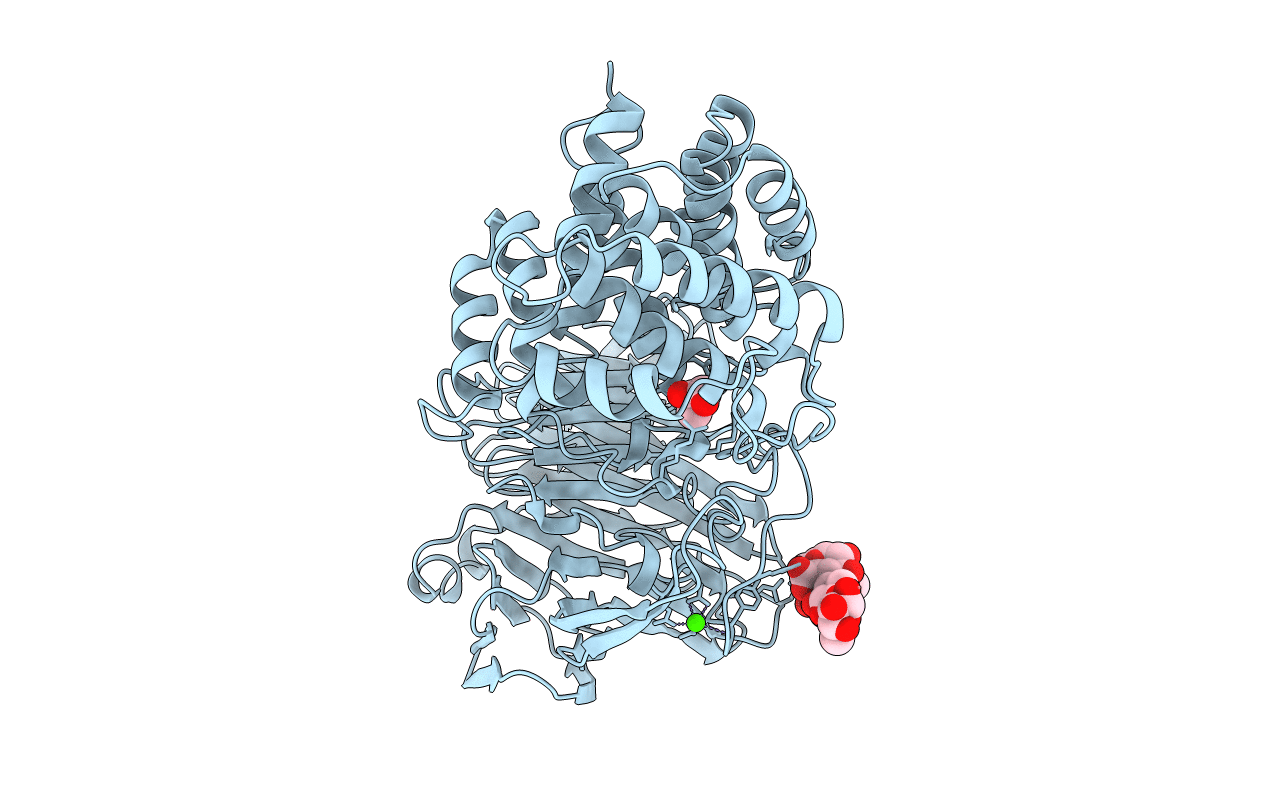
1CB8 image
Deposition Date 1999-03-02
Release Date 1999-05-14
Last Version Date 2023-12-27
Entry Detail
PDB ID:
1CB8
Keywords:
Title:
CHONDROITINASE AC LYASE FROM FLAVOBACTERIUM HEPARINUM
Biological Source:
Source Organism:
Method Details:
Experimental Method:
Resolution:
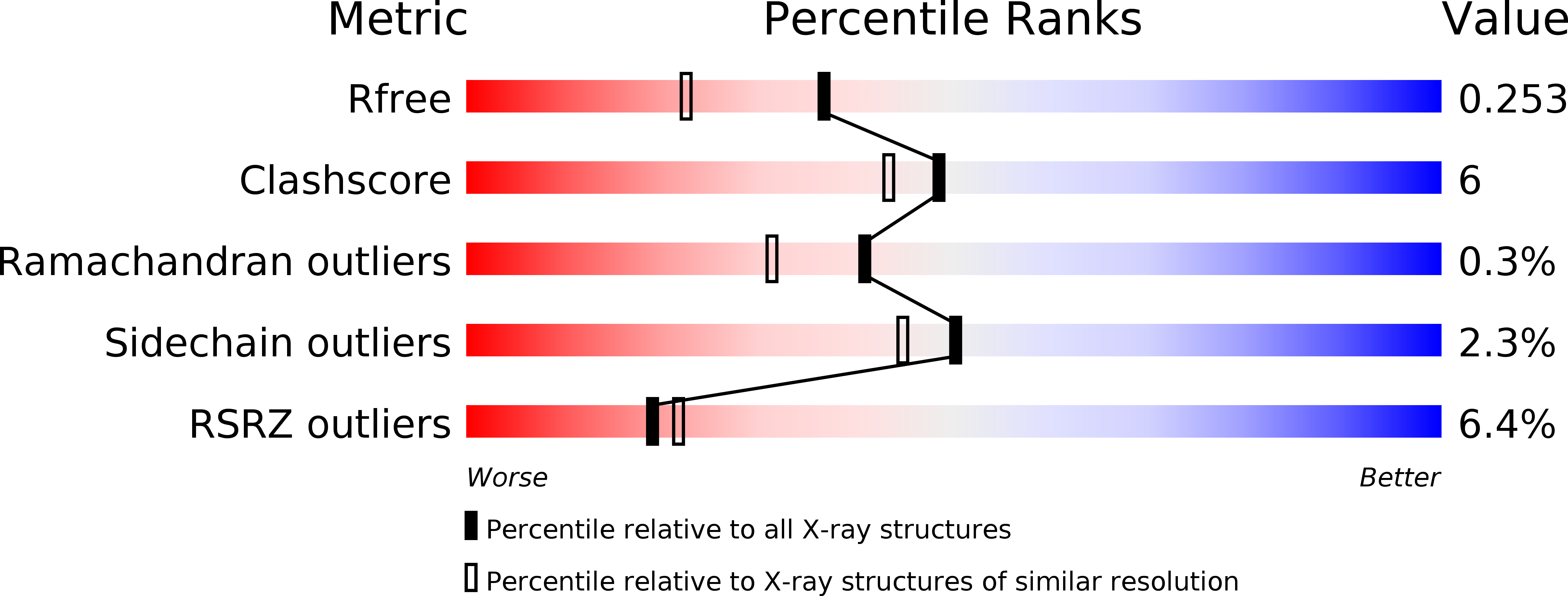
1.90 Å
R-Value Free:
0.26
R-Value Work:
0.19
Space Group:
P 43 21 2
Macromolecular Entities
Structures with similar UniProt ID
Protein Blast
Polymer Type:polypeptide(L)
Molecule:PROTEIN (CHONDROITINASE AC)
Gene (Uniprot):cslA
Chain IDs:A
Chain Length:678
Number of Molecules:1
Biological Source:Pedobacter heparinus
Primary Citation
Crystal structure of chondroitin AC lyase, a representative of a family of glycosaminoglycan degrading enzymes.
J.Mol.Biol. 288 635 647 (1999)
PMID: 10329169 DOI: 10.1006/jmbi.1999.2698

Abstact

Glycosaminoglycans (GAGs), highly sulfated polymers built of hexosamine-uronic acid disaccharide units, are major components of the extracellular matrix, mostly in the form of proteoglycans. They interact with a large array of proteins, in particular of the blood coagulation cascade. Degradation of GAGs in mammalian systems occurs by the action of GAG hydrolases. Bacteria express a large number of GAG-degrading lyases that break the hexosamine-uronic acid bond to create an unsaturated sugar ring. Flavobacterium heparinum produces at least five GAG lyases of different specificity. Chondroitin AC lyase (chondroitinase AC, 75 kDa) is highly active toward chondroitin 4-sulfate and chondroitin-6 sulfate. Its crystal structure has been determined to 1.9 A resolution. The enzyme is composed of two domains. The N-terminal domain of approximately 300 residues contains mostly alpha-helices which form a doubly-layered horseshoe (a subset of the (alpha/alpha)6 toroidal topology). The approximately 370 residues long C-terminal domain is made of beta-strands arranged in a four layered beta-sheet sandwich, with the first two sheets having nine strands each. This fold is novel and has no counterpart in full among known structures. The sequence of chondroitinase AC shows low level of homology to several hyaluronate lyases, which likely share its fold. The shape of the molecule, distribution of electrostatic potential, the pattern of conservation of the amino acids and the results of mutagenesis of hyaluronate lyases, indicate that the enzymatic activity resides primarily within the N-terminal domain. The most likely candidate for the catalytic base is His225. Other residues involved in catalysis and/or substrate binding are Arg288, Arg292, Lys298 and Lys299.

Legend

Protein

Chemical

Disease

Primary Citation of related structures
Feedback Form
Name
Email
Institute
Feedback