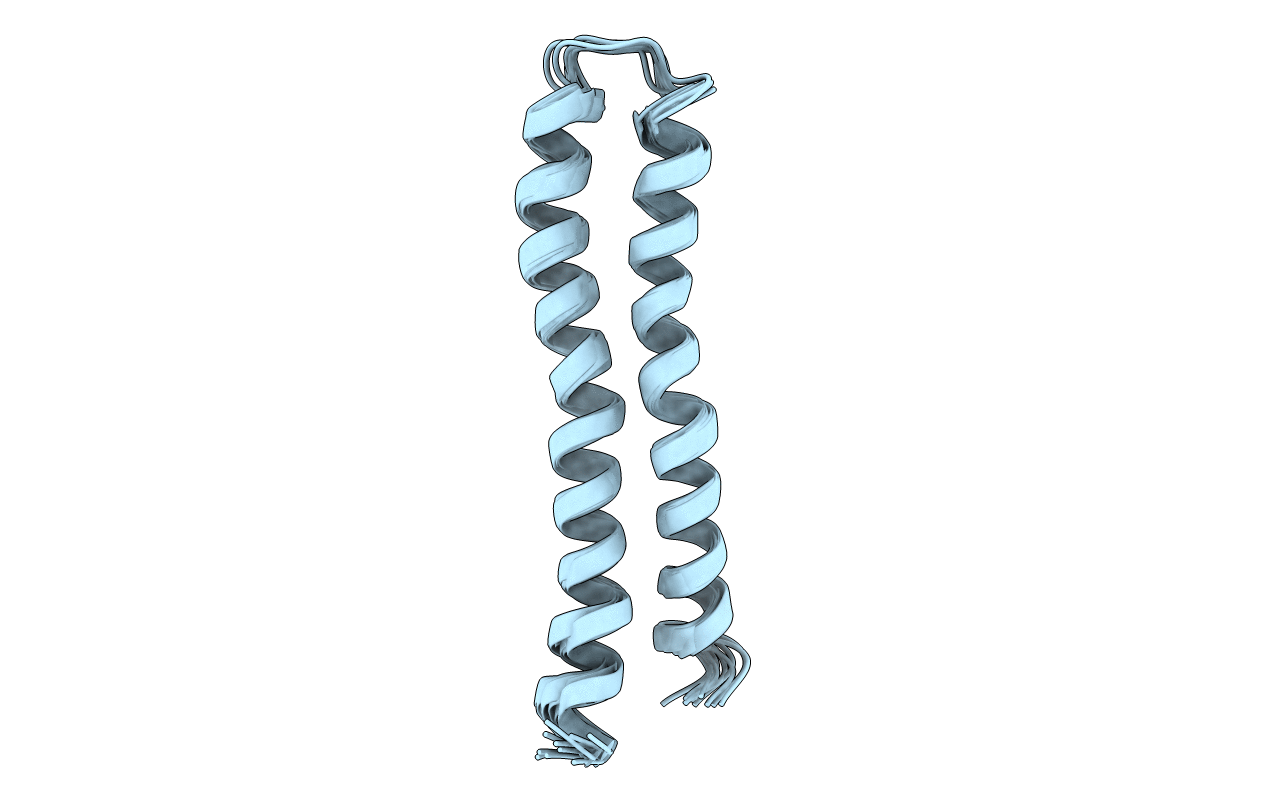
1C0V image
Deposition Date 1999-07-22
Release Date 1999-08-18
Last Version Date 2023-12-27
Entry Detail
PDB ID:
1C0V
Title:
SUBUNIT C OF THE F1FO ATP SYNTHASE OF ESCHERICHIA COLI; NMR, 10 STRUCTURES
Biological Source:
Source Organism:
Escherichia coli (Taxon ID: 562)
Host Organism:
Method Details:
Experimental Method:
Conformers Calculated:
20
Conformers Submitted:
10
Selection Criteria:
LEAST RESTRAINT VIOLATION

Macromolecular Entities
Structures with similar UniProt ID
Protein Blast
Polymer Type:polypeptide(L)
Molecule:PROTEIN (F1FO ATPASE SUBUNIT C)
Gene (Uniprot):atpE
Chain IDs:A
Chain Length:79
Number of Molecules:1
Biological Source:Escherichia coli
Ligand Molecules
Primary Citation
Solution structure of the transmembrane H+-transporting subunit c of the F1F0 ATP synthase.
Biochemistry 37 8817 8824 (1998)
PMID: 9636021 DOI: 10.1021/bi980511m

Abstact

Subunit c is the H+-translocating component of the F1F0 ATP synthase complex. H+ transport is coupled to conformational changes that ultimately lead to ATP synthesis by the enzyme. The properties of the monomeric subunit in a single-phase solution of chloroform-methanol-water (4:4:1) have been shown to mimic those of the protein in the native complex. Triple resonance NMR experiments were used to determine the complete structure of monomeric subunit c in this solvent mixture. The structure of the protein was defined by >2000 interproton distances, 64 (3)JN alpha, and 43 hydrogen-bonding NMR-derived restraints. The root mean squared deviation for the backbone atoms of the two transmembrane helices was 0.63 A. The protein folds as a hairpin of two antiparallel helical segments, connected by a short structured loop. The conserved Arg41-Gln42-Pro43 form the top of this loop. The essential H+-transporting Asp61 residue is located at a slight break in the middle of the C-terminal helix, just prior to Pro64. The C-terminal helix changes direction by 30 +/- 5 degrees at the conserved Pro64. In its protonated form, the Asp61 lies in a cavity created by the absence of side chains at Gly23 and Gly27 in the N-terminal helix. The shape and charge distribution of the molecular surface of the monomeric protein suggest a packing arrangement for the oligomeric protein in the F0 complex, with the front face of one monomer packing favorably against the back face of a second monomer. The packing suggests that the proton (cation) binding site lies between packed pairs of adjacent subunit c.

Legend

Protein

Chemical

Disease

Primary Citation of related structures
Feedback Form
Name
Email
Institute
Feedback