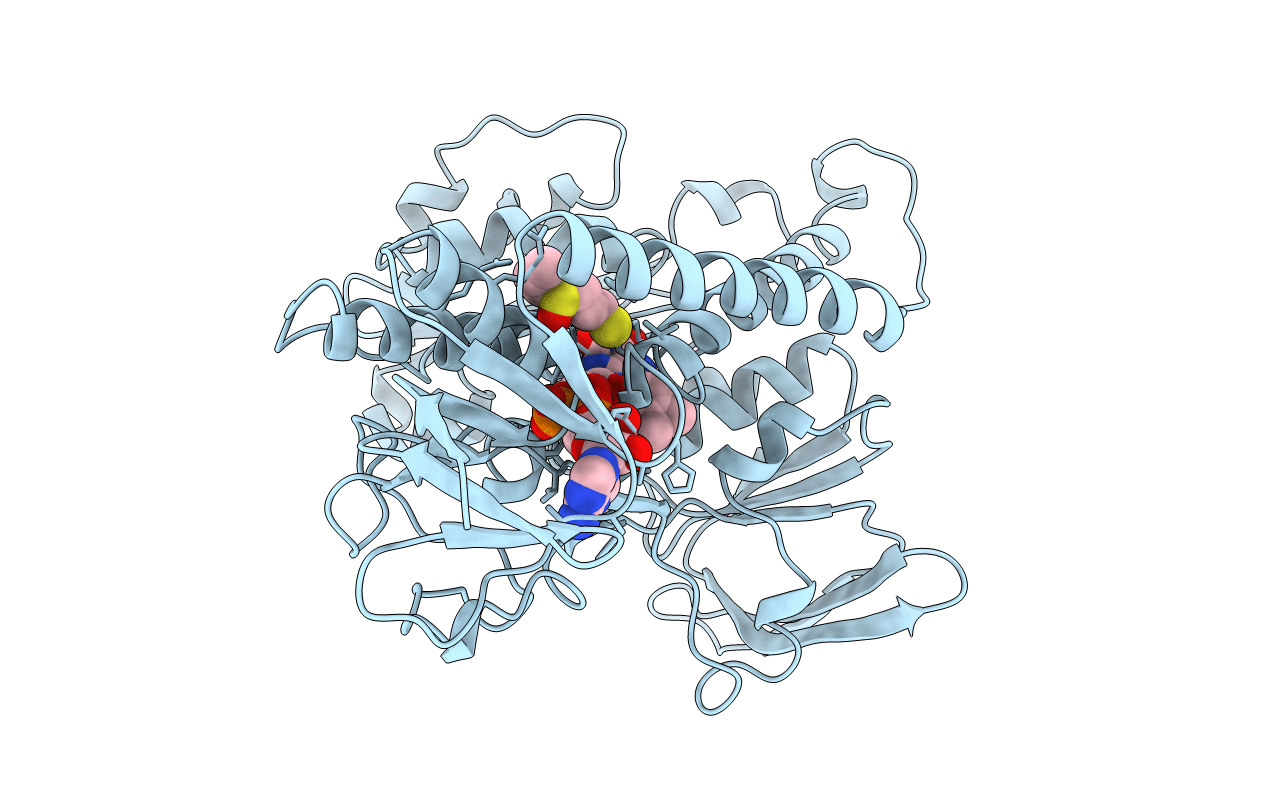
1BWC image
Deposition Date 1998-09-23
Release Date 1999-07-20
Last Version Date 2024-10-16
Entry Detail
PDB ID:
1BWC
Keywords:
Title:
STRUCTURE OF HUMAN GLUTATHIONE REDUCTASE COMPLEXED with AJOENE INHIBITOR AND SUBVERSIVE SUBSTRATE
Biological Source:
Source Organism(s):
Homo sapiens (Taxon ID: 9606)
Expression System(s):
Method Details:
Experimental Method:
Resolution:
2.10 Å
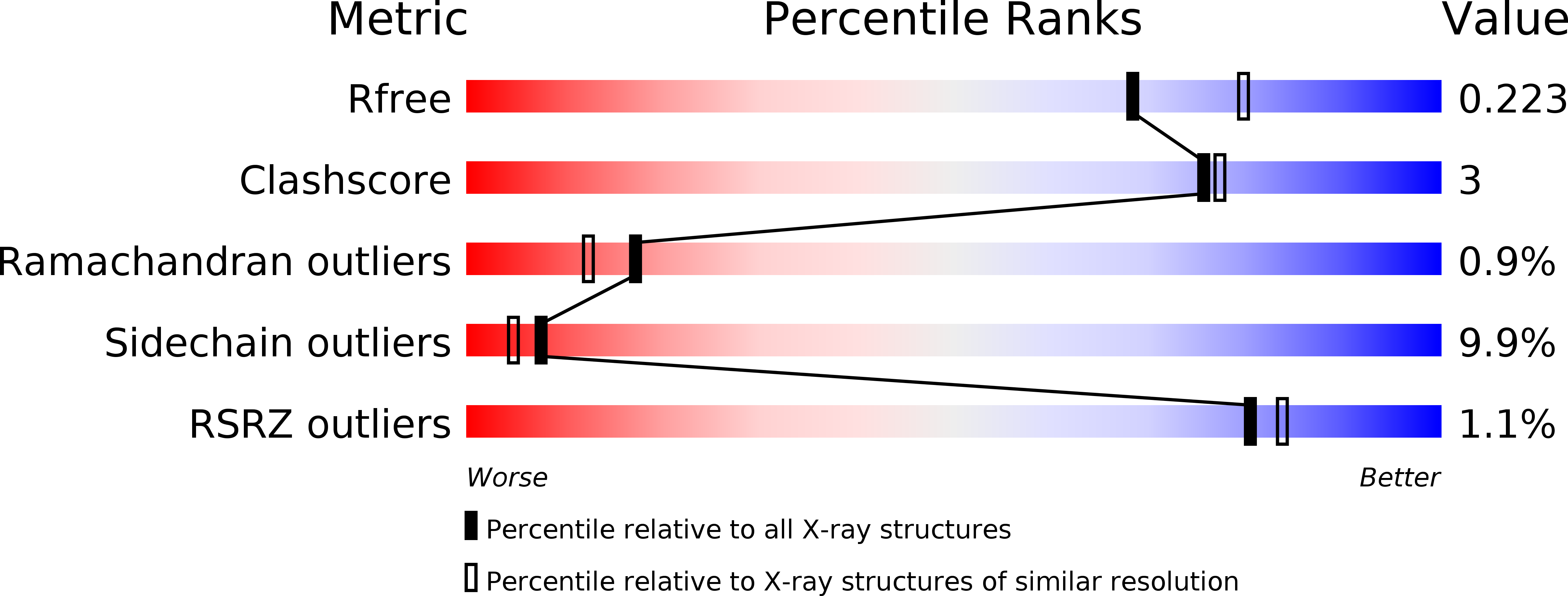
R-Value Free:
0.23
R-Value Work:
0.18
R-Value Observed:
0.18
Space Group:
C 2 2 21
Macromolecular Entities
Structures with similar UniProt ID
Protein Blast
Polymer Type:polypeptide(L)
Molecule:PROTEIN (GLUTATHIONE REDUCTASE)
Gene (Uniprot):GSR
Chain IDs:A
Chain Length:478
Number of Molecules:1
Biological Source:Homo sapiens
Primary Citation
Ajoene is an inhibitor and subversive substrate of human glutathione reductase and Trypanosoma cruzi trypanothione reductase: crystallographic, kinetic, and spectroscopic studies.
J.Med.Chem. 42 364 372 (1999)
PMID: 9986706 DOI: 10.1021/jm980471k

Abstact

Ajoene ((E,Z)-4,5,9-trithiadodeca-1,6,11-triene 9-oxide), a garlic-derived natural compound, is a covalent inhibitor as well as a substrate of human glutathione reductase (GR) and Trypanosoma cruzi trypanothione reductase (TR). The 2.1-A resolution crystal structure of GR inhibited by (E)-ajoene revealed a mixed disulfide between the active site Cys58 and the CH2=CH-CH2-SO-CH2-CH=CH-S moiety of ajoene. The modified enzyme has a markedly increased oxidase activity when compared to free GR. GR reduces (Z)-ajoene with a kcat/Km of 6.8 x 10(3) M-1 s-1 yielding 4,5,9-trithiadodeca-1, 6,11-triene (deoxyajoene) and 4,8,9,13-tetrathiahexadeca-1,6,10, 15-tetraene as stable reaction products. The reaction leads also to the formation of single-electron reduced products and concomitantly superoxide anion radicals as shown by coupling the reaction to the reduction of cytochrome c. The interactions between the flavoenzymes and ajoene are expected to increase the oxidative stress of the respective cell. The antiparasitic and cytostatic actions of ajoene may at least in part be due to the multiple effects on key enzymes of the antioxidant thiol metabolism.

Legend

Protein

Chemical

Disease

Primary Citation of related structures
Feedback Form
Name
Email
Institute
Feedback