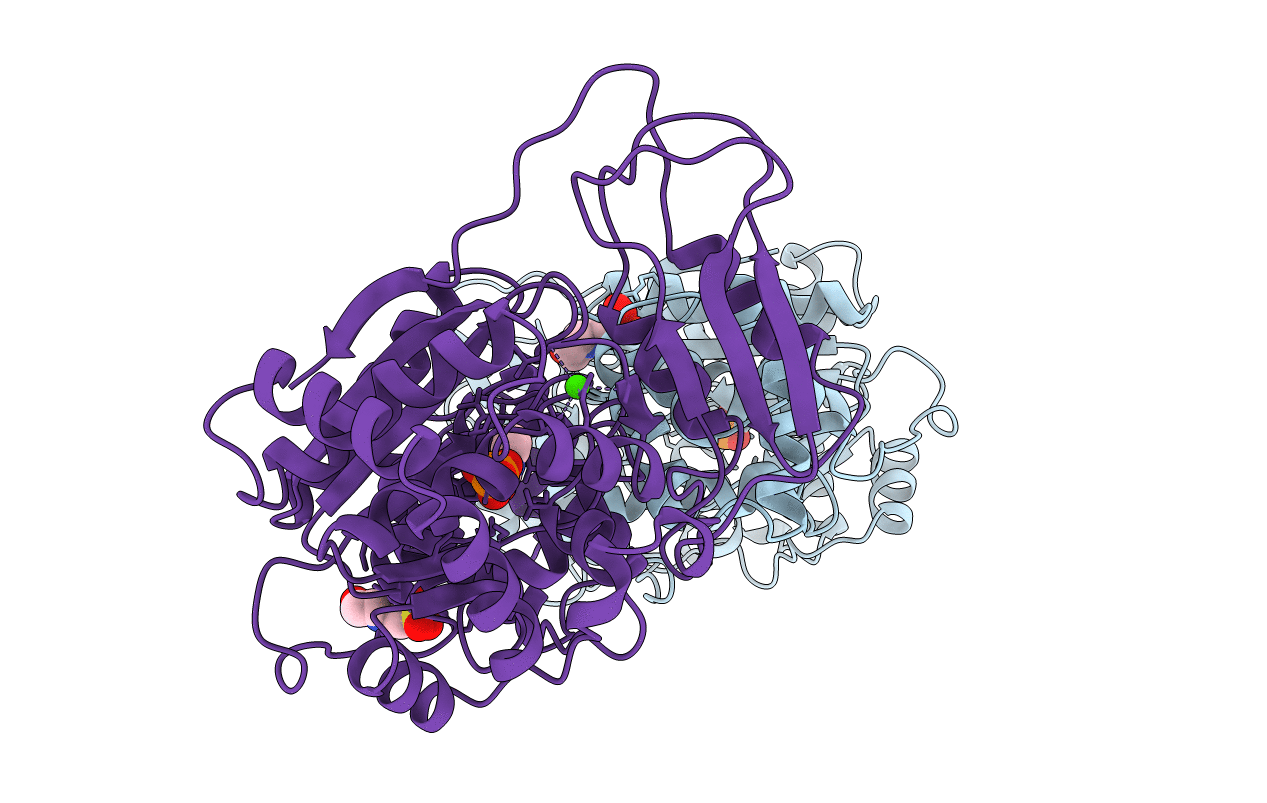
1BRW image
Deposition Date 1998-08-25
Release Date 1999-01-13
Last Version Date 2023-08-09
Entry Detail
PDB ID:
1BRW
Keywords:
Title:
THE CRYSTAL STRUCTURE OF PYRIMIDINE NUCLEOSIDE PHOSPHORYLASE IN A CLOSED CONFORMATION
Biological Source:
Source Organism:
Method Details:
Experimental Method:
Resolution:
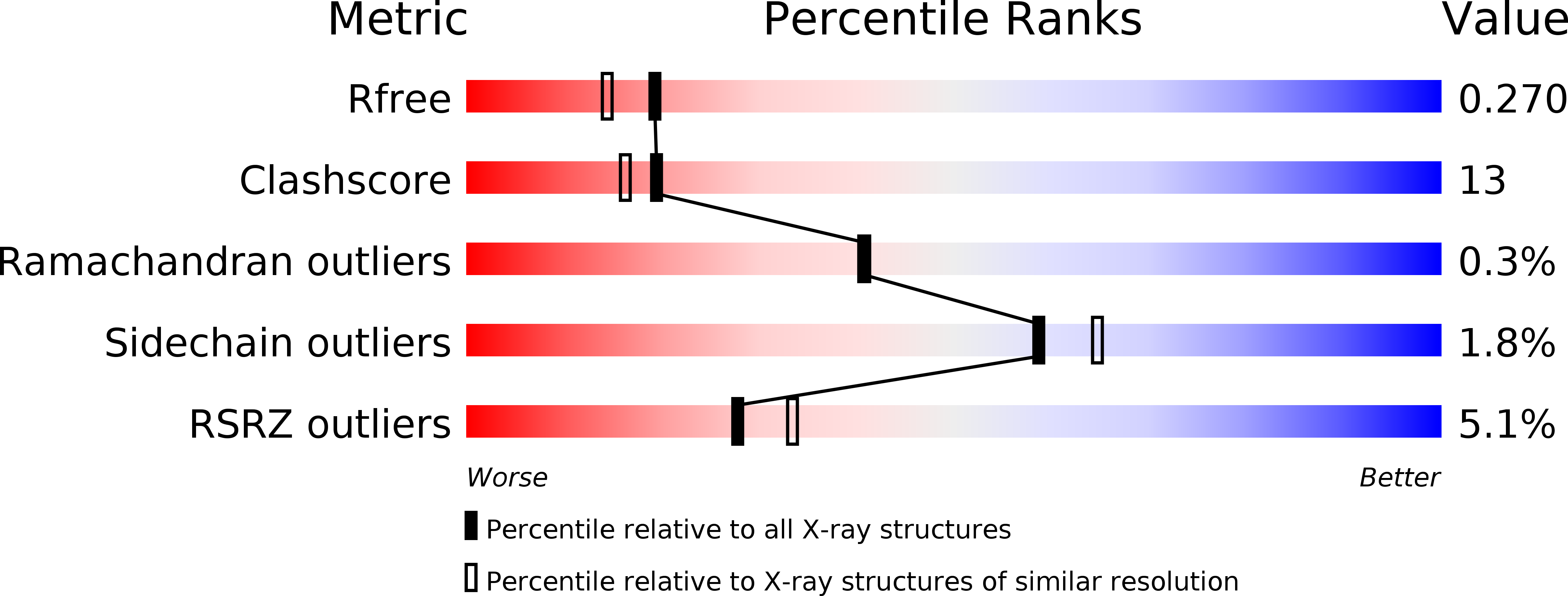
2.10 Å
R-Value Free:
0.27
R-Value Work:
0.23
R-Value Observed:
0.23
Space Group:
P 1 21 1
Macromolecular Entities
Structures with similar UniProt ID
Protein Blast
Polymer Type:polypeptide(L)
Molecule:PROTEIN (PYRIMIDINE NUCLEOSIDE PHOSPHORYLASE)
Gene (Uniprot):pdp
Chain IDs:A, B
Chain Length:433
Number of Molecules:2
Biological Source:Geobacillus stearothermophilus
Primary Citation
The crystal structure of pyrimidine nucleoside phosphorylase in a closed conformation.
Structure 6 1467 1479 (1998)
PMID: 9817849 DOI: 10.1016/S0969-2126(98)00145-2

Abstact

BACKGROUND Pyrimidine nucleoside phosphorylase (PYNP) catalyzes the reversible phosphorolysis of pyrimidines in the nucleotide synthesis salvage pathway. In lower organisms (e.g. Bacillus stearothermophilus) PYNP accepts both thymidine and uridine, whereas in mammalian and other higher organisms it is specific for thymidine (designated thymidine phosphorylase, TP). PYNP shares 40% sequence similarity (and presumably significant structural similarity) with human TP, which has been implicated as a growth factor in tumor angiogenesis. It is thought that TP undergoes a major conformational change upon substrate binding that consequently produces an active conformation. RESULTS The crystal structure of PYNP from B. stearothermophilus with the substrate analog pseudouridine in its active site has been solved to 2.1 A resolution. This structure confirms the similarity of PYNP to TP and supports the idea of a closed active conformation, which is the result of rigid body movement of the alpha and alpha/beta domains. The active-site cleft, where the pyrimidine and phosphate substrates bind, is between the two domains. The structure reveals an asymmetric dimer in which one subunit is fully closed and the other is only partially closed. CONCLUSIONS The closed conformation of PYNP serves as a good model to better understand the domain movement and overall function of TP. Active-site residues are confirmed and a possible mechanism for substrate binding and subsequent domain movement is suggested. Potent inhibitors of TP might have significant therapeutic value in various chemotherapeutic strategies, and the structure of PYNP should provide valuable insight into the rational design of such inhibitors.

Legend

Protein

Chemical

Disease

Primary Citation of related structures
Feedback Form
Name
Email
Institute
Feedback