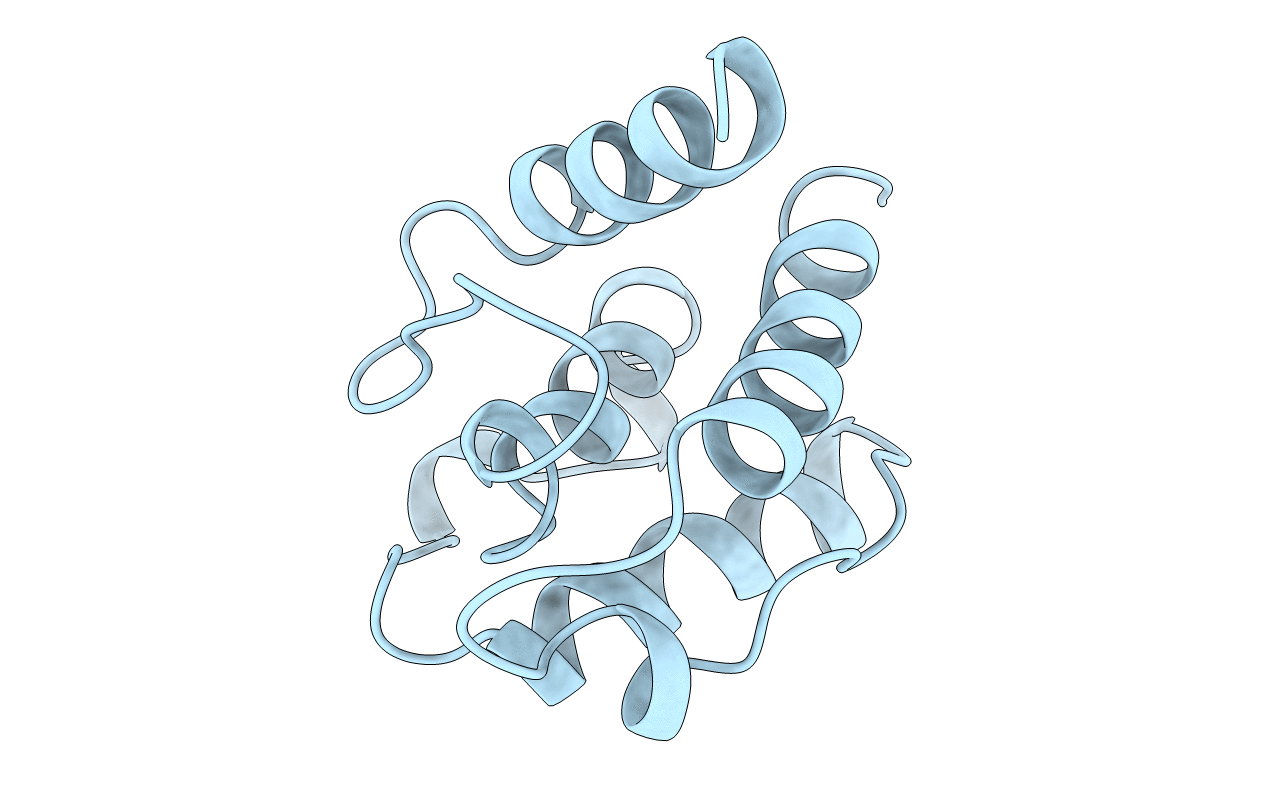
1BKR image
Deposition Date 1998-07-10
Release Date 1998-07-15
Last Version Date 2024-02-07
Entry Detail
PDB ID:
1BKR
Keywords:
Title:
CALPONIN HOMOLOGY (CH) DOMAIN FROM HUMAN BETA-SPECTRIN AT 1.1 ANGSTROM RESOLUTION
Biological Source:
Source Organism:
Homo sapiens (Taxon ID: 9606)
Host Organism:
Method Details:
Experimental Method:
Resolution:
1.10 Å
R-Value Free:
0.18
R-Value Observed:
0.14
Space Group:
P 1 21 1
Macromolecular Entities
Structures with similar UniProt ID
Protein Blast
Polymer Type:polypeptide(L)
Molecule:SPECTRIN BETA CHAIN
Gene (Uniprot):SPTBN1
Chain IDs:A
Chain Length:109
Number of Molecules:1
Biological Source:Homo sapiens
Primary Citation
Structural comparisons of calponin homology domains: implications for actin binding.
Structure 6 1419 1431 (1998)
PMID: 9817844 DOI: 10.1016/S0969-2126(98)00141-5

Abstact

BACKGROUND The actin-binding site of several cytoskeletal proteins is comprised of two calponin homology (CH) domains in a tandem arrangement. As a single copy, the CH domain is also found in regulatory proteins in muscle and in signal-transduction proteins. The three-dimensional structures of three CH domains are known, but they have not yet clarified the molecular details of the interaction between actin filaments and proteins harbouring CH domains. RESULTS We have compared the crystal structure of a CH domain from beta-spectrin, which has been refined to 1.1 A resolution, with the two CH domains that constitute the actin-binding region of fimbrin. This analysis has allowed the construction of a structure-based sequence alignment of CH domains that can be used in further comparisons of members of the CH domain family. The study has also improved our understanding of the factors that determine domain architecture, and has led to discussion on the functional differences that seem to exist between subfamilies of CH domains, as regards binding to F-actin. CONCLUSIONS Our analysis supports biochemical data that implicate a surface centered at the last helix of the N-terminal CH domain as the most probable actin-binding site in cytoskeletal proteins. It is not clear whether the C-terminal domains of the tandem arrangement or the single CH domains have this function alone. This may imply that although the CH domains are homologous and have a conserved structure, they may have evolved to perform different functions.

Legend

Protein

Chemical

Disease

Primary Citation of related structures
Feedback Form
Name
Email
Institute
Feedback