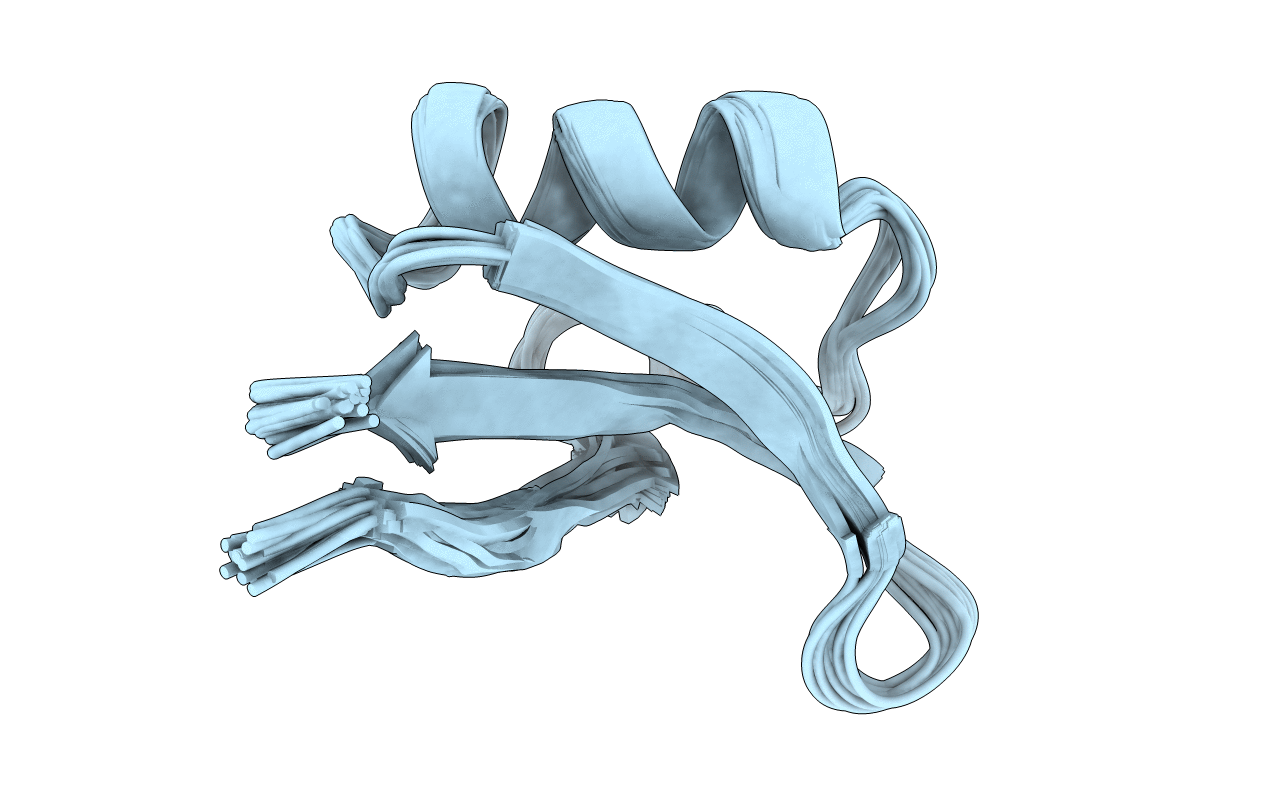
1BK8 image
Deposition Date 1998-07-15
Release Date 2000-01-05
Last Version Date 2024-10-30
Entry Detail
PDB ID:
1BK8
Keywords:
Title:
DETERMINATION OF THE THREE-DIMENSIONAL SOLUTION STRUCTURE OF AESCULUS HIPPOCASTANUM ANTIMICROBIAL PROTEIN 1 (AH-AMP1) BY 1H NMR, 25 STRUCTURES
Biological Source:
Source Organism(s):
Method Details:
Experimental Method:
Conformers Calculated:
500
Conformers Submitted:
25
Selection Criteria:
LEAST RESTRAINT VIOLATION AND ENERGY
Macromolecular Entities
Structures with similar UniProt ID
Protein Blast
Polymer Type:polypeptide(L)
Molecule:ANTIMICROBIAL PROTEIN 1
Chain IDs:A
Chain Length:50
Number of Molecules:1
Biological Source:Aesculus hippocastanum
Ligand Molecules
Primary Citation
The three-dimensional solution structure of Aesculus hippocastanum antimicrobial protein 1 determined by 1H nuclear magnetic resonance.
Proteins 37 388 403 (1999)
PMID: 10591099 DOI: 10.1002/(SICI)1097-0134(19991115)37:3<388::AID-PROT7>3.3.CO;2-6

Abstact

Aesculus hippocastanum antimicrobial protein 1 (Ah-AMP1) is a plant defensin isolated from horse chestnuts. The plant defensins have been divided in several subfamilies according to their amino acid sequence homology. Ah-AMP1, belonging to subfamily A2, inhibits growth of a broad range of fungi. So far, a three-dimensional structure has been determined only for members of subfamilies A3 and B2. In order to understand activity and specificity of these plant defensins, the structure of a protein belonging to subfamily A2 is needed. We report the three-dimensional solution structure of Ah-AMP1 as determined from two-dimensional 1H nuclear magnetic resonance data. The structure features all the characteristics of the "cysteine-stabilized alpha beta-motif." A comparison of the structure, the electrostatic potential surface and regions important for interaction with the fungal receptor, is made with Rs-AFP1 (plant defensin of subfamily A3). Thus, residues important for activity and specificity have been assigned.

Legend

Protein

Chemical

Disease

Primary Citation of related structures
Feedback Form
Name
Email
Institute
Feedback