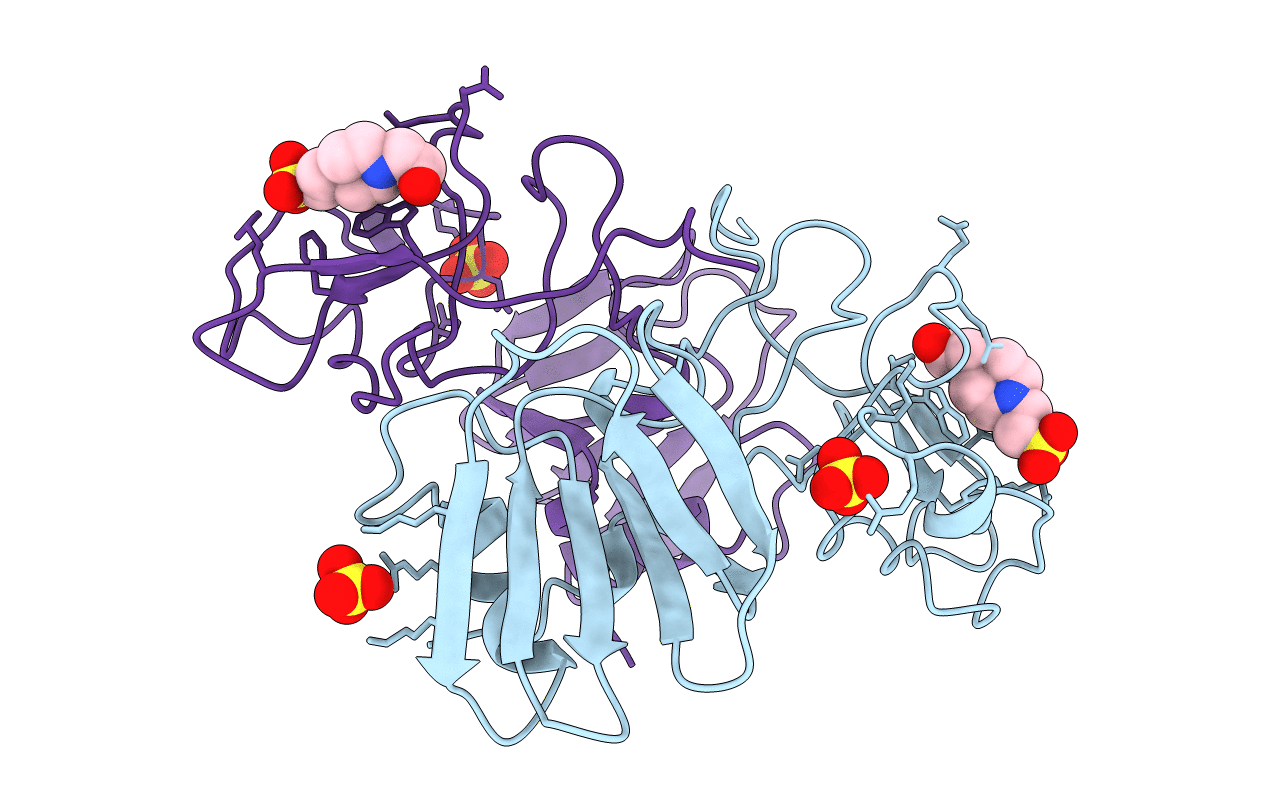
1BHT image
Deposition Date 1998-06-10
Release Date 1998-11-04
Last Version Date 2024-10-16
Entry Detail
PDB ID:
1BHT
Title:
NK1 FRAGMENT OF HUMAN HEPATOCYTE GROWTH FACTOR
Biological Source:
Source Organism:
Homo sapiens (Taxon ID: 9606)
Host Organism:
Method Details:
Experimental Method:
Resolution:
2.00 Å
R-Value Free:
0.24
R-Value Work:
0.19
R-Value Observed:
0.19
Space Group:
P 43 21 2

Macromolecular Entities
Structures with similar UniProt ID
Protein Blast
Polymer Type:polypeptide(L)
Molecule:HEPATOCYTE GROWTH FACTOR
Gene (Uniprot):HGF
Chain IDs:A, B
Chain Length:176
Number of Molecules:2
Biological Source:Homo sapiens
Primary Citation
Crystal structure of the NK1 fragment of human hepatocyte growth factor at 2.0 A resolution.
Structure 6 1383 1393 (1998)
PMID: 9817840 DOI: 10.1016/S0969-2126(98)00138-5

Abstact

BACKGROUND Hepatocyte growth factor (HGF) is a mitogen for hepatocytes and has also been implicated as an epithelial morphogen in tumor invasion. HGF activates its specific cellular receptor, c-met, through an aggregation mechanism potentiated by heparan sulfate glycosaminoglycans. HGF consists of an N-terminal (N) domain, four kringle domains (the first of which carries receptor-binding determinants), and an inactive serine-protease-like domain. NK1, a naturally occurring fragment of HGF, acts as an antagonist of HGF in the absence of heparin. RESULTS The N domain of NK1 consists of a central five-stranded antiparallel beta sheet flanked by an alpha helix and a two-stranded beta ribbon. The overall N domain structure in the context of the NK1 fragment is similar to the structure of the isolated domain; two lysines and an arginine residue coordinate a bound sulfate ion. The NK1 kringle domain is homologous to kringle 4 from plasminogen, except that the lysine-binding pocket is altered by the insertion of a glycine residue. Here, a HEPES molecule is bound in the pocket. The asymmetric unit of the crystal contains a 'head-to-tail' NK1 dimer. We use this dimer to propose a model of the NK2 fragment of HGF. CONCLUSIONS A cluster of exposed lysine and arginine residues in or near the hairpin-loop region of the N domain might form part of the NK1 heparin-binding site. In our NK2 model, both kringle domains pack loosely against the N domain, and a long, positively charged groove lines the interface. This groove might be involved in glycosaminoglycan binding. The HGF receptor-binding determinants are clustered near the binding pocket of the first kringle domain, opposite the N domain.

Legend

Protein

Chemical

Disease

Primary Citation of related structures
Feedback Form
Name
Email
Institute
Feedback