1BG4 image
Deposition Date 1998-06-05
Release Date 1998-08-12
Last Version Date 2024-10-30
Entry Detail
PDB ID:
1BG4
Title:
XYLANASE FROM PENICILLIUM SIMPLICISSIMUM
Biological Source:
Source Organism(s):
Method Details:
Experimental Method:
Resolution:
1.75 Å
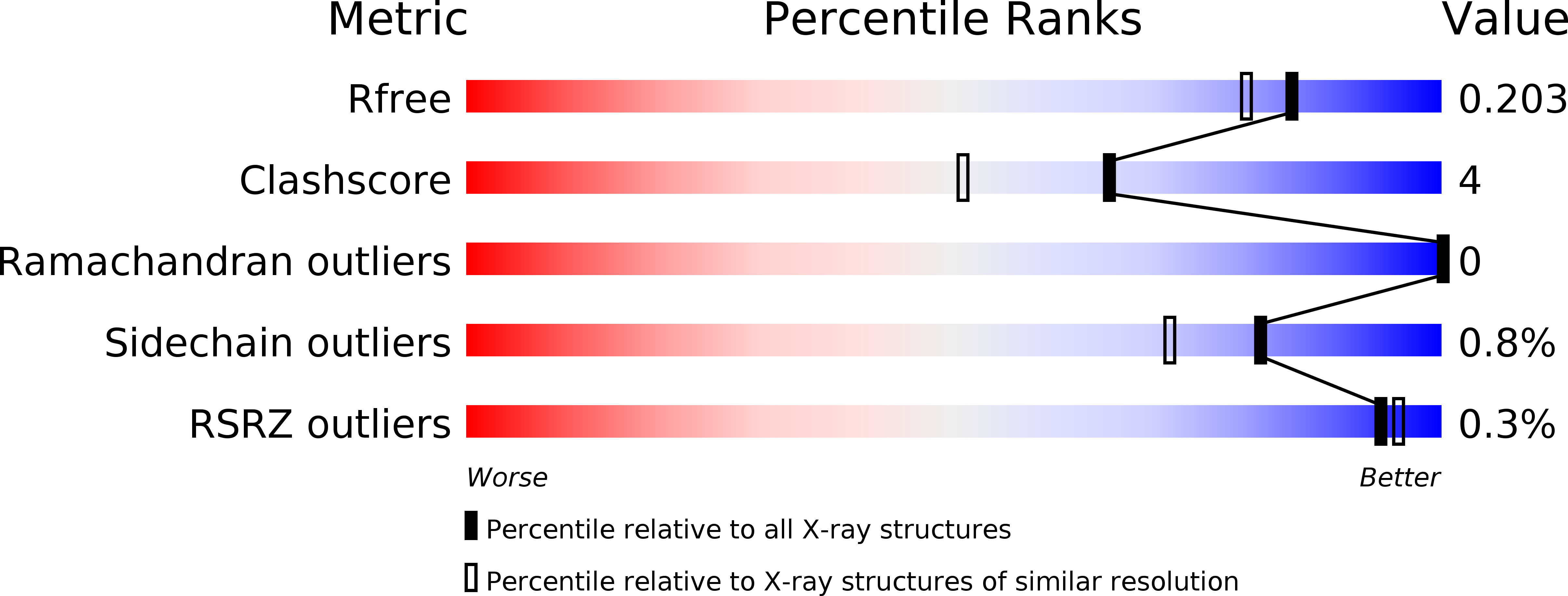
R-Value Free:
0.22
R-Value Work:
0.2
R-Value Observed:
0.2
Space Group:
P 31 2 1
Macromolecular Entities
Structures with similar UniProt ID
Protein Blast
Polymer Type:polypeptide(L)
Molecule:ENDO-1,4-BETA-XYLANASE
Chain IDs:A
Chain Length:302
Number of Molecules:1
Biological Source:Penicillium simplicissimum
Modified Residue
Compound ID Chain ID Parent Comp ID Details 2D Image
PCA A GLN PYROGLUTAMIC ACID
Primary Citation
Structure of the xylanase from Penicillium simplicissimum.
Protein Sci. 7 2081 2088 (1998)
PMID: 9792094

Abstact

Despite its relatively low pH and temperature optimum, the xylanase from Penicillium simplicissimum performs exceedingly well under conditions of paper bleaching. We have purified and characterized this enzyme, which belongs to family 10 of glycosyl hydrolases. Its gene was cloned, and the sequence of the protein was deduced from the nucleotide sequence. The xylanase was crystallized from ammonium sulfate at pH 8.4, and X-ray data were collected at cryo-temperature to a crystallographic resolution of 1.75 A. The crystal structure was solved by molecular replacement using the catalytic domain of the Clostridium thermocellum xylanase as a search model, and refined to a residual of R = 20% (R(free) = 23%) for data between 10 and 1.75 A. The xylanase folds in an (alpha/beta)8 barrel (TIM-barrel), with additional helices and loops arranged at the "top" forming the active site cleft. In its overall shape, the P. simplicissimum xylanase structure is similar to other family 10 xylanases, but its active site cleft is much shallower and wider. This probably accounts for the differences in catalysis and in the mode of action of this enzyme. Three glycerol molecules were observed to bind within the active site groove, one of which interacts directly with the catalytic glutamate residues. It appears that they occupy putative xylose binding subsites.

Legend

Protein

Chemical

Disease

Primary Citation of related structures
Feedback Form
Name
Email
Institute
Feedback