Planned Maintenance: Some services may turn out to be unavailable from 15th January, 2026 to 16th January, 2026. We apologize for the inconvenience!

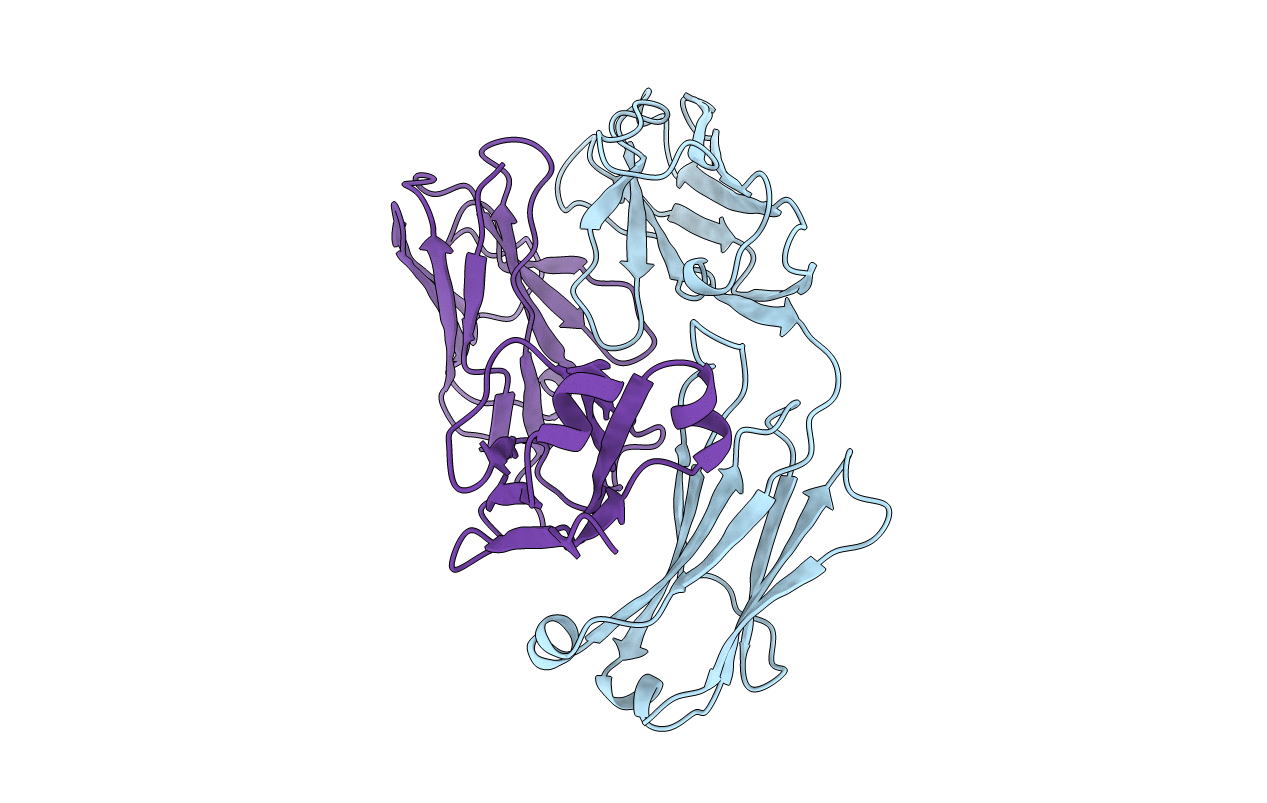
1B6D image
Deposition Date 1999-01-13
Release Date 1999-01-27
Last Version Date 2024-10-30
Entry Detail
PDB ID:
1B6D
Keywords:
Title:
BENCE JONES PROTEIN DEL: AN ENTIRE IMMUNOGLOBULIN KAPPA LIGHT-CHAIN DIMER
Biological Source:
Source Organism(s):
Homo sapiens (Taxon ID: 9606)
Method Details:
Experimental Method:
Resolution:
2.74 Å
R-Value Free:
0.26
R-Value Work:
0.20
R-Value Observed:
0.20
Space Group:
C 2 2 21
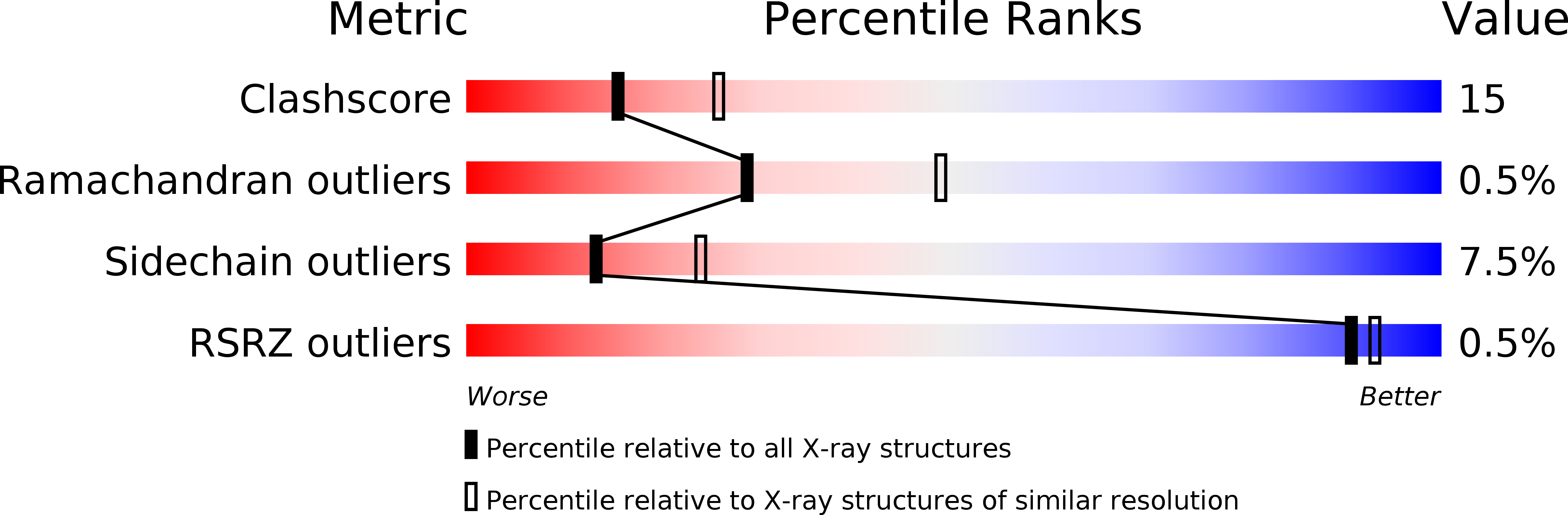
Macromolecular Entities
Polymer Type:polypeptide(L)
Molecule:IMMUNOGLOBULIN
Chain IDs:A, B
Chain Length:212
Number of Molecules:2
Biological Source:Homo sapiens
Primary Citation
The structure of an entire noncovalent immunoglobulin kappa light-chain dimer (Bence-Jones protein) reveals a weak and unusual constant domains association.
Eur.J.Biochem. 260 192 199 (1999)
PMID: 10091599 DOI: 10.1046/j.1432-1327.1999.00136.x

Abstact

Monoclonal free light chains secreted in immunoproliferative disorders are frequently involved in renal complications, including a specific proximal tubule impairment, Fanconi's syndrome. The latter is characterized in most cases by intracellular crystallization including a light-chain variable-domain fragment which resists lysosomal proteases. Bence-Jones protein (BJP) DEL was isolated from a patient with myeloma-associated Fanconi's syndrome. The crystal structure of this human kappa immunoglobulin light-chain noncovalent dimer was determined using molecular replacement with the structure of molecule REI, as the variable domain, and that of BJP LOC as the constant domain. To our knowledge, DEL is the first complete kappa BJP structure described to date. The R-factor is 20.7% at 2.8 A resolution. The BJP DEL dimer was compared with other light-chain dimers and with Fab fragments with a kappa light chain. Although the domain-folding pattern was similar, the relative positions of the constant domains differed. BJP DEL showed a noncanonical quaternary structural arrangement which may be attributable to the poor CL-CL affinity and lack of an interchain disulfide bridge, combined with the conformational editing effect of the crystal-packing forces. Our results suggest that, in the absence of a disulfide bridge, most BJP CLs are probably mobile in solution. This may explain their high susceptibility to proteases and the absence of naturally occurring crystals for these dimers. Furthermore, these findings of an unusual quaternary structure of an immunoglobulin light-chain association extend our knowledge about the large and highly diverse structures of the immunoglobulin superfamily.

Legend

Protein

Chemical

Disease

Primary Citation of related structures
Feedback Form
Name
Email
Institute
Feedback