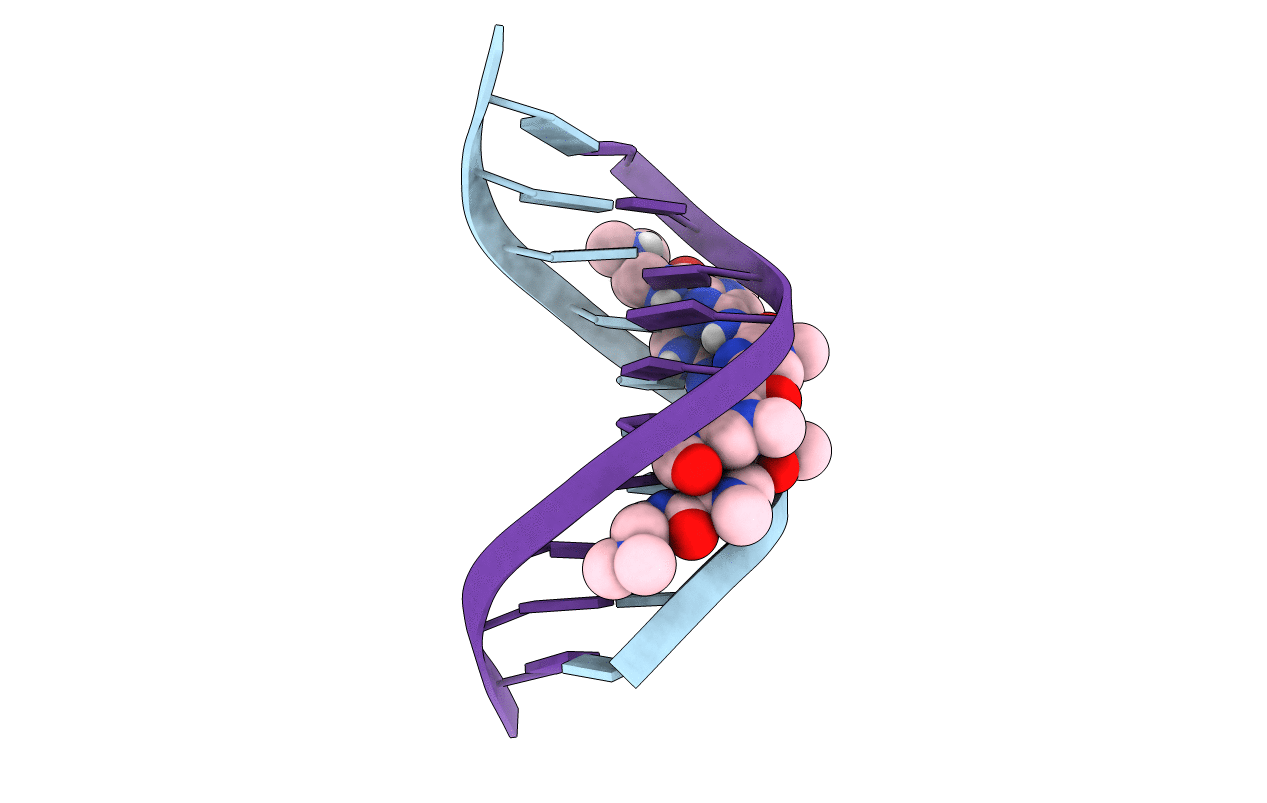
1B0S image
Deposition Date 1998-11-12
Release Date 1999-08-31
Last Version Date 2023-12-27
Entry Detail
PDB ID:
1B0S
Keywords:
Title:
BINDING OF AR-1-144, A TRI-IMIDAZOLE DNA MINOR GROOVE BINDER, TO CCGG SEQUENCE ANALYZED BY NMR SPECTROSCOPY
Biological Source:
Source Organism:
Method Details:
Experimental Method:
Conformers Calculated:
11
Conformers Submitted:
1
Selection Criteria:
REFINED AVERAGE STRUCTURE

Macromolecular Entities
Polymer Type:polydeoxyribonucleotide
Molecule:DNA (5'-D(*GP*AP*AP*CP*CP*GP*GP*TP*TP*C)-3')
Chain IDs:A, B
Chain Length:10
Number of Molecules:2
Biological Source:
Ligand Molecules
Primary Citation
Binding of AR-1-144, a tri-imidazole DNA minor groove binder, to CCGG sequence analyzed by NMR spectroscopy.
Eur.J.Biochem. 263 646 655 (1999)
PMID: 10469127 DOI: 10.1046/j.1432-1327.1999.00515.x

Abstact

The interactions of N-[2-(dimethylamino)ethyl]-1-methyl-4-[1-methyl-4-[4-formamido-1-meth ylimidazole-2-carboxamido]imidazole-2-carboxamido]imidazole-2-c arboxa mide (AR-1-144), a tri-imidazole polyamide minor groove binder, with DNA have been investigated by NMR and CD spectroscopy. A series of DNA oligonucleotides with a C/G-containing four-bp core, i.e. CCGG, CGCG, GGCC, and GCGC, have been titrated with AR-1-144 at different ratios. AR-1-144 favors the CCGG sequence. The flanking sequence of the CCGG core also influences the binding preference, with a C or T being favored on the 3'-side of the CCGG core. The three-dimensional structure of the symmetric 2:1 side-by-side complex of AR-1-144 and GAACCGGTTC, determined by NOE-constrained NMR refinement, reveals that each AR-1-144 binds to four base pairs, i.e. at C5-G6-G7-T8, with every amide-imidazole unit forming two potential hydrogen bonds with DNA. The same DNA binding preference of AR-1-144 was also confirmed by circular dichroism spectroscopy, indicating that the DNA binding preference of AR-1-144 is independent of concentration. The cooperative binding of an AR-1-144 homodimer to the (purine)CCGG(pyrimidine) core sequence appears to be weaker than that of the distamycin A homodimer to A/T sequences, most likely due to the diminished hydrophobic interactions between AR-1-144 and DNA. Our results are consistent with previous footprinting data and explain the binding pattern found in the crystal structure of a di-imidazole drug bound to CATGGCCATG.

Legend

Protein

Chemical

Disease

Primary Citation of related structures
Feedback Form
Name
Email
Institute
Feedback