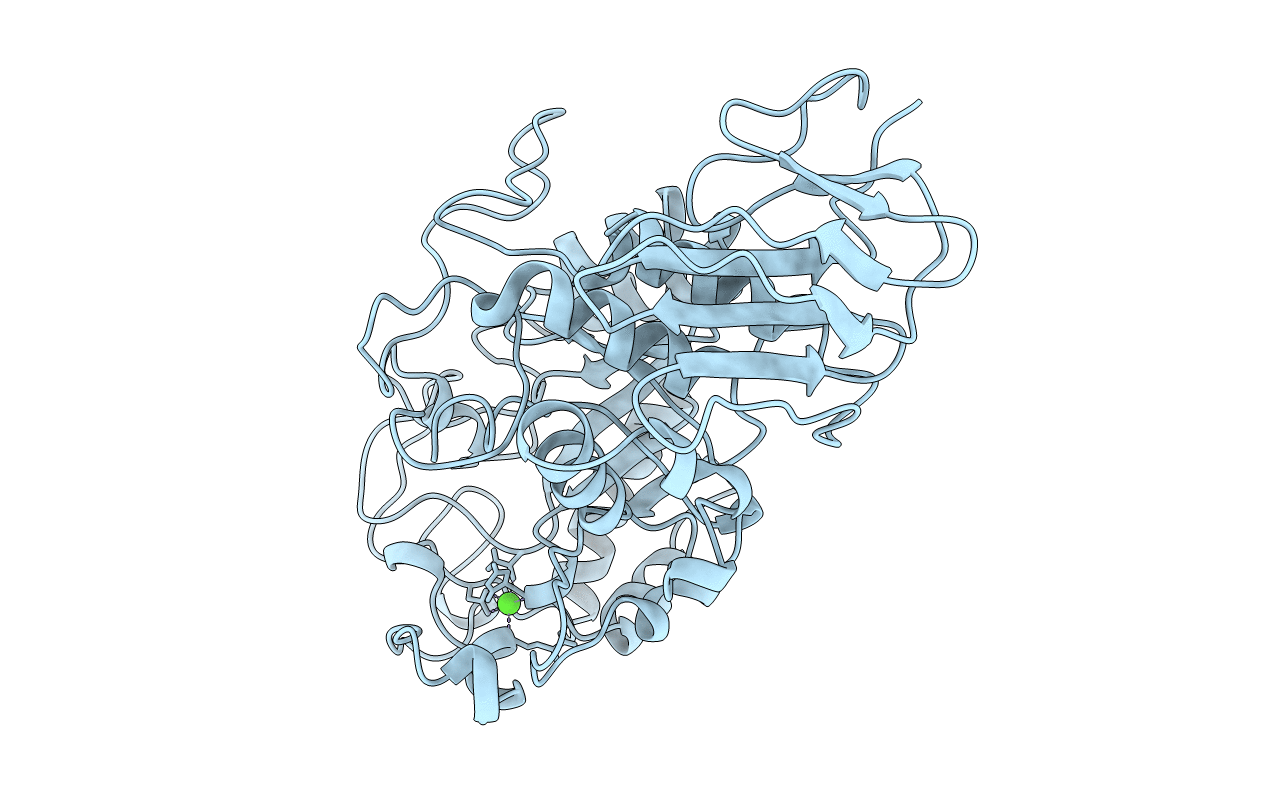
1B0I image
Deposition Date 1998-11-10
Release Date 1999-11-17
Last Version Date 2024-11-13
Entry Detail
PDB ID:
1B0I
Keywords:
Title:
ALPHA-AMYLASE FROM ALTEROMONAS HALOPLANCTIS
Biological Source:
Source Organism:
Host Organism:
Method Details:
Experimental Method:
Resolution:
2.40 Å
R-Value Free:
0.21
R-Value Work:
0.18
Space Group:
P 21 21 21
Macromolecular Entities
Structures with similar UniProt ID
Protein Blast
Polymer Type:polypeptide(L)
Molecule:PROTEIN (ALPHA-AMYLASE)
Gene (Uniprot):amy
Chain IDs:A
Chain Length:453
Number of Molecules:1
Biological Source:Pseudoalteromonas haloplanktis
Primary Citation
Structures of the psychrophilic Alteromonas haloplanctis alpha-amylase give insights into cold adaptation at a molecular level.
Structure 6 1503 1506 (1998)
PMID: 9862804 DOI: 10.1016/S0969-2126(98)00149-X

Abstact

BACKGROUND . Enzymes from psychrophilic (cold-adapted) microorganisms operate at temperatures close to 0 degreesC, where the activity of their mesophilic and thermophilic counterparts is drastically reduced. It has generally been assumed that thermophily is associated with rigid proteins, whereas psychrophilic enzymes have a tendency to be more flexible. RESULTS . Insights into the cold adaptation of proteins are gained on the basis of a psychrophilic protein's molecular structure. To this end, we have determined the structure of the recombinant form of a psychrophilic alpha-amylase from Alteromonas haloplanctis at 2.4 A resolution. We have compared this with the structure of the wild-type enzyme, recently solved at 2.0 A resolution, and with available structures of their mesophilic counterparts. These comparative studies have enabled us to identify possible determinants of cold adaptation. CONCLUSIONS . We propose that an increased resilience of the molecular surface and a less rigid protein core, with less interdomain interactions, are determining factors of the conformational flexibility that allows efficient enzyme catalysis in cold environments.

Legend

Protein

Chemical

Disease

Primary Citation of related structures
Feedback Form
Name
Email
Institute
Feedback