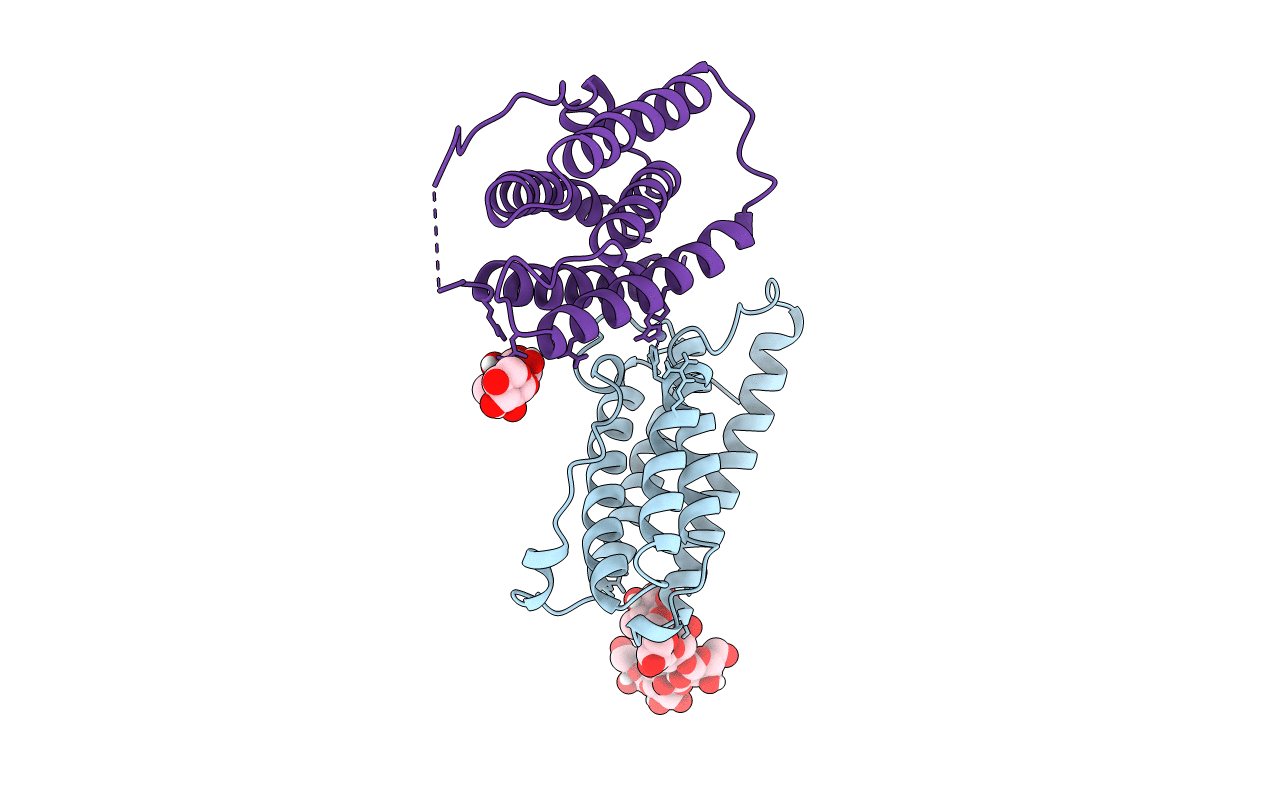
1AU1 image
Deposition Date 1997-09-09
Release Date 1998-06-17
Last Version Date 2024-11-20
Entry Detail
PDB ID:
1AU1
Keywords:
Title:
HUMAN INTERFERON-BETA CRYSTAL STRUCTURE
Biological Source:
Source Organism:
Homo sapiens (Taxon ID: 9606)
Host Organism:
Method Details:
Experimental Method:
Resolution:
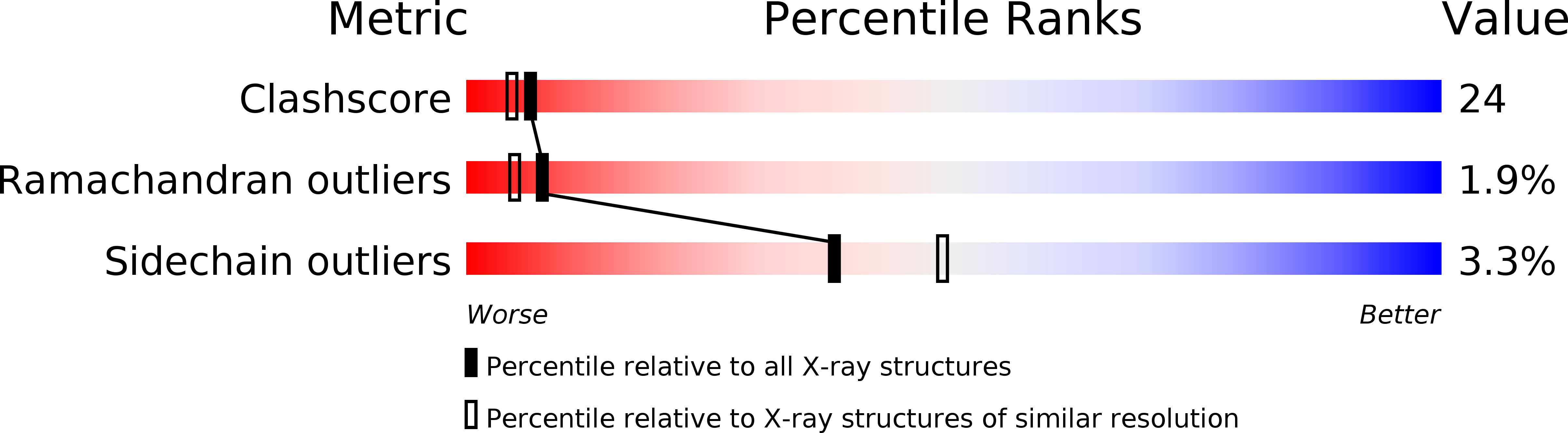
2.20 Å
R-Value Free:
0.28
R-Value Work:
0.22
R-Value Observed:
0.22
Space Group:
P 21 21 21
Macromolecular Entities
Structures with similar UniProt ID
Protein Blast
Polymer Type:polypeptide(L)
Molecule:INTERFERON-BETA
Gene (Uniprot):IFNB1
Chain IDs:A, B
Chain Length:166
Number of Molecules:2
Biological Source:Homo sapiens
Modified Residue
Compound ID Chain ID Parent Comp ID Details 2D Image
ASN A ASN GLYCOSYLATION SITE
Ligand Molecules
Primary Citation
The crystal structure of human interferon beta at 2.2-A resolution.
Proc.Natl.Acad.Sci.USA 94 11813 11818 (1997)
PMID: 9342320 DOI: 10.1073/pnas.94.22.11813

Abstact

Type I interferons (IFNs) are helical cytokines that have diverse biological activities despite the fact that they appear to interact with the same receptor system. To achieve a better understanding of the structural basis for the different activities of alpha and beta IFNs, we have determined the crystal structure of glycosylated human IFN-beta at 2.2-A resolution by molecular replacement. The molecule adopts a fold similar to that of the previously determined structures of murine IFN-beta and human IFN-alpha2b but displays several distinct structural features. Like human IFN-alpha2b, human IFN-beta contains a zinc-binding site at the interface of the two molecules in the asymmetric unit, raising the question of functional relevance for IFN-beta dimers. However, unlike the human IFN-alpha2b dimer, in which homologous surfaces form the interface, human IFN-beta dimerizes with contact surfaces from opposite sides of the molecule. The relevance of the structure to the effects of point mutations in IFN-beta at specific exposed residues is discussed. A potential role of ligand-ligand interactions in the conformational assembly of IFN receptor components is discussed.

Legend

Protein

Chemical

Disease

Primary Citation of related structures
Feedback Form
Name
Email
Institute
Feedback